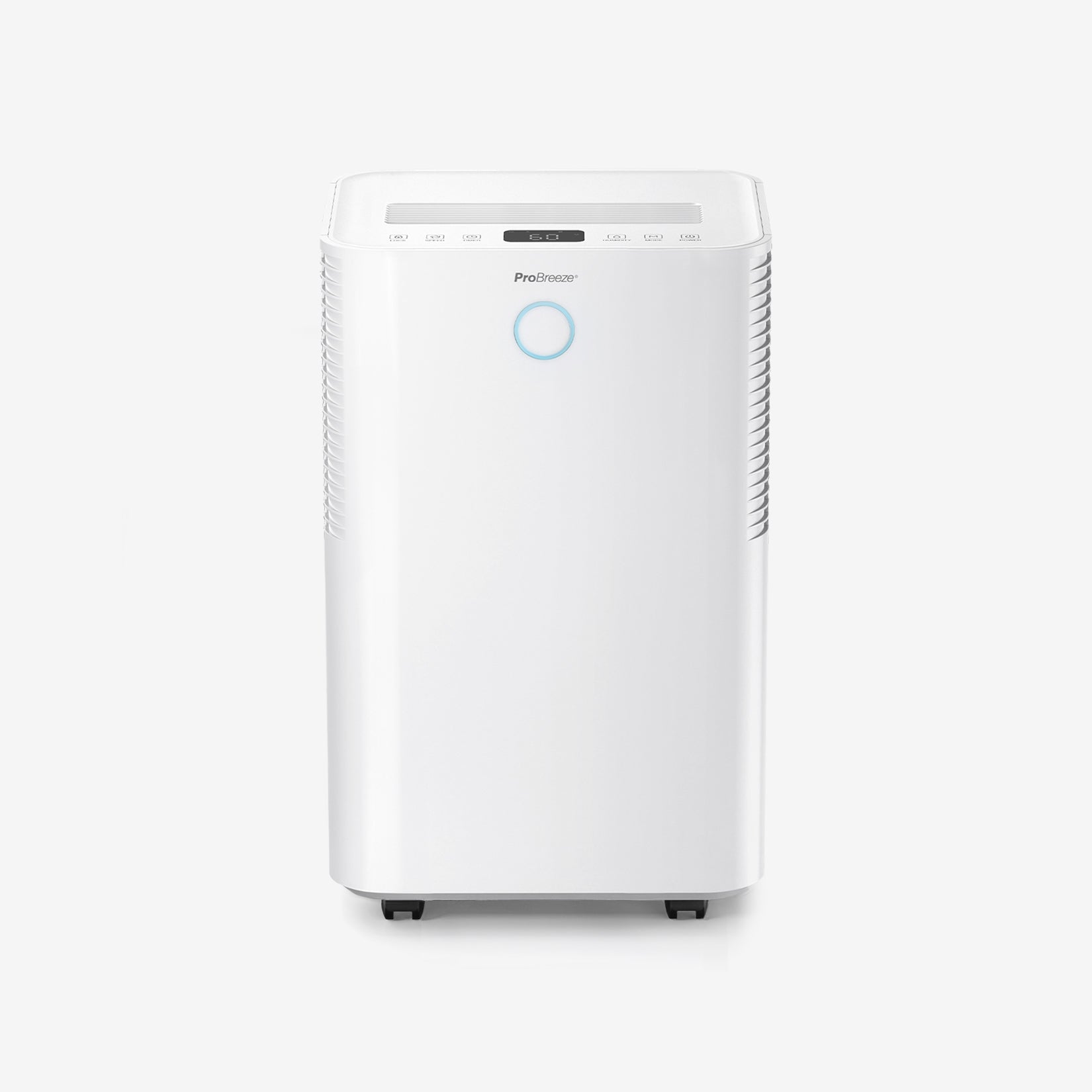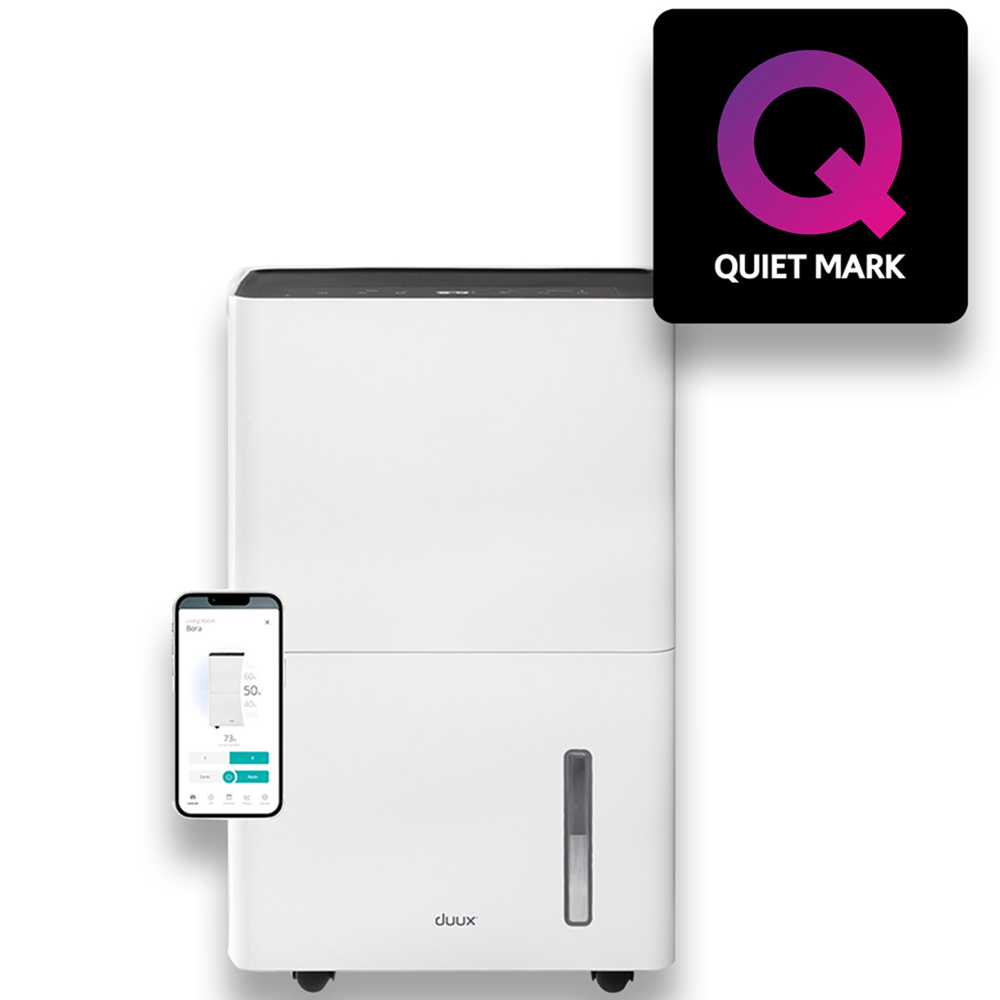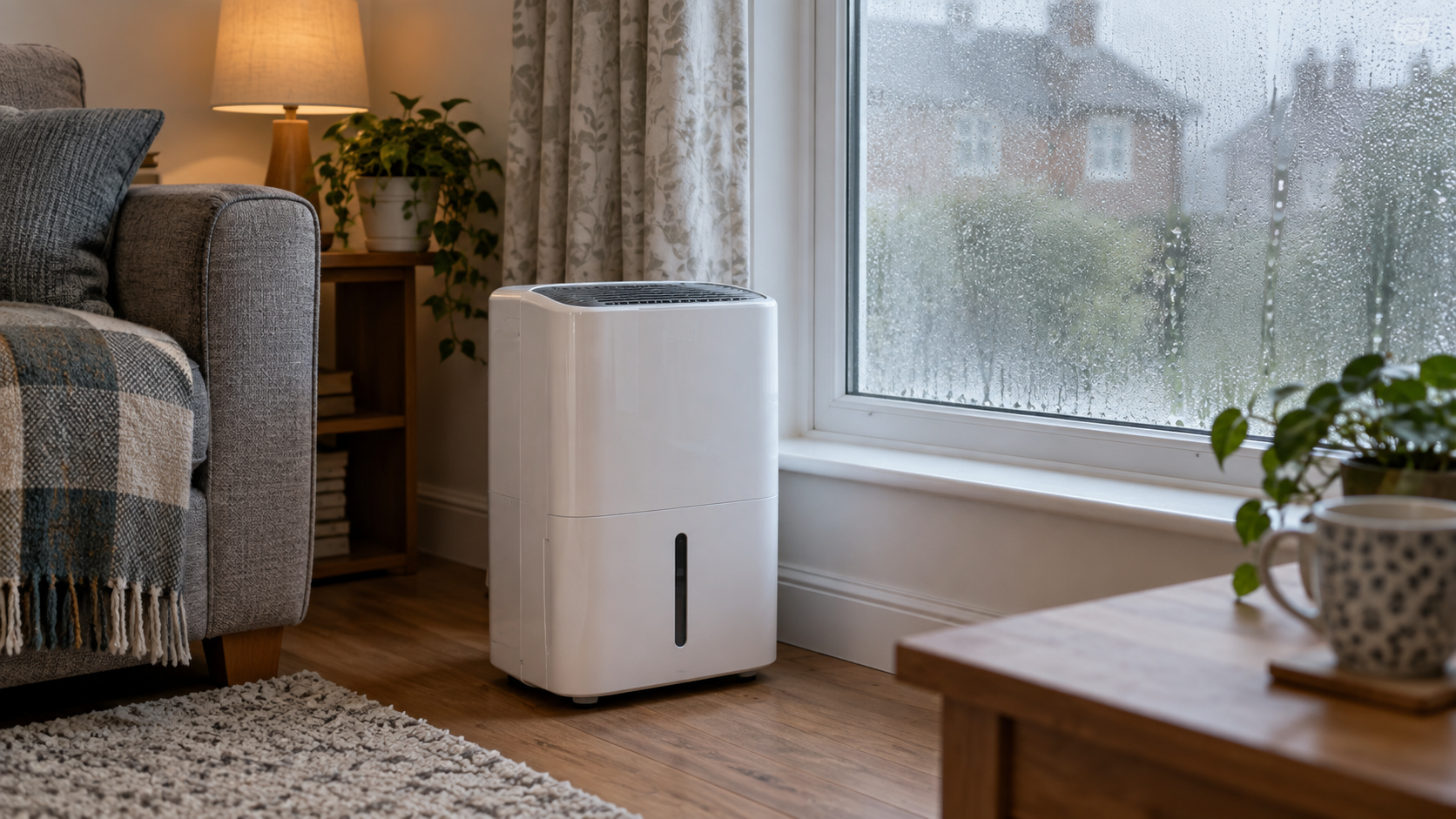
If you have ever come downstairs on a grey January morning to a rack of washing that is still damp, windows running with condensation and a faint musty smell in the air, you already understand the problem this article is here to solve. Drying clothes indoors is unavoidable for most of us through a British winter — there simply are not enough dry days to hang everything on the line — but doing it badly quietly wrecks your home. The good news is that the right dehumidifier turns indoor drying from a damp, mould-inviting chore into something fast, cheap and genuinely healthier for the house.
This guide explains how a dehumidifier dries laundry, which type and features actually matter for this job, what it costs compared with a tumble dryer, and how to get a load bone dry overnight.
Why a dehumidifier is the smart way to dry laundry indoors
A single wash load releases roughly two litres of water as it dries. Do the maths across an average family's washing and you are putting somewhere between 10 and 16 litres of moisture into your home every week. That water does not vanish — it lands on the coldest surfaces it can find: window reveals, external walls, behind the wardrobe. Push indoor humidity above about 60% and you have created the exact conditions that black mould and dust mites love.
A dehumidifier flips that on its head. Instead of letting the moisture from your washing spread through the house, it pulls that water straight out of the air and collects it in a tank. The clothes dry far quicker because the surrounding air stays thirsty, and the moisture never gets the chance to settle on your walls. You dry the laundry and protect the fabric of your home in a single step. If damp and condensation are your main concern, our guide on whether a dehumidifier will stop condensation and mould goes into the wider picture.
Compressor or desiccant for drying clothes?
This is the first real decision, and for laundry the answer is usually clearer than people expect.
A compressor model chills air to squeeze the water out of it. It is the more energy-efficient choice and works brilliantly at normal room temperatures — so for drying washing in a heated bedroom, bathroom or utility room, it is the one most households want. A desiccant model uses a moisture-absorbing wheel and a heater, which makes it thirstier on electricity, but it keeps working in the cold where a compressor struggles. If your drying happens in an unheated garage, a caravan or a chilly outhouse that sits below about 10°C, a desiccant earns its place.
For the majority of readers drying indoors in a warmish room, a compressor unit gives you the lower running cost with no loss of performance. Our full compressor vs desiccant comparison walks through the trade-offs room by room if you are still torn.
The features that actually matter for laundry
Marketing blurb throws a lot of numbers at you. These are the ones that make a real difference when the job is drying clothes.
A dedicated laundry or drying mode
Most of the better UK models now include a laundry mode. Rather than aiming for a set humidity and then easing off, it runs the fan and compressor hard to shift as much water as fast as possible. It is the single feature I would prioritise for this use — it is the difference between clothes that are dry by morning and clothes that are still cool and damp at the seams.
Extraction rate and size
Extraction rate is quoted in litres per day (for example 12L, 20L, 25L). You are not trying to fill the tank — a bigger number simply means the machine clears moisture faster, which shortens drying time. For a typical household drying regular loads, a 12L to 20L compressor unit hits the sweet spot. Our what size dehumidifier do I need guide matches capacity to home size in detail.
Tank size and continuous drainage
Drying a load can pull a surprising amount of water from the air, and there is nothing more annoying than a machine that stops at 3am because the tank is full. Look for a generous tank, and check the unit has a continuous drainage option — a hose outlet that lets you run it to a nearby drain or sink so it never has to stop to be emptied.
Noise level
If the dehumidifier is going to run overnight on a landing or in a bedroom, noise matters. Check the decibel rating and look for a quieter night setting. Compressor models cycle on and off, so an occasional hum is normal; anything rated around the low-to-mid 40s dB is comfortable to sleep near.
Energy efficiency and a humidistat
A built-in humidistat lets the machine switch off once the target is reached rather than running needlessly, which keeps the bill down. It is also what makes a dehumidifier safe to leave running unattended.
What it costs versus a tumble dryer
This is where a dehumidifier quietly wins. A vented or condenser tumble dryer draws around 2,000–2,500W and costs somewhere between 49p and £1.24 a cycle depending on its age and efficiency. A compressor dehumidifier draws only about 130–350W, and drying a load alongside an airer typically costs 16p to 74p — with most compressor setups landing at the lower end of that range.
| Method | Typical cost per load | Speed | Extra benefit |
|---|---|---|---|
| Vented / condenser tumble dryer | 49p – £1.24 | Fast | None for the room |
| Heat pump tumble dryer | 30p – 49p | Fast | Lower energy use |
| Heated airer | 25p – 37p | Slow | Cheap to buy |
| Dehumidifier + airer | 16p – 74p | Overnight | Removes damp from whole room |
If you are torn between the two cheapest indoor options, our dehumidifier vs heated airer comparison weighs them up in full. The dehumidifier is not the fastest, but it is the only method on that list that also protects your home from condensation while it works — and unlike a tumble dryer, it earns its keep all year round as a damp and mould control tool. For the full breakdown of what these machines add to your bill, see our dehumidifier running costs guide. Actual per-hour costs depend on the unit rate you pay under the Ofgem energy price cap, so it is worth checking your own tariff before you buy.
How to dry a load fast: the method that works
The dehumidifier does the heavy lifting, but technique makes a big difference to how quickly clothes are dry and how little electricity you use.
- Spin twice. Run an extra high-speed spin (1,400rpm if your machine allows) before you hang anything. The more water the drum removes, the less the dehumidifier has to.
- Close the room off. Put the airer and dehumidifier in one small room and shut the door. You are dehumidifying that room, not the whole house — a closed space dries far faster.
- Space the clothes out. Overlapping garments trap damp. Give everything room for air to move around it.
- Point the airflow at the washing. Position the unit so its output faces the airer, and use laundry mode if you have it.
- Run it overnight. If you are on an Economy 7 or time-of-use tariff, running through the cheap night hours cuts the cost even further, and you wake up to dry clothes.
Used this way, most loads are dry in three to six hours, and a full airer left overnight will be ready to put away by breakfast.
The health and home benefits people forget
Drying laundry over radiators or on an open rack without extracting the moisture is one of the most common causes of winter condensation and mould in UK homes — and the resulting damp is linked to respiratory problems. The NHS is clear that damp and mould can affect your health, particularly for anyone with asthma or a weakened immune system. A dehumidifier tackles the cause rather than the symptom: it removes the water your washing gives off before it ever reaches your walls and windows.
Frequently asked questions
Is a dehumidifier cheaper than a tumble dryer for drying clothes?
In most cases, yes. A compressor dehumidifier drying a load alongside an airer usually costs less per load than a vented or condenser tumble dryer, and it removes damp from the room at the same time. A heat pump tumble dryer is closer on cost but does nothing for household humidity.
How long does it take to dry clothes with a dehumidifier?
In a small, closed room with the clothes well spaced and the unit on laundry mode, most loads dry in three to six hours. A full airer left running overnight is normally ready to put away by morning.
What size dehumidifier do I need for drying laundry?
For a typical household, a 12L to 20L compressor model is ideal. The higher extraction rate shortens drying time rather than filling a bigger tank. Our sizing guide matches capacity to your home.
Should I get a compressor or desiccant dehumidifier for drying clothes?
For drying in a heated room, choose a compressor model — it uses less electricity and performs just as well at normal temperatures. Only pick a desiccant unit if you are drying in a cold space such as a garage or outhouse below about 10°C.
Where should I put the dehumidifier when drying washing?
In the same small room as the airer, with the door shut and the airflow pointed at the clothes. Closing the room off concentrates the drying effect and gets the laundry dry far quicker than running it in an open hallway.