Running costs updated 1 October 2026. Every electricity figure on this page is costed at the Ofgem price cap average electricity unit rate of 26.32p per kWh, which applies from 1 October to 31 December 2026. Your own tariff may be higher or lower, so check your latest bill before relying on these numbers.
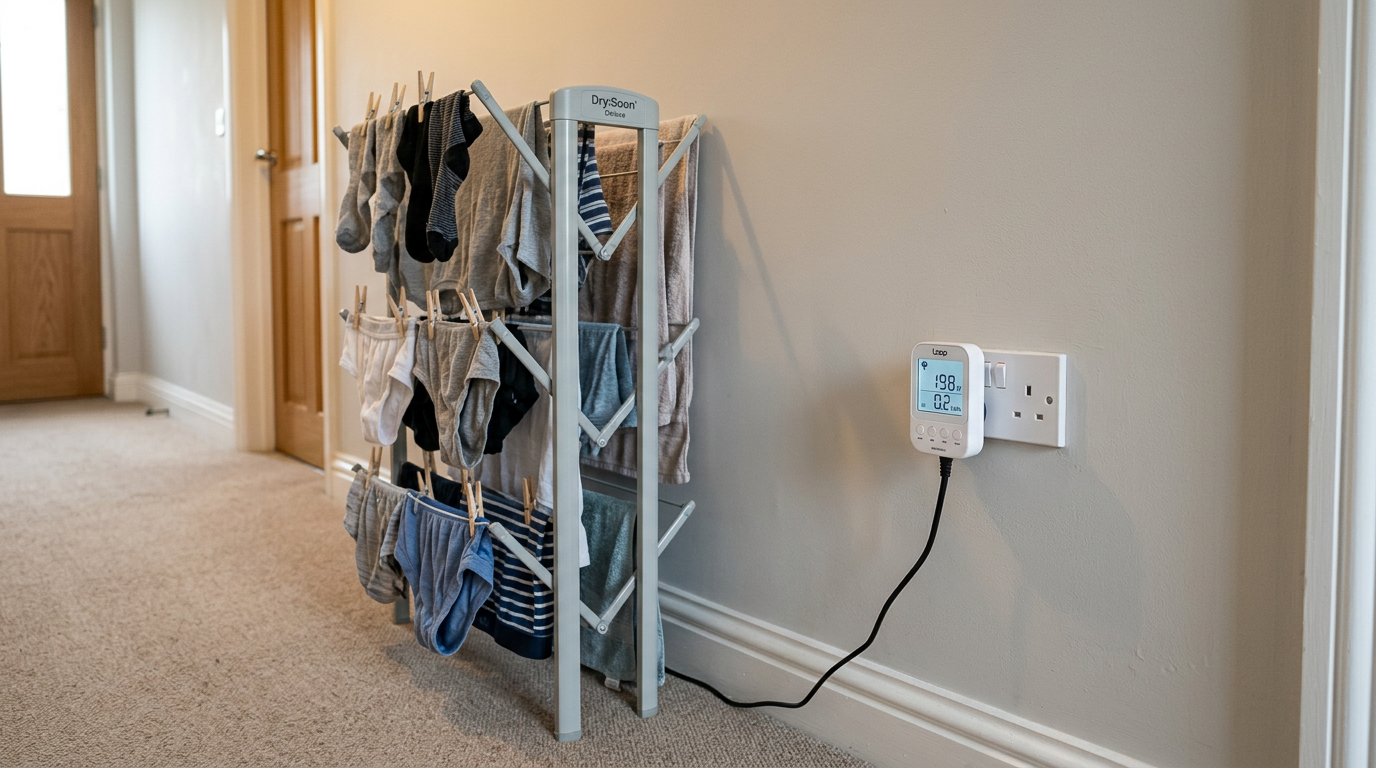
A heated clothes airer costs between about 5p and 8p an hour to run. That is the whole answer, and it is why they have become the default way to dry washing indoors in Britain. But the hourly figure hides the thing that actually determines your bill: how many hours you run it, which depends almost entirely on whether you use a cover and whether the room can get rid of the moisture.
The 60-second answer
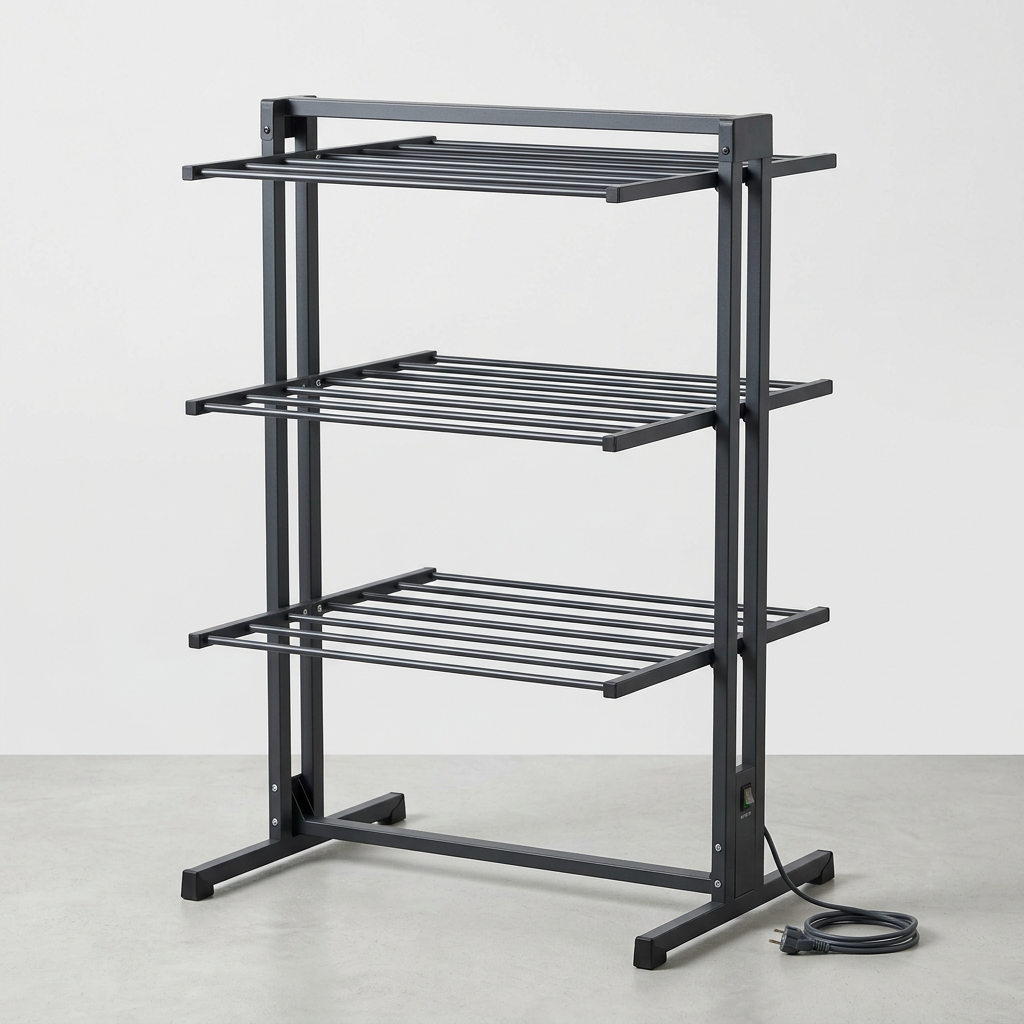
- A 300W heated airer costs 7.9p an hour at 26.32p per kWh - about 47p for a six-hour run.
- A 200W compact model costs 5.3p an hour - about 32p for six hours.
- A 1000W drying pod costs 26.3p an hour, but typically runs for 1-2 hours rather than overnight.
- Five loads a week through a winter (26 weeks) on a 300W airer is roughly £61.
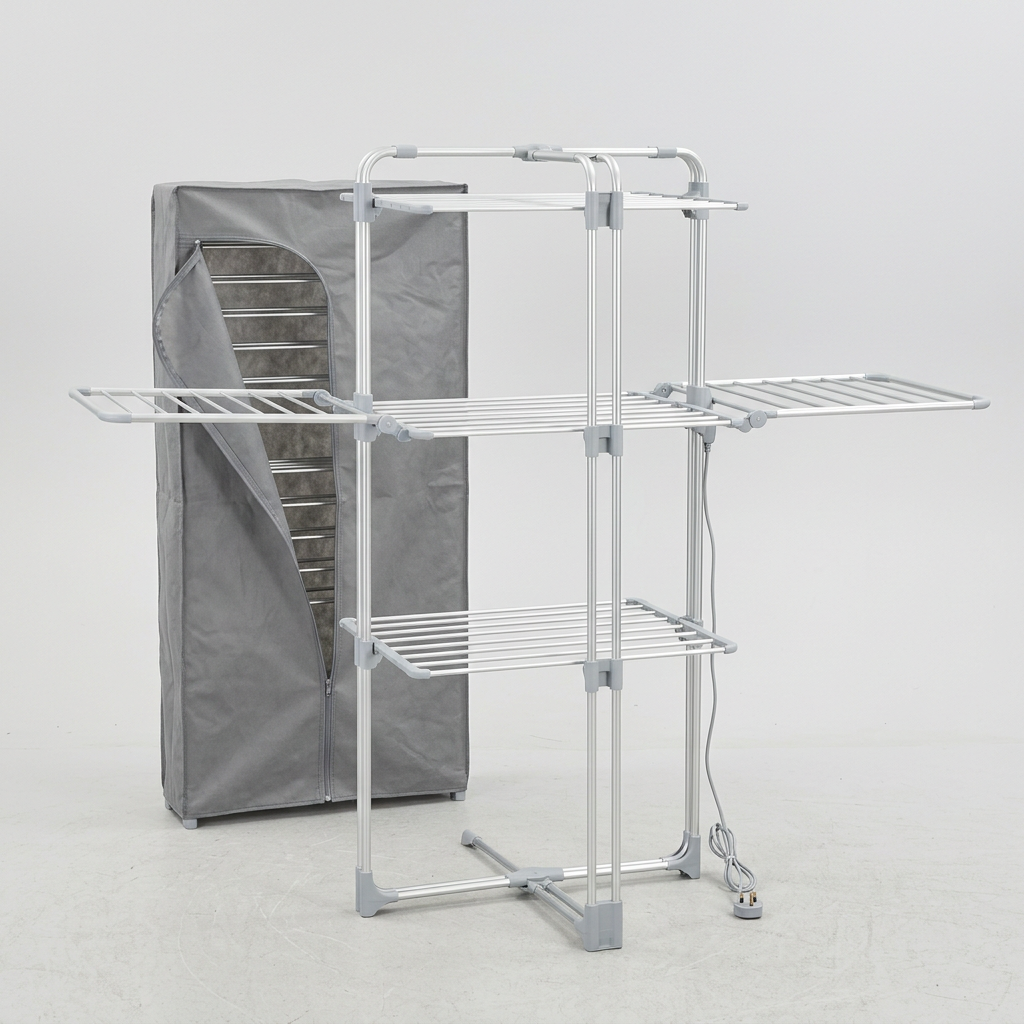
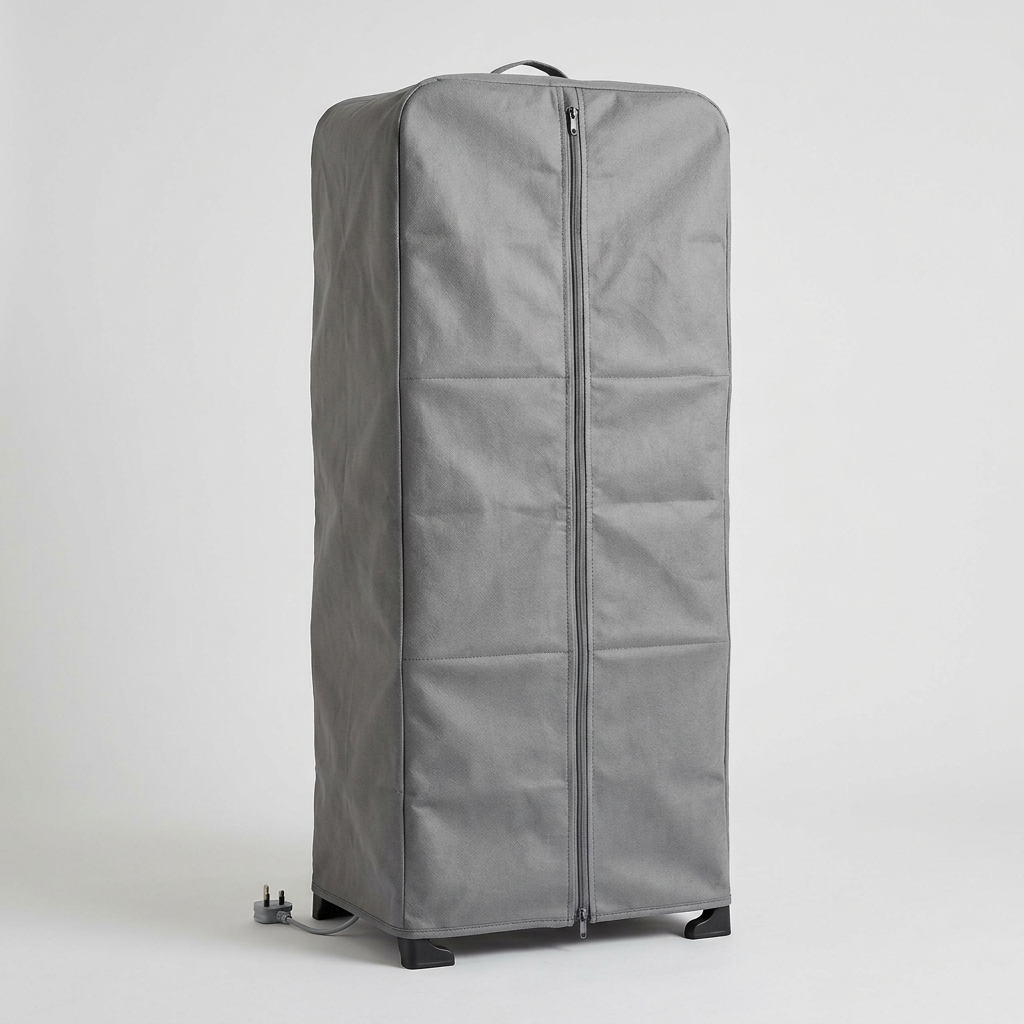
- A cover is the single biggest saving available: it typically cuts a run from six hours to four, which is about a third off the bill.
How the maths works
Electricity is billed per kilowatt-hour. A 300W airer uses 0.3 kWh every hour, so at the Ofgem average unit rate of 26.32p per kWh it costs 0.3 × 26.32 = 7.9p an hour. That is the entire calculation. Any article quoting a different number is either using an older price cap, a regional rate, or including the daily standing charge - which you pay whether the airer is on or not.
| Airer type | Wattage | Cost per hour | Cost per 4-hour run (covered) | Cost per 6-hour run (uncovered) |
|---|---|---|---|---|
| Compact 3-tier (e.g. Duronic CA20) | 202W | 5.3p | 21p | 32p |
| Winged flat airer (e.g. Minky 12m) | 230W | 6.1p | 24p | 36p |
| Standard 3-tier | 298-300W | 7.8-7.9p | 32p | 47p |
| 4-tier family airer | 300W | 7.9p | 32p | 47p |
| Heated drying pod | 1000W | 26.3p | — | 39p for a 90-minute run |
What it costs over a winter
The per-hour figure is reassuring; the seasonal figure is the one to budget for. These assume a six-hour run per load with no cover, over a 26-week heating season.
| Loads per week | 202W airer | 300W airer | 300W airer with cover (4h) |
|---|---|---|---|
| 2 | £16.60 | £24.60 | £16.40 |
| 3 | £24.90 | £36.90 | £24.60 |
| 5 | £41.50 | £61.60 | £41.00 |
| 7 | £58.10 | £86.20 | £57.50 |
Read that table twice, because it contains the only money-saving tip on this page that is worth anything: a 300W airer with a cover costs roughly the same as a 200W airer without one. You do not need to buy a lower-wattage machine to cut the bill - you need to stop the heat escaping.
How it compares with the alternatives
| Method | Energy per load | Cost per load at 26.32p/kWh |
|---|---|---|
| Vented or condenser tumble dryer | 2.5-4.5 kWh | 66p - £1.18 |
| Heat pump tumble dryer | 1.2-2.0 kWh | 32p - 53p |
| Heated airer (4-6 hours) | 1.0-1.8 kWh | 26p - 47p |
| Heated drying pod (90 minutes) | 1.5 kWh | 39p |
| Dehumidifier running alongside an unheated airer | 0.6-2.8 kWh | 17p - 74p |
| Unheated airer, no dehumidifier | 0 kWh | Free - but the moisture has to go somewhere |
Against a conventional vented or condenser dryer, a heated airer saves roughly 20p to 90p a load. Against a modern heat pump dryer the gap narrows considerably, and a heat pump dryer finishes in a couple of hours rather than overnight. If you already own a heat pump dryer, a heated airer is about convenience and fabric care, not savings. Our heated airer vs tumble dryer comparison works through that properly.
Six ways to cut the cost (in order of how much they actually save)
- Use a cover. Around a third off every run. If your airer did not come with one, a generic 3-tier cover is cheap and pays for itself in a few weeks.
- Spin faster before you dry. Going from a 1,000rpm to a 1,400rpm spin removes meaningfully more water in two minutes of free machine time, and every litre you remove is a litre the airer does not have to evaporate.
- Use a timer. Either a built-in one or a £5 plug-in socket timer. Most people leave an airer on for two or three hours longer than the clothes need.
- Do not overload it. Packed bars have no air between them, so nothing dries and you run it twice. Space garments out and turn thick items once.
- Put it in the smallest ventilated room you can. A bathroom with the extractor on, or a utility room with the window on the vent latch, dries faster than an open-plan living room.
- Check whether you are on a cheap-rate tariff. If you have an off-peak period, an overnight timer run moves the whole cost to the cheaper rate.
The hidden cost nobody puts on the label
A typical washing load holds one to two litres of water after spinning. A heated airer does not make that water disappear - it evaporates it into your home. In a well-ventilated house that is fine. In a modern, airtight flat it raises the relative humidity, and once you are consistently above about 65% you get condensation on the coldest surfaces and, eventually, mould.
The fix is ventilation, a cover, or a dehumidifier running in the same room. A compressor dehumidifier drawing 150-255W costs 4-7p an hour, so pairing one with the airer is not expensive - and it genuinely speeds up drying, because dry air absorbs moisture faster. We cover the trade-off in do heated airers cause condensation? and compare the two approaches directly in dehumidifier vs heated airer.
The bottom line
Budget around £40 to £60 for a winter of heated-airer drying if you do four or five loads a week, and treat the cover as part of the purchase rather than an accessory. If the figure matters enough that you are choosing between a 200W and a 300W model, buy the 300W one with a cover - it will cost the same to run and finish sooner.
Ready to choose? Our best heated clothes airers UK line-up compares eight models on wattage, drying space, cover, timer and cost per session.
Frequently asked questions
How much does a heated clothes airer cost to run per hour in the UK?
At the Ofgem average unit rate of 26.32p per kWh (1 October to 31 December 2026), a 300W heated airer costs 7.9p an hour, a 230W model 6.1p and a 202W model 5.3p. A 1000W heated drying pod costs 26.3p an hour but runs for far less time.
Is a heated airer cheaper than a tumble dryer?
Yes, against a conventional vented or condenser dryer: 26-47p per load versus 66p to £1.18. Against a modern heat pump dryer at 32-53p a load the saving largely disappears, and the dryer is much faster.
How much does it cost to leave a heated airer on overnight?
A 300W airer left on for eight hours costs about 63p at 26.32p per kWh. A timer that switches it off after four to six hours usually gets the same result for 32-47p.
Does a cover really save money on a heated airer?
Yes - it is the biggest single saving available. A cover traps the warm air around the garments and typically cuts a six-hour run to about four hours, roughly a third off the cost of every load.
How much does a heated airer cost to run for a whole winter?
Five loads a week over a 26-week season on a 300W airer is roughly £61 uncovered, or about £41 with a cover fitted. A 202W compact model is around £41 uncovered.
Is it cheaper to run a heated airer or a dehumidifier?
A compressor dehumidifier at 150-255W costs 4-7p an hour, so it is cheaper per hour than a 300W airer. In practice most people get the fastest and most reliable result by running both: the airer supplies gentle heat and the dehumidifier removes the moisture before it reaches the windows.
Do heated airers use a lot of electricity?
No. A 300W airer uses less power than a desktop PC and roughly a fifth of what a conventional tumble dryer draws. The reason bills can still add up is run time - six to eight hours per load, several times a week.
Which heated airer is cheapest to run?
Per hour, the lowest-wattage tiered models - around 200W - are cheapest, such as the Duronic CA20 at 5.3p an hour. Per load, a 300W airer with a cover often works out the same or cheaper because it finishes sooner. See our heated airer comparison for the per-session figures.