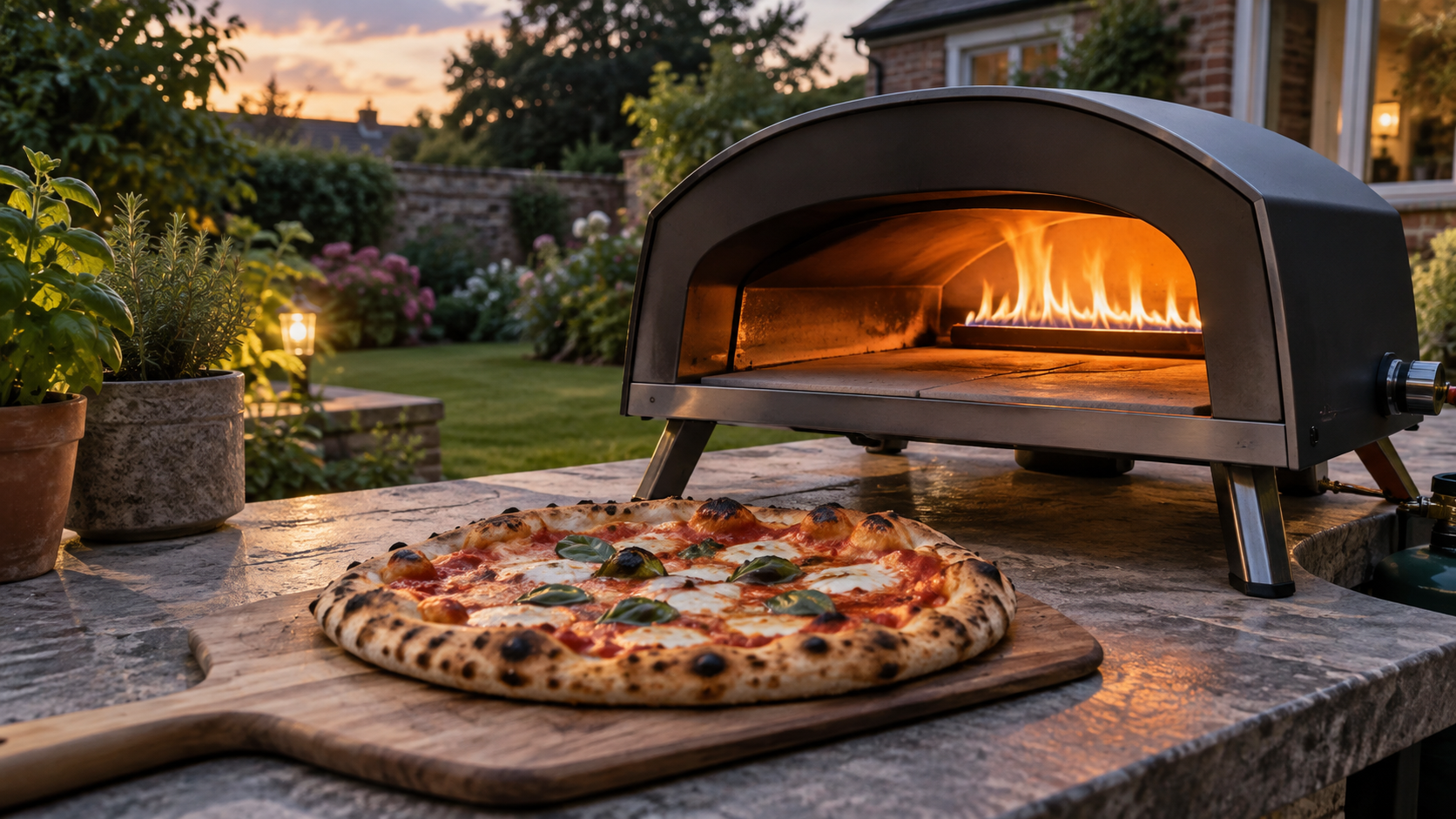
Few garden purchases have taken off in the UK quite like the portable pizza oven. Ten years ago, a proper pizza at home meant a brick oven costing thousands and a builder to install it. Today you can buy a 12-inch gas oven for around £250, set it on a patio table and be eating something close to Neapolitan pizza within half an hour.
The marketing, though, has run ahead of the reality. Almost every listing promises "500°C in 15 minutes" and "pizza in 60 seconds", and plenty of new owners end the first evening with a burnt top, a raw base and a pile of dough stuck to a peel. This guide explains how pizza ovens actually work, what the headline numbers really mean, which fuel suits a British garden, what it costs to run one, and how to match an oven to the way you will genuinely use it.
The 60-second answer
For most UK households, a 12-inch gas-fired pizza oven costing £250–£350 is the right first buy. Gas is easy to control, starts quickly, works in the wind and drizzle that define a British summer evening, and forgives beginners in a way wood does not.
Step up to a 16-inch oven (£450–£600) if you regularly cook for four or more, want room to turn pizzas easily, or plan to roast meat and vegetables as well. Choose wood or multi-fuel if the flavour and the ritual matter more to you than convenience. Consider an electric model only if you have no outdoor space or cannot use gas.
And treat "pizza in 60 seconds" as a best-case figure that depends on a fully heat-soaked stone, the right dough and practice — not something the oven delivers out of the box.
Do you actually need a pizza oven?
A domestic kitchen oven tops out at around 250°C. A good pizza oven cooks at 400–450°C on the stone, which is the difference between a crisp, blistered, leopard-spotted crust in 90 seconds and a pale, bready base in ten minutes. If that difference matters to you, no amount of pizza stones or steel plates in a kitchen oven fully closes the gap.
Three questions are worth answering honestly first.
How often will you use it? An oven used a dozen times a summer pays back quickly against takeaway prices. One used twice then left in the shed does not. Our honest verdict on whether pizza ovens are worth it works through the maths.
Are you prepared to learn? Pizza ovens have a learning curve. Dough handling, launching from the peel and turning the pizza every 15–20 seconds take a few sessions to master. Most people get there, but the first evening is rarely the best.
Do you have a safe outdoor spot? Pizza ovens are strictly outdoor appliances. You need a stable, heat-resistant surface in the open air, away from fences, sheds, overhanging branches and anything flammable.
The fuel types explained
The fuel you choose shapes everything else: how quickly you are cooking, how much attention the oven needs, how much it costs to run and what the pizza tastes like.
Gas (propane)
The mainstream choice in the UK, and the right one for most first-time buyers. A gas oven connects to a standard patio gas bottle via a regulator, lights at the turn of a dial and reaches cooking temperature in 15–25 minutes. The flame is adjustable, which matters enormously: you can turn it down to let the top catch up with the base, or back up between pizzas to let the stone recover.
The trade-off is flavour. Gas produces no smoke, so you get the texture of a wood-fired pizza without the subtle smoky note. Most people cannot tell the difference once the toppings go on; purists can.
Wood pellets
Pellet ovens burn compressed hardwood pellets fed from a hopper at the back. They are cheap to buy, reach high temperatures quickly and give genuine wood-fired flavour. They also need constant attention: the hopper must be topped up every few minutes, the fire can falter if the pellets are damp, and temperature is harder to control than with gas. Many pellet ovens now accept an optional gas burner, which is the best of both worlds.
Wood and charcoal
Burning split logs or charcoal is the most traditional and most characterful way to cook. It is also the most demanding. You need dry, kiln-dried hardwood, patience while the oven comes up to heat (often 30–45 minutes), and a feel for feeding the fire to keep a rolling flame across the roof of the oven. The reward is the most authentic flavour and the ritual that many owners say is half the point.
Multi-fuel
Multi-fuel ovens run on wood or charcoal, with a gas burner sold as an optional extra. They give you flexibility — gas for a quick midweek pizza, wood for a weekend session — at the cost of a higher price and a little more setup.
Electric
Electric pizza ovens have improved dramatically and can now reach 400°C or more on the stone. Some are designed for indoor worktop use. They are the only option for flats without outdoor space, and they are the easiest of all to control. The limitations are a lower ceiling on heat recovery between pizzas, a high purchase price at the top end and, of course, no flame or smoke. For a fuller comparison, see our guide to gas vs wood-fired pizza ovens.
| Fuel | Heat-up time | Ease of use | Flavour | Best for |
|---|---|---|---|---|
| Gas | 15–25 mins | Easiest outdoor option | Clean, no smoke | Beginners, busy households, windy gardens |
| Wood pellets | 15–20 mins | Needs constant feeding | Light smoky | Flavour on a budget |
| Wood / charcoal | 30–45 mins | Most demanding | Authentic wood-fired | Enthusiasts who enjoy the ritual |
| Multi-fuel | Depends on fuel | Flexible | Choice of both | People who want gas and wood |
| Electric | 20–30 mins | Very easy | Clean, no smoke | Flats, no outdoor space, indoor use |
Why "500°C" and "60-second pizza" mislead most buyers
This is the central myth of the pizza oven market. Nearly every oven is sold on a peak temperature — 500°C is the usual headline — and a cook time of a minute or so. Both figures are real in a narrow sense, and both routinely set new owners up to fail.
The first problem is what is being measured. The headline figure is usually the air temperature inside the dome, near the flame, at the hottest point. What actually cooks the base of your pizza is the stone, and the stone heats far more slowly than the air. After 15 minutes with the burner on full, the air might read 500°C while the centre of the stone is still at 300°C. Launch a pizza then and the top chars before the base has set.
The second problem is recovery. Every pizza you cook pulls heat out of the stone. A thin, lightweight stone in a budget oven can drop 80–100°C with one pizza and take several minutes to climb back. Cook four pizzas back-to-back and each is worse than the last. Thicker stones and better insulation recover faster, which is a large part of what you pay for in more expensive ovens.
The third problem is the dough. The 60-second figure assumes a Neapolitan-style dough at around 430–480°C, stretched thin and turned constantly. A thicker, New York-style dough or a home-made dough with sugar or oil in it will burn at those temperatures and needs a cooler oven and two to four minutes.
The practical fixes are simple. Buy an infrared thermometer (around £15–£25) and read the stone, not the built-in gauge. Preheat for longer than the manual suggests — 25–30 minutes for gas, longer for wood. Aim for a stone temperature of roughly 400–430°C for Neapolitan pizza. And turn the flame down to low for a minute before launching, so the top and base cook at the same rate.
What size pizza oven do you need?
Pizza ovens are sold by the largest pizza they can fit: usually 12 or 16 inches. The number describes the opening and the stone, not the pizza you will comfortably cook.
In a 12-inch oven, a 12-inch pizza fits with no margin at all. It is easy to catch the edge on the oven mouth and difficult to turn without scorching the crust against the flame. Most owners end up cooking 10-inch pizzas, which is fine for one or two people. A 16-inch oven lets you cook a 12-inch pizza with room to spare, turn it easily and keep it further from the flame. It also accommodates a cast-iron pan for steaks, fish and vegetables.
| Oven size | Comfortable pizza | Best for | Typical weight |
|---|---|---|---|
| 12-inch | 10–11 inch | Couples, small families, portability | 10–15kg |
| 16-inch | 12–14 inch | Families of four-plus, entertaining, roasting | 18–30kg |
| Dome / large | 14–16 inch | Semi-permanent setups, baking bread, slow cooking | 50kg+ |
A 16-inch oven uses more gas and takes a little longer to heat, but most owners who start with a 12-inch model wish they had gone bigger. Our comparison of 12 vs 16-inch pizza ovens goes into the trade-offs in more detail.
Budget bands: what your money buys
Under £150 — budget and unbranded
Thin steel bodies, minimal insulation and lightweight stones. Some will reach high air temperatures, but stone recovery is poor and cooking more than two pizzas in a row is frustrating. Fine for occasional summer use if expectations are modest; many owners upgrade within a year.
£200–£350 — the sweet spot for most
Where the mainstream 12-inch gas ovens and the better pellet ovens sit. You get decent insulation, a proper cordierite stone, a well-designed flame, reliable ignition and a brand with spare parts and accessories. For most households this is all the oven they will ever need.
£350–£600 — larger and more versatile
16-inch gas ovens, multi-fuel models and multi-function outdoor ovens that also smoke and roast. Better heat retention, more room to cook and generally better build quality.
£600–£1,000+ — premium and electric
Dome-style ovens with thick refractory floors and serious insulation, and the best electric ovens. These hold heat for long sessions, bake bread and roast joints after the pizza is done, and look like a permanent garden feature. Worth it for enthusiasts; overkill for occasional use.
The specifications that actually matter
Stone thickness and material
The stone is the heart of the oven. Cordierite is the standard material: it handles thermal shock well and holds heat. Thickness matters more than most buyers realise. A 10mm stone heats quickly but loses heat with every pizza; a 15–20mm stone takes longer to preheat but recovers far better and cooks a more even base. If a listing does not state stone thickness, assume it is thin.
Insulation
Better insulation means faster heat-up, better recovery, lower fuel use and a cooler outer shell. It is also the hardest spec to judge from a listing. Weight is a rough proxy: a heavier oven of the same size usually has more insulation and a thicker stone.
Burner or fire design
In gas ovens, the shape of the burner decides how evenly the heat rolls across the dome. A single rear burner creates a hot back and a cooler front, so you have to turn the pizza often. L-shaped or wrap-around burners spread the heat more evenly and make turning easier. In wood ovens, the airflow design decides how cleanly the fire burns and how steady the flame is.
Opening height
A low opening keeps heat in, which helps with pizza. A taller opening lets you fit cast-iron pans, roasting trays and bread tins. If you want the oven to do more than pizza, check the mouth height.
Portability and weight
A 12-inch oven at 10–15kg can be carried to a campsite or stored in a cupboard. A 16-inch oven at 25kg-plus is really a semi-permanent patio fixture. Folding legs and a carry cover make a real difference if you plan to move it.
Specs that are mostly marketing
Peak air temperature (almost every oven claims 500°C), built-in thermometers that read the air rather than the stone, and "ready in 15 minutes" claims that describe the air rather than the cooking surface. Judge an oven on stone thickness, insulation, flame design and after-sales support instead.
| Feature | How much it matters | What to look for |
|---|---|---|
| Stone thickness | High — drives recovery | 15mm or more, cordierite |
| Insulation | High | Heavier build, cool outer shell |
| Burner design | High for gas | L-shaped or wrap-around flame |
| Size | High | 16-inch if you cook for four or more |
| Opening height | Medium | Taller if you want to roast and bake |
| Portability | Depends on use | Folding legs, carry cover, under 15kg |
| Built-in thermometer | Low | Use an infrared thermometer instead |
| Peak temperature claim | Very low | Ignore it |
What a pizza oven costs to run
Running costs are modest compared with takeaways, but they vary by fuel. The figures below are typical estimates for a two-hour session including preheating; actual use depends on the oven, the weather and how hard you run it. Electricity is costed at around 26p per kWh, in line with the Ofgem price cap.
| Fuel | Typical fuel cost | Two-hour session (estimate) | Notes |
|---|---|---|---|
| Gas, 12-inch oven | Propane around £3 per kg | £2–£3 | A 13kg bottle lasts many sessions |
| Gas, 16-inch oven | Propane around £3 per kg | £3.50–£5.50 | Larger burner, more gas |
| Wood pellets | Around £1–£1.50 per kg | £3–£4 | Keep pellets dry |
| Kiln-dried logs | Varies by supplier | £4–£6 | Most variable cost |
| Electric | Around 26p per kWh | £1–£1.20 | Heater cycles once at temperature |
Put against a takeaway pizza at £12–£18, a family pizza night at home costs a few pounds in fuel and perhaps £5–£8 in ingredients. Our breakdown of pizza oven running costs compares gas, wood and electric across a full season.
Safety, smoke and the rules
Outdoors only. Gas, pellet, wood and charcoal ovens all produce carbon monoxide. Never use one indoors, in a garage, in a tent or under an enclosed gazebo. The NHS guidance on carbon monoxide poisoning explains the symptoms, which are easy to mistake for tiredness or a headache.
Gas bottles. Use the regulator and hose supplied or recommended by the manufacturer, check connections with soapy water for leaks, store bottles upright outdoors and turn the gas off at the bottle after every session. The HSE's guidance on LPG safety is a useful reference.
Placement. Set the oven on a stable, non-flammable surface such as stone, concrete or a steel table. Keep clear of fences, sheds, overhanging trees and anything that could catch a spark. The outer shell of cheaper ovens can get dangerously hot, so keep children and pets well back.
Smoke and neighbours. Wood and pellet ovens produce some smoke, particularly while lighting. The smoke control area rules mainly concern fuel burned in homes and chimneys, but persistent smoke that affects neighbours can still be treated as a nuisance by your council. Use dry, kiln-dried fuel, get the fire burning hot quickly and be considerate about wind direction.
Charring. Leopard spotting on the crust is part of the style, but heavily blackened areas are best trimmed. The Food Standards Agency's advice on acrylamide suggests aiming for golden rather than burnt with starchy foods.
The accessories that are actually worth buying
A pizza oven is only half the kit. Four accessories make a real difference, and together they cost £60–£120.
A launching peel. A wooden or perforated metal peel to slide raw pizza onto the stone. Perforated metal lets excess flour fall away and stops the base tasting burnt.
A turning peel. A small round peel for rotating the pizza inside the oven. In most ovens you need to turn every 15–20 seconds, so this is close to essential.
An infrared thermometer. The single most useful accessory. It tells you the real stone temperature, which is what decides whether your pizza works.
A cover. British weather will rust steel and crack stones that get wet then heated. A fitted waterproof cover, or storing the oven indoors, adds years to its life.
Getting good results quickly
Most first-night problems come from the dough and the launch, not the oven. A few habits shorten the learning curve considerably.
Use a simple Neapolitan-style dough (flour, water, salt, yeast) at around 60–65% hydration, and give it at least 24 hours of cold fermentation in the fridge. Stretch it by hand rather than rolling. Dust the peel with semolina rather than flour, build the pizza on the peel quickly and give it a shake before launching to check it slides. Keep toppings light, because wet, heavy toppings make a soggy centre. Turn the flame down just before launching, turn the pizza every 15–20 seconds, and give the stone a couple of minutes to recover between pizzas.
Maintenance
| Task | How often | Why |
|---|---|---|
| Burn off the stone | After every session | Run on high for 10 minutes to burn off spills |
| Brush the stone | Once cool | Remove ash and flour; never wash with soap |
| Empty ash (wood/pellet) | Every session | Ash restricts airflow and flame |
| Check gas hose and regulator | Start of season | Look for cracks and test for leaks |
| Clean the chimney and flue | Every few months | Soot build-up affects the draw |
| Cover or store indoors | Always when not in use | Rain rusts steel and cracks stones |
Stones will stain and darken over time. That is normal and does not affect cooking. Never pour water on a hot stone and never use detergent; the stone absorbs it and you will taste it in the next pizza.
How the main UK brands compare
These are general positioning notes based on published specifications, warranty terms and aggregated UK owner feedback, not our own laboratory testing.
Ooni
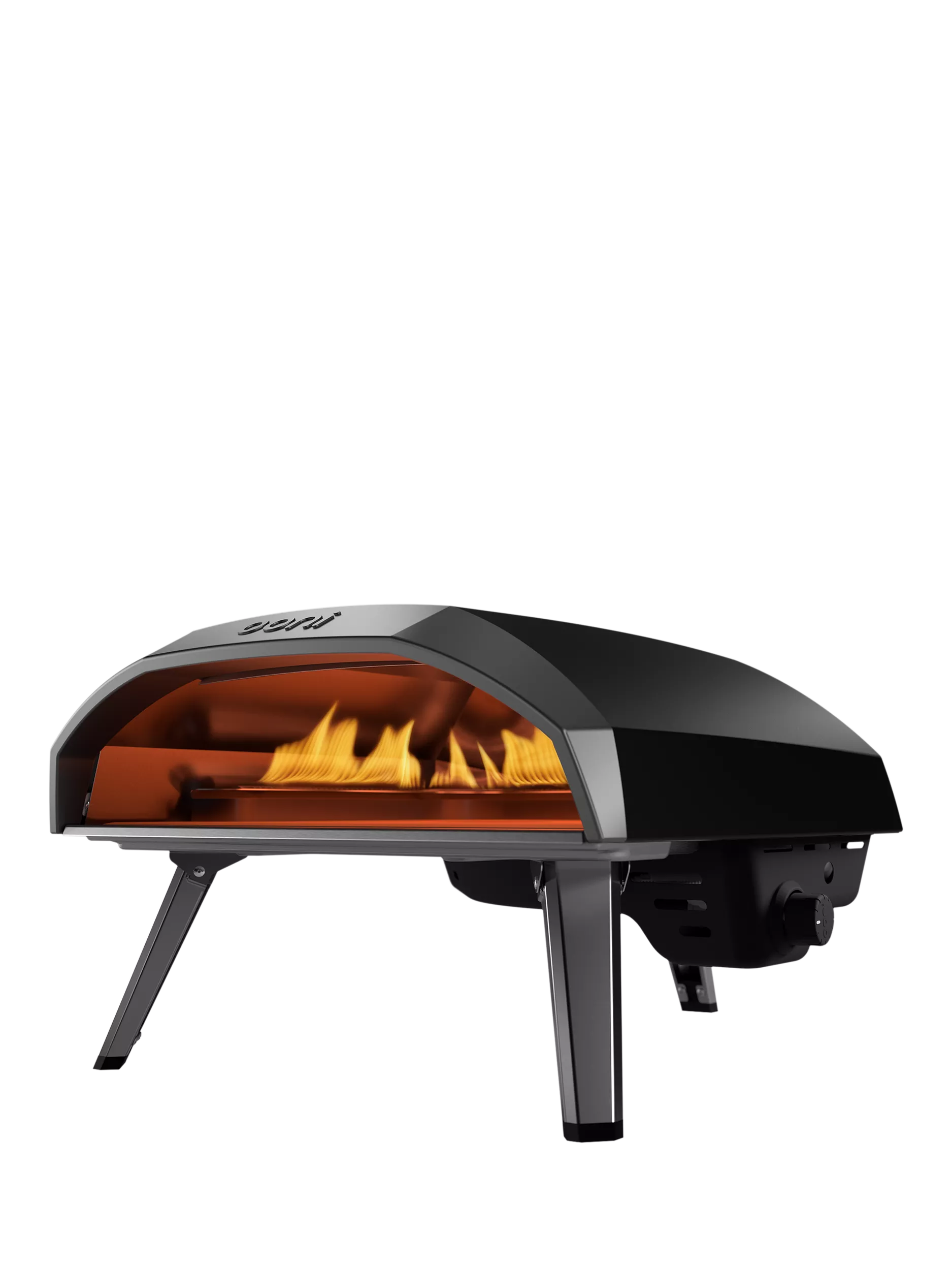
The brand that created the portable pizza oven market, and still the default choice. Ooni covers every fuel type and price point, from the compact Fyra pellet oven to the Koda gas range, the multi-fuel Karu and the Volt electric oven. Strong accessory range, good spare-part support and a large owner community for recipes and troubleshooting.
Gozney
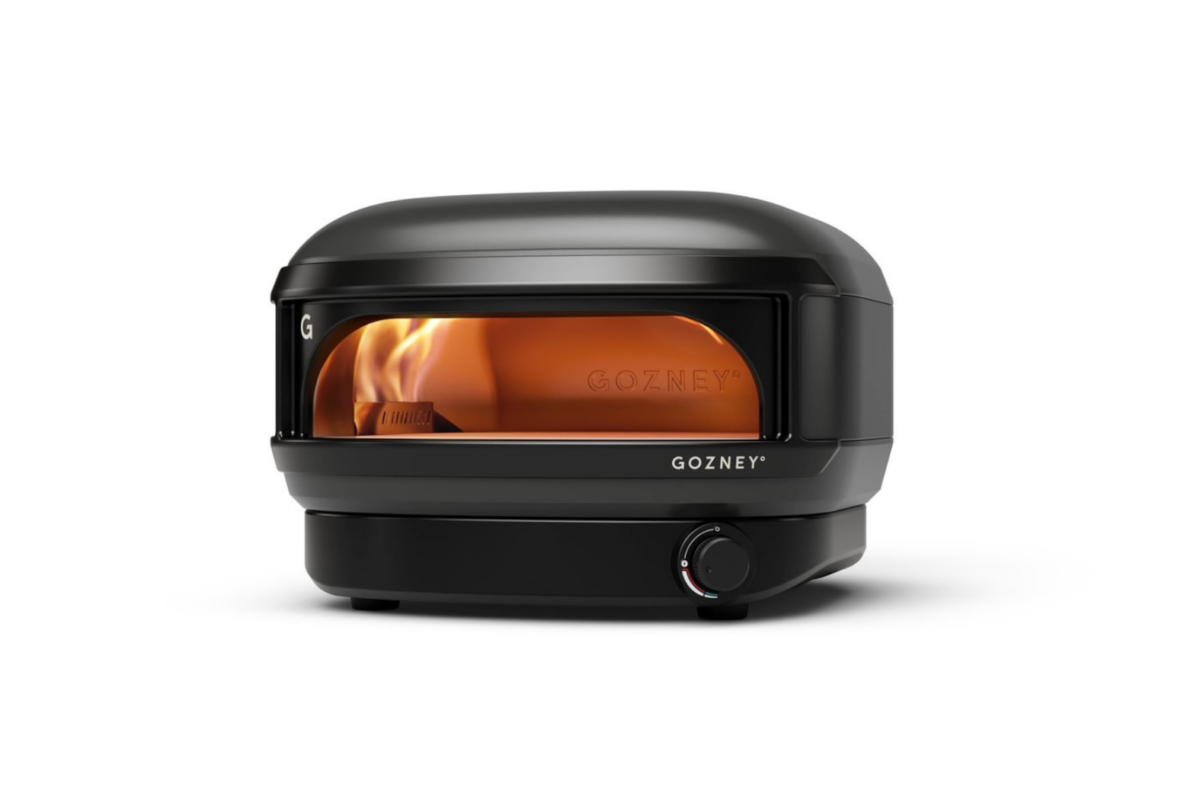
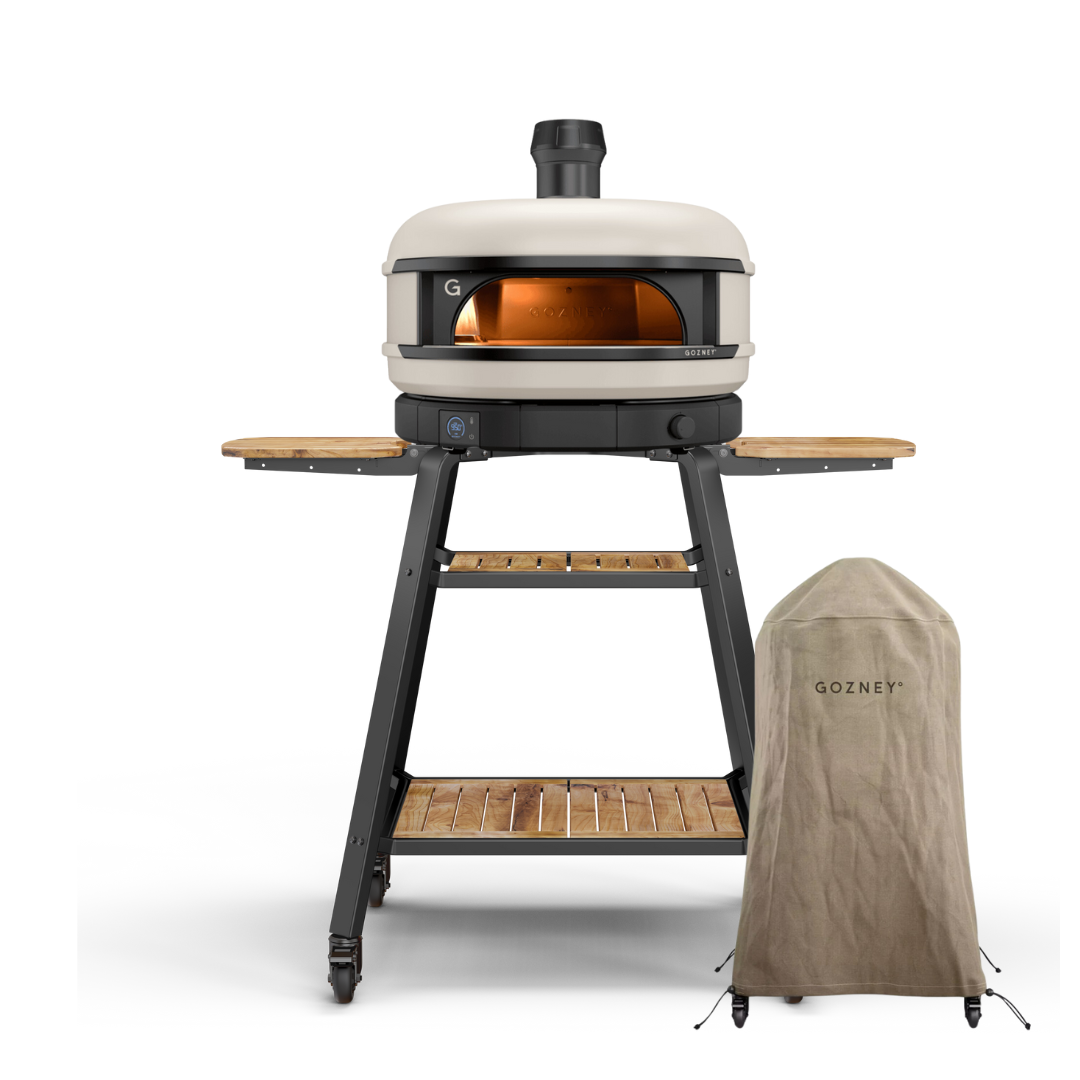
The premium alternative, known for heavier, better-insulated ovens with thick stones. The Roccbox and Arc compete with Ooni's mid-range; the Dome is a large, semi-permanent multi-fuel oven aimed at enthusiasts. You generally pay more, and in return get better heat retention and a more robust build.
Ninja
A different approach: the Woodfire range is a multi-function electric outdoor oven that also roasts, smokes and bakes, with wood pellets used only for flavour. It will not match a dedicated gas oven for peak heat and speed, but it is very easy to use and far more versatile. Our Ninja Woodfire vs Ooni comparison sets out who each suits.
Witt, Solo Stove and other mid-range brands
Several well-regarded brands compete in the £300–£600 gas oven space, often with good build quality and competitive specifications. Check stone thickness, UK parts availability and warranty terms before buying.
Budget and unbranded ovens
Marketplace ovens under £150 often look similar to the market leaders but use thinner steel, lighter stones and less insulation. They can work for occasional use, but recovery between pizzas is usually poor and spare parts are rarely available.
For independent testing, Which? reviews pizza ovens under controlled conditions, which is useful for comparing heat-up and consistency.
Seven mistakes to avoid
1. Trusting the built-in thermometer. It reads the air, not the stone. Buy an infrared thermometer.
2. Launching too early. A 15-minute preheat rarely gets the stone hot enough. Give it 25–30 minutes.
3. Buying a 12-inch oven for a family of five. You will be cooking one small pizza at a time for an hour. Go 16-inch.
4. Using too much flour on the peel. Excess flour burns on the stone and makes the base bitter. Use semolina, sparingly.
5. Overloading toppings. Heavy, wet toppings stop the centre cooking and make launching harder.
6. Using it under a gazebo or in a garage. Carbon monoxide and fire risk. Pizza ovens belong in the open air.
7. Leaving it out in the rain. Water ruins stones and rusts steel. Cover it or bring it in.
A four-question decision framework
1. Convenience or ritual? Convenience means gas or electric. Ritual and flavour mean wood, pellet or multi-fuel.
2. How many people do you cook for? One to three, 12-inch. Four or more, or regular entertaining, 16-inch.
3. Will it move? Camping and storage in a cupboard point to a light 12-inch oven. A permanent patio spot opens up heavier, better-insulated models.
4. Pizza only, or more? If you want to roast, bake and smoke too, look at larger ovens with taller openings or multi-function models.
The bottom line
For most UK households, a 12-inch gas pizza oven at £250–£350 from an established brand is the best first purchase, and a 16-inch model is worth the extra if you feed a family or entertain. Buy an infrared thermometer, a turning peel and a cover alongside it. Preheat for longer than you think, read the stone rather than the gauge, keep toppings light and turn the pizza often.
Do that, and ignore the 500°C headline, and a pizza oven becomes one of the most-used and best-value things in a British garden.
Frequently asked questions
Is a gas or wood pizza oven better?
Gas is better for most people: quicker to heat, easier to control and more forgiving in wind and drizzle. Wood gives a more authentic flavour and a more hands-on experience, but needs more skill and attention. Multi-fuel ovens let you use both.
Can I use a pizza oven in the rain?
Light drizzle is usually fine for a gas oven in use, but avoid heavy rain, and never let a cold stone get wet before heating, as it can crack. Do not move the oven under a gazebo or enclosed shelter to escape the rain, because of carbon monoxide and fire risk.
How long does a pizza oven take to heat up?
Most gas ovens reach cooking temperature on the stone in 20–30 minutes. Pellet ovens take around 15–20 minutes and wood-fired ovens 30–45 minutes. The air heats faster than the stone, so check with an infrared thermometer rather than trusting the clock.
What temperature should a pizza oven be?
For Neapolitan-style pizza, aim for a stone temperature of roughly 400–430°C. For thicker New York-style or home-made doughs with oil or sugar, around 300–350°C gives the base time to cook before the top burns.
Can you cook other food in a pizza oven?
Yes. Steaks, fish, vegetables, flatbreads and even whole joints cook well in a cast-iron pan. Larger ovens with taller openings are better for roasting and baking bread.
Is a 12-inch pizza oven big enough?
For one or two people, yes. In practice you will cook 10–11-inch pizzas in a 12-inch oven. For families of four or more, a 16-inch oven makes cooking faster and easier.
Why is my pizza base burnt but the top raw?
The stone is hotter than the dome. Let the stone settle to around 400–430°C, keep the flame high so the top catches up, and lift the pizza briefly towards the roof of the oven on the turning peel to finish the toppings. If the top burns before the base sets, the opposite applies: preheat the stone for longer and turn the flame down just before launching.
Do I need planning permission for a pizza oven?
A portable pizza oven on a patio does not need planning permission. A large built-in masonry oven or outdoor kitchen structure may be subject to permitted development rules, especially near boundaries or in conservation areas, so check with your local authority for permanent builds.