Event dates: Amazon Prime Big Deal Days runs in the UK on Tuesday 6 and Wednesday 7 October 2026, opening at 00:01 BST on the 6th. Deals are Prime-only. Every electricity figure below is costed at the Ofgem price cap average unit rate of 26.32p per kWh (1 October to 31 December 2026).
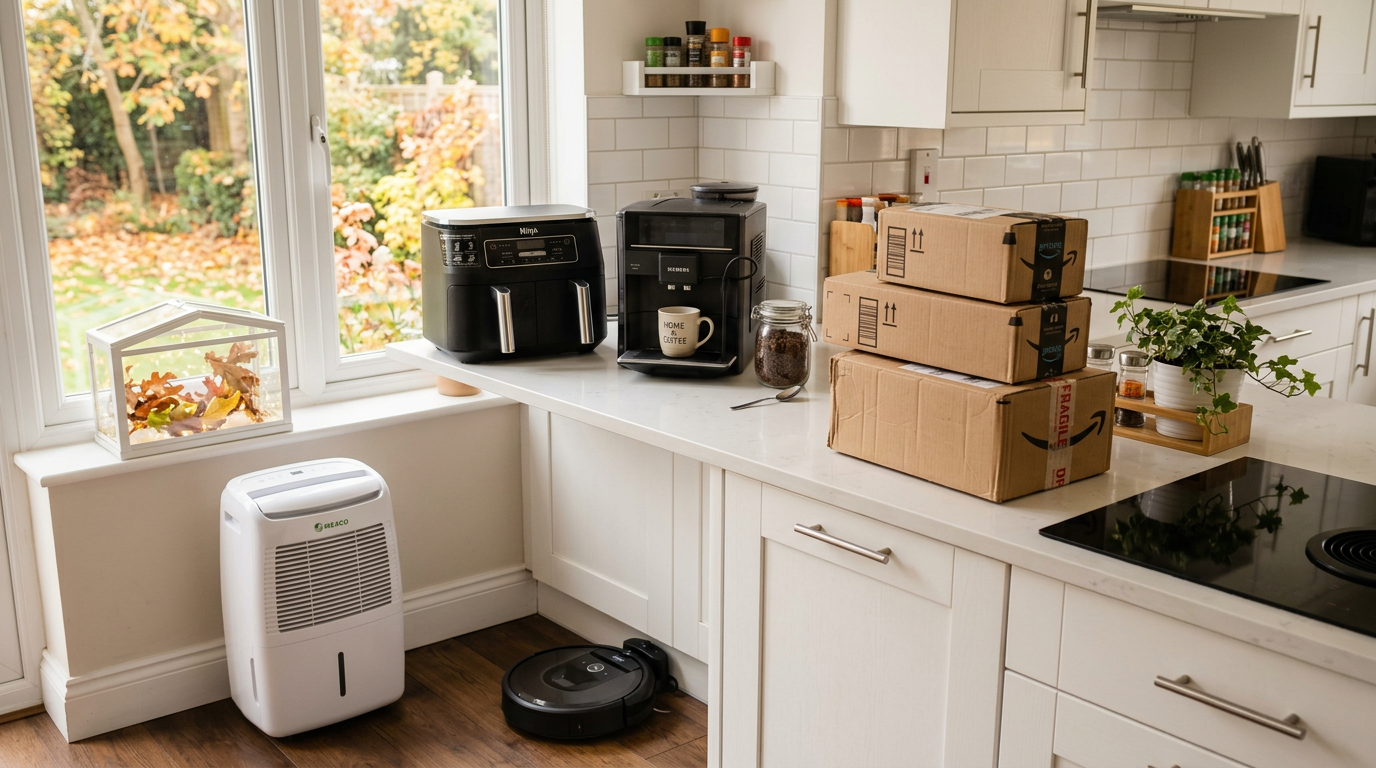
Prime Big Deal Days is Amazon's autumn sale — effectively a dress rehearsal for Black Friday, squeezed into 48 hours and restricted to Prime members. For home appliances it matters more than most people expect, because October is exactly when UK households start buying the things that get used all winter: air fryers, dehumidifiers, robot vacuums and coffee machines.
This guide is not a live deals feed. We do not show live prices and we do not run a price tracker. What follows is the part that does not change hour to hour: which models in each category are worth shortlisting, what a sensible price actually looks like, and the traps that catch people out in a two-day sale.
The 60-second version
- 6-7 October 2026, Prime members only. A free trial counts, and you can cancel it afterwards.
- Build your shortlist before the 6th. Two days is not long enough to research a £500 purchase properly.
- Check the price history on every deal with a tool such as CamelCamelCamel or PriceSpy. A discount only counts against what the product genuinely sold for over the preceding months.
- Match the exact model code. Appliance ranges are full of near-identical variants, and the one on offer is often the cut-down version.
- If it is not deeply discounted now, wait for Black Friday (27 November 2026). October is a warm-up; the deepest cuts usually land in late November. Our Black Friday buying guide covers that event.
- If you need it now, buy it now. Waiting seven weeks to save £25 on a dehumidifier while damp spreads is a false economy.
How to tell a real deal from a fake one in 60 seconds
Three checks, in this order:
- Price history. Paste the product URL into a price-history tool. If the "was" price only appeared for a fortnight in September, the saving is theatre. The Competition and Markets Authority has repeatedly warned retailers about reference pricing for exactly this reason.
- Model code. Compare the full code, not the marketing name. A robot vacuum sold without its auto-empty dock, or an air fryer with a smaller drawer, can carry almost the same name as the model you researched.
- Seller and warranty. Check whether it is sold by Amazon or a third party, and what the UK warranty is. Grey imports and short warranties are common on big-ticket garden items.
A fourth, slower check is worth it on anything over about £300: work out the running cost. A cheap machine with expensive consumables is not cheap. Every one of our category pages lists running costs alongside the purchase price.
Air fryers
Air fryers are the single most discounted kitchen category in UK sales, and October is when demand climbs again. The sale is where dual-zone models stop being a luxury.
What to shortlist: a dual-zone model if you cook for two or more people, because cooking a main and a side at different temperatures in one appliance is the feature people actually use. Single-drawer models from 4-5L are fine for one or two people and for reheating. Above about 9L total capacity you are into oven territory, and the footprint on a UK worktop becomes the real cost.
Features worth paying for: a genuinely usable sync-finish function, dishwasher-safe non-stick drawers, a window or light if you cook a lot of baked goods, and a clear display. Features to ignore: app connectivity, dozens of presets, and "XL" numbers that count the basket volume rather than the usable cooking area.
Running cost: a 1,700W air fryer used for 25 minutes costs roughly 19p at 26.32p per kWh — materially less than heating a full-size oven for an hour.
Shortlist from our best air fryers UK line-up, and read the air fryer buying guide if you are choosing between sizes. Our air fryer Black Friday guide explains how the November prices usually compare.
Robot vacuums
Robot vacuums give the largest cash savings of any category we cover, simply because they start high. A flagship self-emptying model is a four-figure list price in some ranges, and last year's version is where the value sits.
What to shortlist: the previous generation of a flagship, not the brand-new release. In practice the newest model usually adds obstacle-avoidance refinements and app features rather than better cleaning. Decide first whether you need an auto-empty dock (worth it if you have pets or shed a lot of hair) and whether you want mopping at all — most hybrid mops are fine for light kitchen floors and not a substitute for a proper mop.
Features worth paying for: LiDAR navigation, decent suction with a rubber or anti-tangle brush, a dock that is small enough to live somewhere sensible, and spare parts you can actually buy in the UK. Features to ignore: headline Pa suction numbers used as a single score, and "AI object recognition" claims with no independent evidence behind them.
Shortlist from our best robot vacuums UK line-up, or start with the robot vacuum buying guide. The robot vacuum Black Friday guide is worth a look before you commit in October.
Coffee machines
Bean-to-cup machines discount reliably, and bundles (beans, descaler, milk jug) are common in Amazon's autumn sale. This is also the category where buying the wrong type is most expensive.
What to shortlist: be honest about which of the three groups you are in. Pod machines are cheap, consistent and have the highest ongoing cost per cup. Bean-to-cup machines are the one-button answer for a household that drinks milky coffee and does not want to learn anything. Manual espresso machines plus a separate grinder give the best cup for the money but demand practice and a burr grinder you have budgeted for.
Features worth paying for: a steel burr grinder with usable grind adjustment, a removable brew unit you can rinse, and a proper steam wand if you care about milk texture. Features to ignore: bar-pressure numbers above about 9 bar (marketing), and one-touch recipe counts.
Shortlist from our best coffee machines UK line-up and read the coffee machine buying guide. The coffee machine Black Friday guide sets expectations for November.
Dehumidifiers
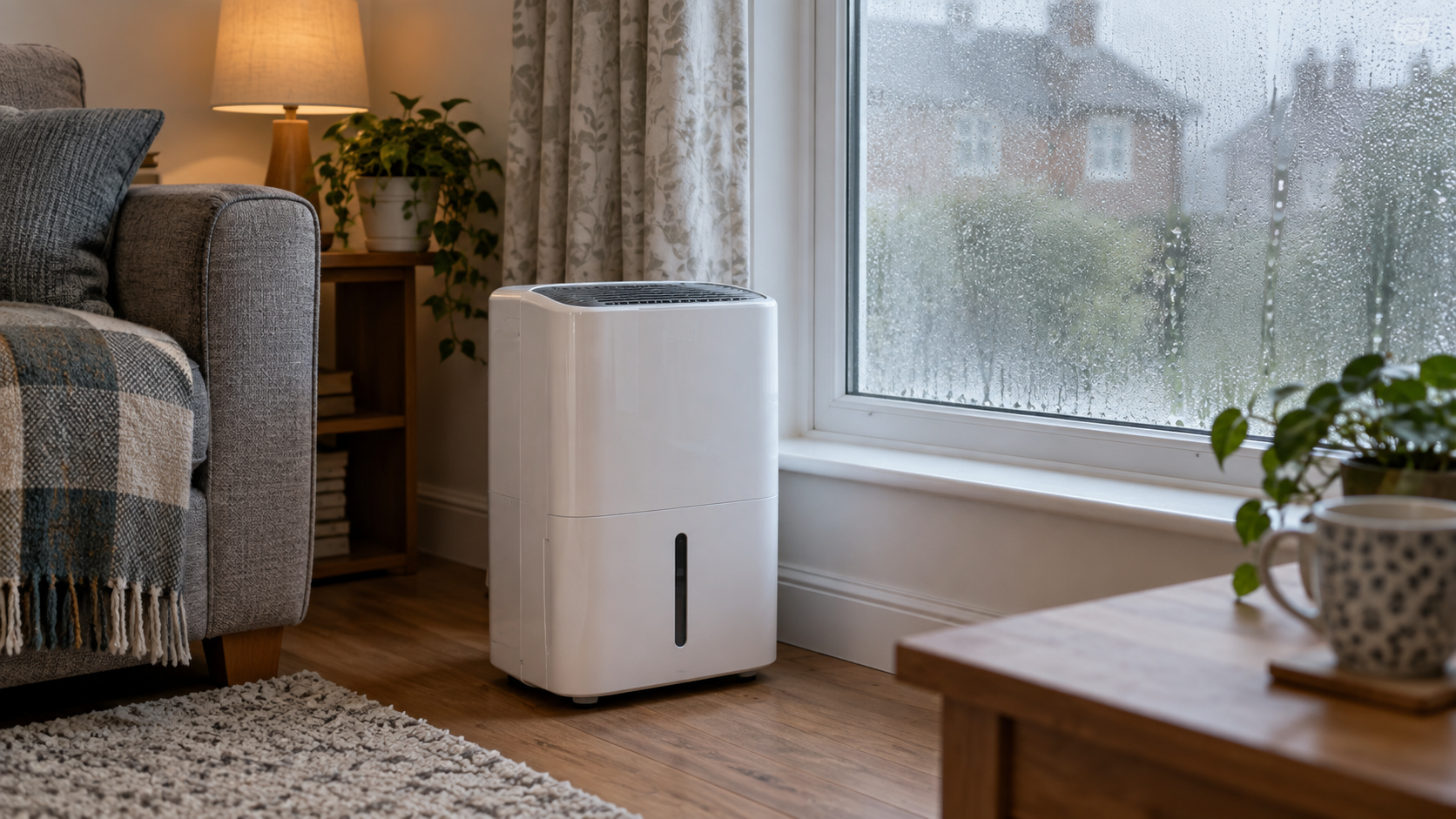
October is the start of UK damp season, which makes this the one category where buying in the autumn sale usually beats waiting. Prices firm up as condensation complaints rise, not down.
What to shortlist: for most UK homes a compressor model of 12-20L per day is the right answer. Desiccant models work better in unheated spaces such as garages, conservatories and cold hallways, but they draw far more power. Size the unit to the property and the damp level, not to the room.
Running cost at 26.32p per kWh: a typical compressor unit draws 150-255W, which is roughly 4-7p an hour. A desiccant unit at 500-670W is roughly 13-18p an hour. Over a wet winter that difference is the single biggest number in the decision, and it is why we would not put a desiccant unit in a heated living room.
Features worth paying for: a humidistat that actually cycles the machine off, a laundry mode, a continuous-drain port and a quoted noise figure in dB. Features to ignore: "ioniser" and UV claims, and extraction figures quoted at 30°C/80% rather than UK conditions.
Shortlist from our best dehumidifiers UK line-up, then read the dehumidifier buying guide, dehumidifier running costs and what size dehumidifier you need. If you are buying mainly to dry washing, best dehumidifier for drying clothes is the one to read, and dehumidifier vs heated airer compares it with the cheaper alternative.
Hot tubs
Inflatable hot tubs are an odd one in an October sale: the end-of-season clearance is genuine, but so is the fact that running one through a UK winter is expensive. Buy now only if you have decided you will use it in the cold.
What to shortlist: a model rated for winter use with a decent insulated cover and, ideally, a hard-wearing liner. Four-person tubs are the sweet spot for most gardens; six-person models cost meaningfully more to heat.
The cost that matters: heating, not purchase price. Winter running costs for an inflatable tub used regularly run into pounds per day rather than pence, which is why our hot tub running costs guide is the first thing we would read before buying one in October. Also check whether your garden can take the filled weight and where the nearest outdoor-rated RCD socket is.
Shortlist from our best inflatable hot tubs UK line-up and read the hot tub buying guide.
Pizza ovens
Pizza ovens are the clearest end-of-season bargain in the sale. Demand collapses in October, so autumn and winter are when the stock clears — and unlike hot tubs, a pizza oven costs nothing to own while it sits in the shed until spring.
What to shortlist: gas if you want to cook on a weeknight, wood or dual-fuel if the process is part of the appeal. A 12in oven suits most households; 16in models are for people cooking for a crowd and are much heavier to move.
The spec that matters: stone thickness and insulation, not headline peak temperature. The "500°C in 20 minutes" figure is dome air temperature — the stone lags well behind it, and a thin stone loses 80-100°C per pizza. An infrared thermometer is the accessory that actually improves your results.
Shortlist from our best pizza ovens UK line-up and read the pizza oven buying guide.
Prime Big Deal Days vs Black Friday: which should you wait for?
| Category | Buy in October? | Why |
|---|---|---|
| Dehumidifiers | Yes | Damp season is starting. Prices tend to firm up, not fall, through November, and the appliance earns its keep immediately. |
| Pizza ovens | Yes | End-of-season clearance. Nothing is lost by storing it until spring. |
| Hot tubs | Only if you will use it in winter | Genuine clearance pricing, but winter heating costs dwarf the saving if it sits unused. |
| Air fryers | Maybe | Discounts are real in October but usually deeper on Black Friday. Buy now if you need one; otherwise shortlist and wait. |
| Robot vacuums | Usually wait | The largest cash savings of the year normally land in late November on last-generation flagships. |
| Coffee machines | Usually wait | Bundles appear in October, but bean-to-cup list prices typically drop furthest in the Black Friday week. |
Five mistakes people make in a 48-hour sale
- Researching during the sale. Countdown timers are designed to stop you comparing. Do the reading now.
- Buying on percentage, not price. "60% off" on an inflated list price is worse value than 20% off a product that was fairly priced to begin with.
- Ignoring the model code. The discounted variant is frequently missing the dock, the second drawer or the cover.
- Forgetting running costs. At 26.32p per kWh, a desiccant dehumidifier left running all winter can cost more than the machine did.
- Assuming returns are harder in a sale. They are not: online purchases normally carry a 14-day cancellation right under the Consumer Contracts Regulations, and the Consumer Rights Act applies to faulty goods whatever you paid. Which? consumer rights has the detail.
The bottom line
Treat 6-7 October as a shortlisting deadline rather than a shopping event. Decide the model, write down the price you would be happy to pay, and then check it against the price history when the sale opens. If the number is there, buy; if it is not, our Black Friday guide will be updated before 27 November. The two categories we would genuinely buy in October are dehumidifiers, because you need them now, and pizza ovens, because nobody else wants one in the rain.
Frequently asked questions
When is Amazon Prime Big Deal Days 2026 in the UK?
Tuesday 6 and Wednesday 7 October 2026, starting at 00:01 BST on 6 October. It is Amazon's autumn Prime-exclusive sale and runs for 48 hours.
Do you need Prime for Big Deal Days?
Yes — the deals are restricted to Prime members. A free trial qualifies, and you can cancel before it renews if you only want access to the sale.
Are Prime Big Deal Days discounts better than Black Friday?
Generally not. In our experience of these events the October sale is a warm-up: discounts are real but usually shallower than late November, especially on robot vacuums and bean-to-cup coffee machines. The exceptions are seasonal clearance lines such as pizza ovens and hot tubs, and dehumidifiers, which tend to get more expensive as winter demand builds.
Do you show live prices for these deals?
No. Prices change by the hour during a 48-hour sale, and we do not run a price-history tracker. We publish the research that does not change — which model suits which home, what a realistic price looks like and how to check a deal — and you confirm the current price on the retailer's site.
How can I check if a Prime Big Deal Days price is actually a good one?
Paste the product link into a price-history tool such as CamelCamelCamel or PriceSpy and look at the previous six months. Then confirm the full model code matches the one you researched, and check whether the item is sold by Amazon or a third-party seller.
Which home appliances are worth buying in October rather than November?
Dehumidifiers, because UK damp season is starting and prices tend to firm up through the winter, and seasonal clearance items such as pizza ovens. Air fryers, robot vacuums and coffee machines usually see their deepest cuts on Black Friday.
Can I return something bought in Prime Big Deal Days?
Yes. Online purchases normally come with a 14-day cancellation period under the Consumer Contracts Regulations, and your rights under the Consumer Rights Act apply to faulty goods regardless of the discount. Check the retailer's own policy as well, since many extend returns in the run-up to Christmas.
How much does it cost to run the appliances in this guide?
At the Ofgem average unit rate of 26.32p per kWh for 1 October to 31 December 2026: an air fryer costs roughly 19p for a 25-minute cook, a compressor dehumidifier 4-7p an hour, a desiccant dehumidifier 13-18p an hour, and a robot vacuum a few pence per clean. Inflatable hot tubs are the outlier, costing pounds per day to heat through a UK winter.