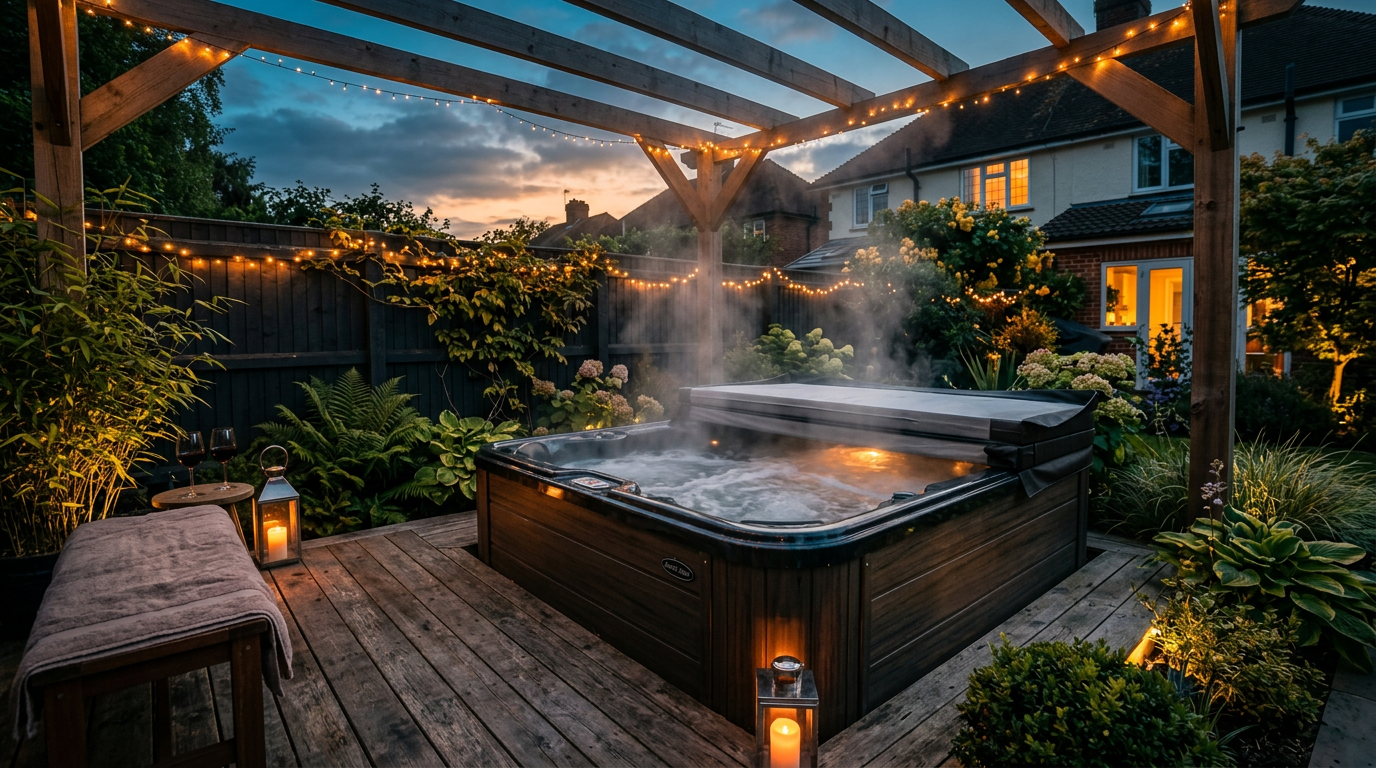
It's the question every prospective buyer asks, and the one most hot tub retailers are surprisingly vague about. The honest answer is that a typical hot tub in the UK costs between £30 and £90 per month to run — but that range hides a lot of important detail. A well-insulated modern spa used a few times a week sits at the lower end. An older or inflatable model left running through a cold January can easily double that.
Below we break down exactly where the money goes, what drives the cost up or down, and the practical changes that make the biggest difference to your bill.
The short answer
Most modern, well-insulated hard-shell hot tubs use 3–6 kWh of electricity per day to keep the water at temperature. At a typical UK electricity rate of around 25p per kWh, that works out at roughly:
| Daily usage | Per day | Per month | Per year |
|---|---|---|---|
| 3 kWh (efficient, summer) | £0.75 | ~£23 | ~£274 |
| 4.5 kWh (typical, year-round average) | £1.13 | ~£34 | ~£411 |
| 6 kWh (winter, regular use) | £1.50 | ~£46 | ~£548 |
| 10 kWh (poorly insulated / inflatable in winter) | £2.50 | ~£76 | ~£913 |
Figures are illustrative estimates based on a 25p/kWh electricity rate. Your actual cost will depend on your tariff, your tub, and how you use it.
Electricity is only part of the story
Running costs go beyond the meter reading. A realistic all-in monthly budget for hot tub ownership in the UK looks something like this:
- Electricity: £25–£90 per month. The single biggest cost, and the one most affected by insulation and season.
- Chemicals: £20–£45 per month. Chlorine or bromine, pH balancers, shock treatment and test strips.
- Filters: £40–£120 per year. Most tubs need filter cartridges replaced every 12 months, sometimes more often with heavy use.
- Servicing: £150–£200 per year. An annual professional service, or £25–£50 a month on a service plan.
- Water: £10–£30 per refill. Most owners drain and refill every three to four months.
Add it all up and a sensible all-in figure for most UK households is £55 to £150 per month.
What actually drives the cost
1. Insulation quality — the biggest factor by far
This is where cheap tubs get expensive. Full-foam insulation, where the entire cabinet cavity is filled with expanding foam, retains heat dramatically better than perimeter insulation, which only lines the outer walls. Full-foam models typically cut heating costs by 25–35% compared with perimeter-insulated equivalents.
2. Your cover
Up to 75–90% of a hot tub's heat loss happens through the water surface. A thick, tapered, well-fitting cover in good condition is the cheapest efficiency upgrade you can make. If your cover is waterlogged, sagging in the middle, or no longer seals at the edges, replacing it will pay for itself surprisingly quickly.
3. Hard-shell versus inflatable
Inflatable tubs have a much lower purchase price, but they are considerably less efficient to run. In cold weather an inflatable can cost 40–60% more per month than a well-insulated rigid tub, sometimes topping £150 in the depths of winter. If you plan to use your tub year-round, a hard-shell model is usually cheaper over its lifetime despite the higher upfront cost.
4. Season and location
Expect to pay roughly £20–£40 a month in summer and £40–£150 in winter. An exposed, windy garden loses heat faster than a sheltered corner — a fence, hedge or gazebo genuinely reduces your bill. If you're weighing up whether to keep yours running through the colder months or drain it entirely, our guide to whether to leave your hot tub empty over winter covers the pros, cons and step-by-step draining instructions.
5. Your electricity tariff
If you can shift heating cycles to off-peak hours on an Economy 7 or agile tariff, you can knock 20–30% off the annual electricity cost without changing anything about the tub itself.
Should you switch it off between uses?
No — and this is the mistake that costs people the most money. It feels intuitive that turning the tub off when you're not using it must save energy, but reheating a full tub from cold takes a large, sustained power draw over many hours. Maintaining a steady temperature under a good cover uses far less energy overall.
The exception is a genuinely long absence. If you're away for several weeks in mid-summer, draining or shutting down can make sense. For anything shorter, leave it running.
Seven ways to cut your running costs
- Upgrade a tired cover. The single highest-impact fix if your existing one is worn.
- Add a floating thermal blanket. A £20–£40 accessory that sits directly on the water under the cover and noticeably reduces evaporation losses.
- Drop the temperature by 1–2°C. Going from 40°C to 38°C is barely noticeable in the water but meaningfully cheaper.
- Shelter the tub. A fence panel, hedge or gazebo on the windward side reduces convective heat loss.
- Clean your filters monthly. Clogged filters make the pump work harder and reduce circulation efficiency.
- Move heating to off-peak hours. Use the tub's built-in scheduling with an Economy 7 or agile tariff.
- Consider an air-source heat pump. A significant upfront cost, but heat pumps can cut heating electricity by 70–80% and pay back over a few years if you use the tub heavily.
Is a hot tub worth the running cost?
At roughly £40 a month for a typical well-insulated model, a hot tub costs about the same as a mid-range gym membership or a couple of takeaways — for something you can use every single day, in your own garden, whenever you like.
The key is buying the right tub in the first place. A cheap, poorly insulated model will cost you more every month for as long as you own it, and those savings on the purchase price disappear within a couple of years. Insulation quality, cover design and heating efficiency are the specifications that matter most — and they're exactly what we weigh most heavily in our reviews. If you're choosing between the two market leaders, our Lay-Z-Spa vs CleverSpa comparison shows how a £100 price gap translates to measurably different running costs. It's also worth thinking about the total cost of ownership over the tub's life — we've broken down how long inflatable hot tubs actually last and what determines whether yours gets three years or seven. And if you're still deciding whether to take the plunge at all, our honest verdict on whether inflatable hot tubs are worth it weighs up every angle.