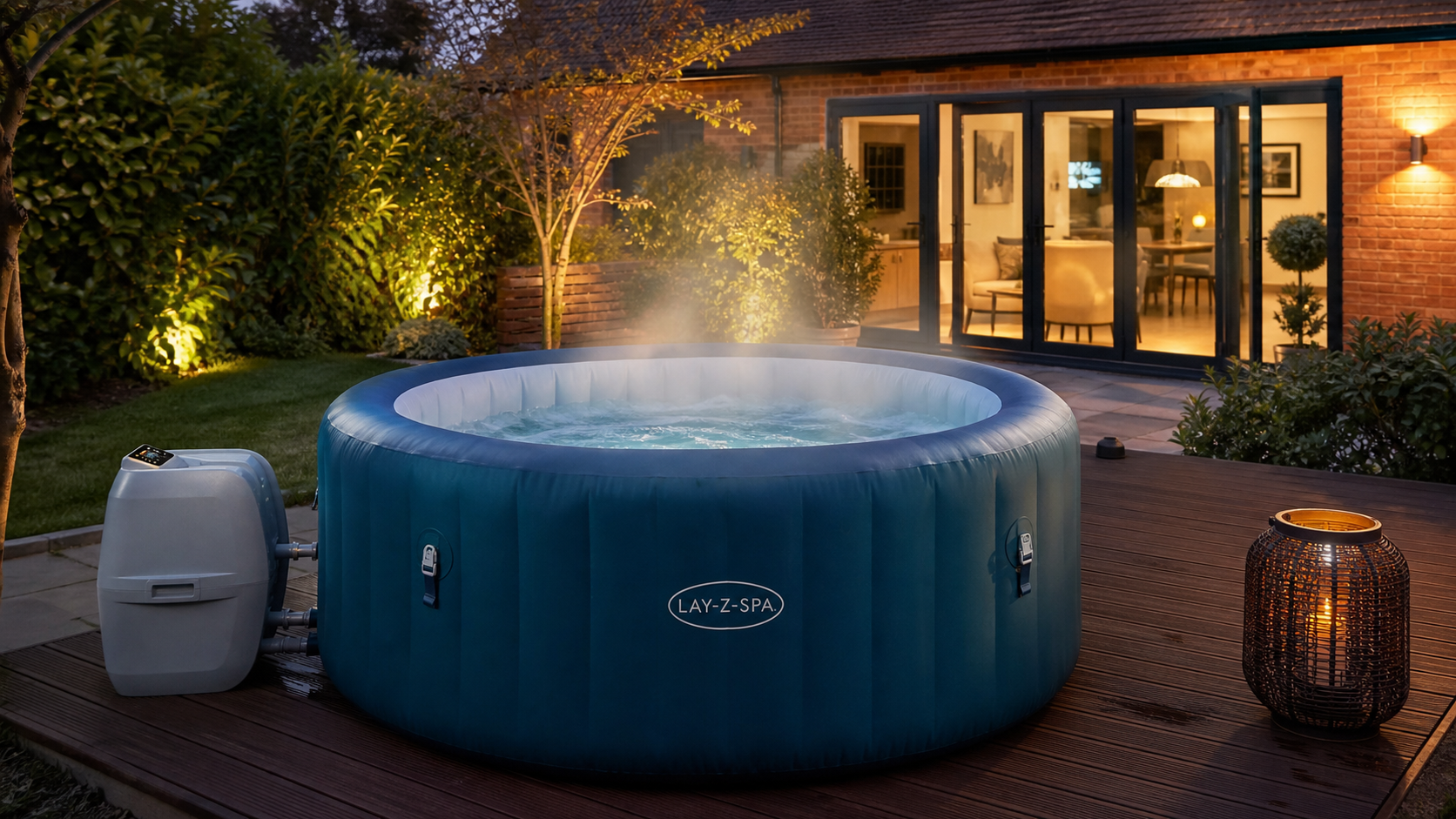
Every spring the same question floods search engines and garden forums: is an inflatable hot tub actually worth the money, or is it one of those impulse buys that ends up deflated in the shed by September? After researching every major model on the UK market, reviewing independent test data and analysing hundreds of verified owner reports, the honest answer is that it depends entirely on what you expect from one. This guide gives you the real picture — what they do well, what they do badly, and how to decide whether one belongs in your garden.
Five genuine reasons an inflatable hot tub is worth it
1. The price of entry is remarkably low
A decent inflatable hot tub costs between £300 and £600. The Lay-Z-Spa Cancun starts at around £299, while a mid-range model like the Lay-Z-Spa Paris Luxe with LED lights comes in at £429. Compare that to a hardshell hot tub at £3,000 to £8,000 plus installation, and the inflatable route is an entirely different financial commitment. If you are not sure whether a hot tub suits your lifestyle, spending £350 to find out is a lot less painful than spending £5,000.
2. No installation, no electrician, no planning
You unbox it, inflate it with the built-in pump, fill it with a garden hose, and plug it into a standard 13A socket. There is no need for a dedicated electrical supply, no concrete base (though a flat, level surface is essential), and no planning permission. The whole setup takes about an hour, and you can have it running and heating that same evening. If you rent, or if you move house regularly, this flexibility is a genuine advantage over a permanent installation.
3. You can put it away when you are not using it
An inflatable tub deflates, drains and folds back into its box. If you only want it for the summer months, you can reclaim the garden space in winter rather than staring at a covered hulk on the patio for six months. That said, plenty of people do run them year-round — our guide to whether to leave a hot tub empty over winter covers the practicalities of both approaches.
4. They genuinely help with relaxation and recovery
Warm water and jets are not a gimmick. Sitting in 37–40°C water for 20 minutes after a long day loosens tight muscles, eases joint stiffness, and is one of the most reliably effective ways to unwind that does not involve a bottle of wine. If you have a physically demanding job — or three dogs that need walking twice a day — an evening soak makes a noticeable difference to how you feel the next morning.
5. They are a genuinely social purchase
A hot tub in the garden changes how you use your outdoor space. Barbecues last longer, evenings with friends stretch later into the year, and teenagers who normally vanish into their rooms actually come outside. It is one of the few purchases in the home and garden space that the whole household tends to use rather than just one person.
When an inflatable hot tub is not worth it
You want powerful massage jets
Inflatable hot tubs use air jets, not the pressurised water jets found in hardshell models. Air jets create a pleasant bubbling sensation, but they do not deliver the targeted, deep-tissue massage that a £5,000 spa does. The top-end Lay-Z-Spa Santorini HydroJet Pro bridges the gap with a hybrid HydroJet system, but even that is closer to a vigorous fizz than a sports massage. If therapeutic hydrotherapy is the main reason you want a hot tub, an inflatable will disappoint you.
You are not prepared for the running costs
Heating an inflatable hot tub from cold to 37°C takes 12 to 24 hours and can cost £5 to £8 in electricity each time. Keeping it at temperature costs roughly £7 to £15 a week depending on the season, insulation and how often you use it. Over a year of continuous use, budget £400 to £700 in electricity alone. That is the running cost most people underestimate. We broke down the exact figures in our hot tub running cost guide.
You do not want the maintenance
A hot tub is a small pool of warm, still water — the perfect breeding ground for bacteria if left unchecked. You need to test and adjust the water chemistry (pH and sanitiser) two to three times a week, change the filter regularly, and do a full drain and clean every four to eight weeks. It takes about ten minutes each time, but it is a non-negotiable commitment. Skip it, and the water turns cloudy, the tub develops biofilm, and in a worst case you risk infections. The NHS guidance on Legionnaires' disease is a useful reminder of why hot tub hygiene matters.
Your garden is exposed or very small
An inflatable tub on an unsheltered patio loses heat rapidly in wind, which pushes running costs up and makes winter use uncomfortable. You also need space around the tub for the pump unit, a path to drain it, and room to get in and out safely. A small, exposed balcony or a narrow courtyard can make the whole experience more hassle than it is worth.
What an inflatable hot tub does well vs what it does badly
| Does well | Does badly |
|---|---|
| Affordable entry point (£300–£600) | Weak jets compared to hardshell spas |
| No installation or electrician needed | Slow to heat from cold (12–24 hours) |
| Portable — deflate and store when not in use | Higher running costs than a well-insulated hardshell |
| Genuine relaxation and social value | Regular water chemistry maintenance required |
| Fits renters and people who move often | Less durable — typically lasts 3 to 5 years |
How much should you spend?
- Under £350: Entry-level models like the Cancun and the Miami. Perfectly functional, but fewer jets, basic insulation, and no extras. CleverSpa's budget range sits here too — our Lay-Z-Spa vs CleverSpa comparison weighs whether the £100 saving is worth the trade-offs in durability and running costs.
- £350–£550: The sweet spot. The Boracay Smart Signature and Ibiza add better insulation, more jets, and app control. This is where most buyers should land.
- £550–£900: Premium inflatables. The Helsinki Smart and the Santorini HydroJet Pro push the format as far as it goes, with freeze shields for winter use and the closest thing to real massage jets you will find in an inflatable.
The independent testing at Which? is worth checking for heating times and insulation ratings — the manufacturer's stated "ready in 12 hours" can be optimistic in a British spring.
How long do they last?
Expect 3 to 5 years from a well-maintained inflatable hot tub. The pump and heater are usually the first things to go, and replacement parts for Bestway Lay-Z-Spa models are widely available. The tub liner itself can develop slow punctures over time, though repair kits handle most of these. Our inflatable hot tub lifespan guide covers what wears out first and how to extend the life of each component.
The verdict
An inflatable hot tub is worth it if you want affordable, low-commitment access to a genuinely relaxing experience and you are prepared to spend ten minutes a few times a week on water chemistry. It is not worth it if you expect powerful massage jets, you are not willing to pay the running costs, or your garden is too small or exposed to make it practical.
For most UK households, the sweet spot is a mid-range model in the £350 to £550 bracket, run from spring to autumn, with a good-quality thermal cover and a sheltered spot on the patio. At that level, the cost per soak works out at a couple of pounds — less than a coffee — and the quality-of-life return is hard to beat in the home and garden space.
Ready to choose a model? Our full inflatable hot tub reviews compare every model we test on heating speed, jet performance, insulation and running cost, so you can find the one that fits your garden and your budget.