A countertop water dispenser filters tap water and serves it hot for drinks, at room temperature, or (on models with a cooler) properly chilled, with no kettle and no plumbing. They suit busy family kitchens, home offices and anyone making a lot of hot drinks.
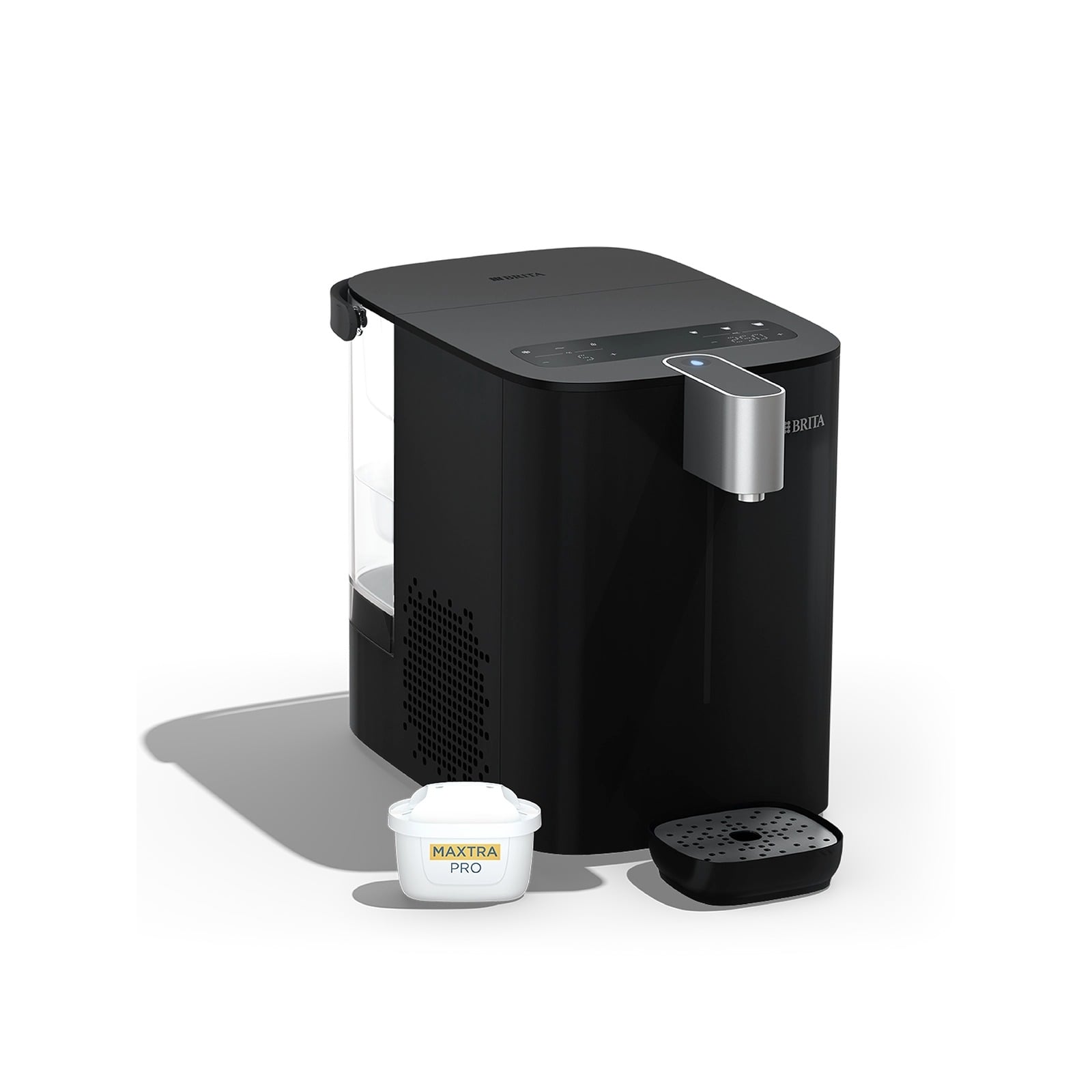
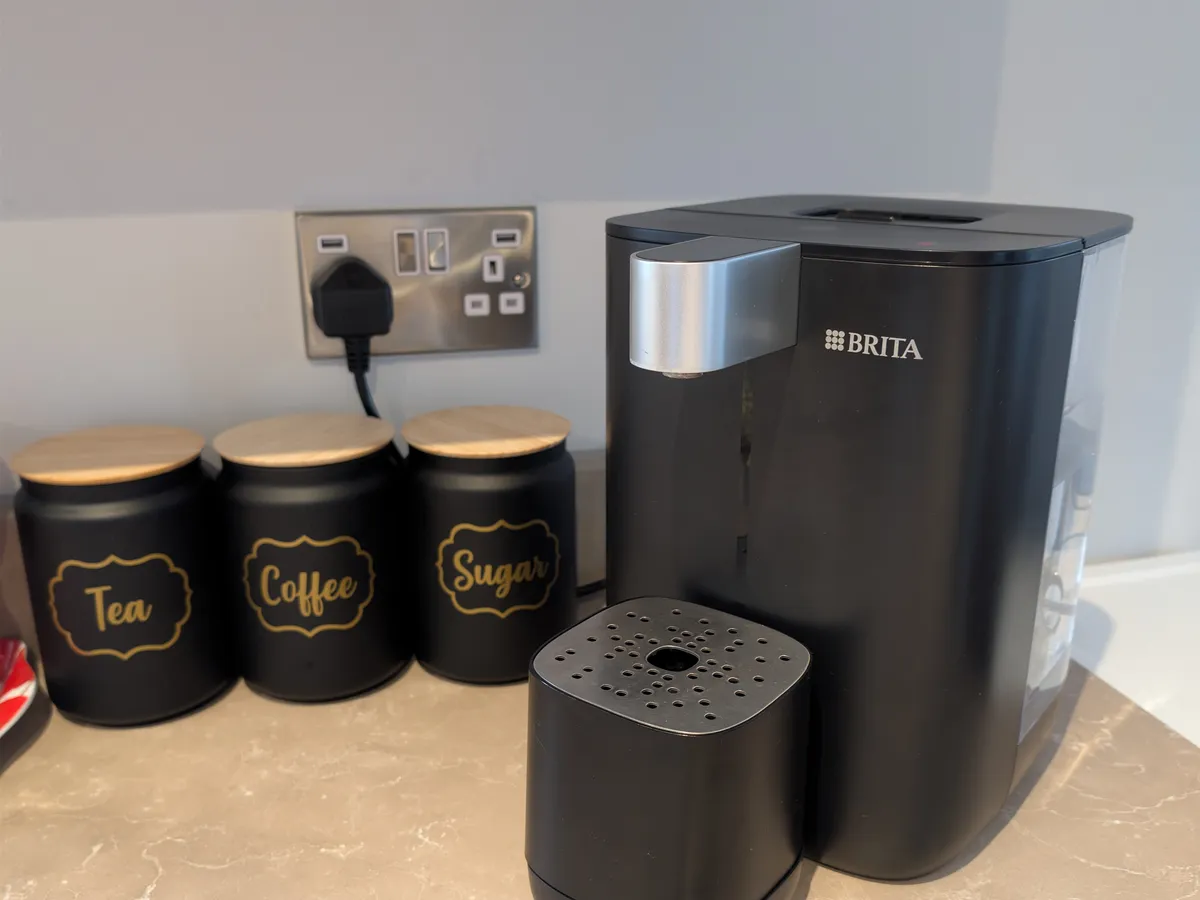
The biggest difference between models is chilling. Some, like the BRITA YOURCE I own, only give filtered water at room temperature plus hot water. Others have a built-in cooler. Because this is a hot and cold guide, models that genuinely chill rank higher. Filtration is the other big split: carbon-style filters (BRITA, Philips) improve taste and reduce limescale, while reverse osmosis (Waterdrop, Osmio) filters much more finely but sends some water to a waste tank.
This comparison is mostly research-led: it uses manufacturers' published specifications, retailer prices and owner feedback. The one exception is the BRITA YOURCE, which I own and use every day at home, so that review includes my own first-hand experience. Prices were last checked on 11 October 2026 and change often.
Chilled or ambient: check this first
Many dispensers sold as "hot and cold" only give room-temperature filtered water. That is how my BRITA YOURCE works: the water tastes excellent, but it is not as cold as I personally like. If ice-cold water matters, check the product listing mentions a cooler or a temperature around 5-10°C.
Filters, tank size and running costs
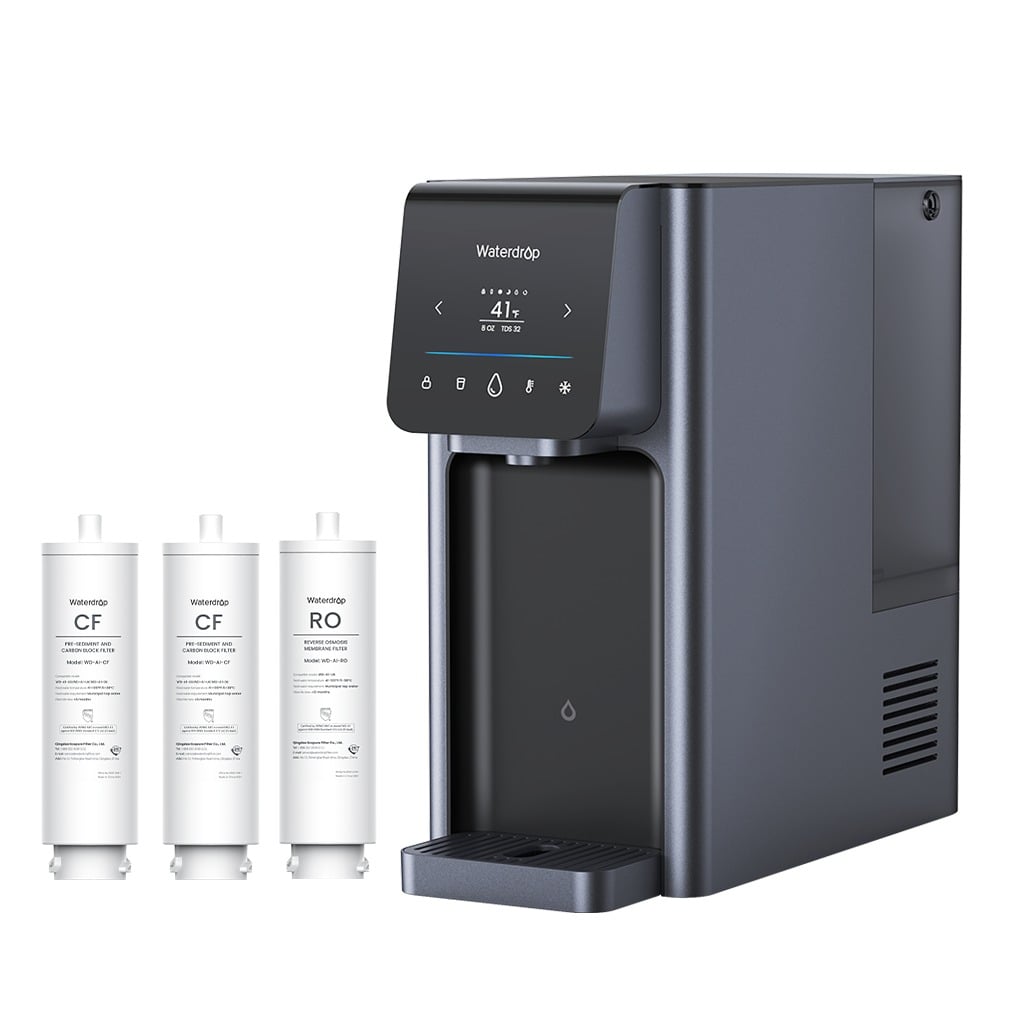
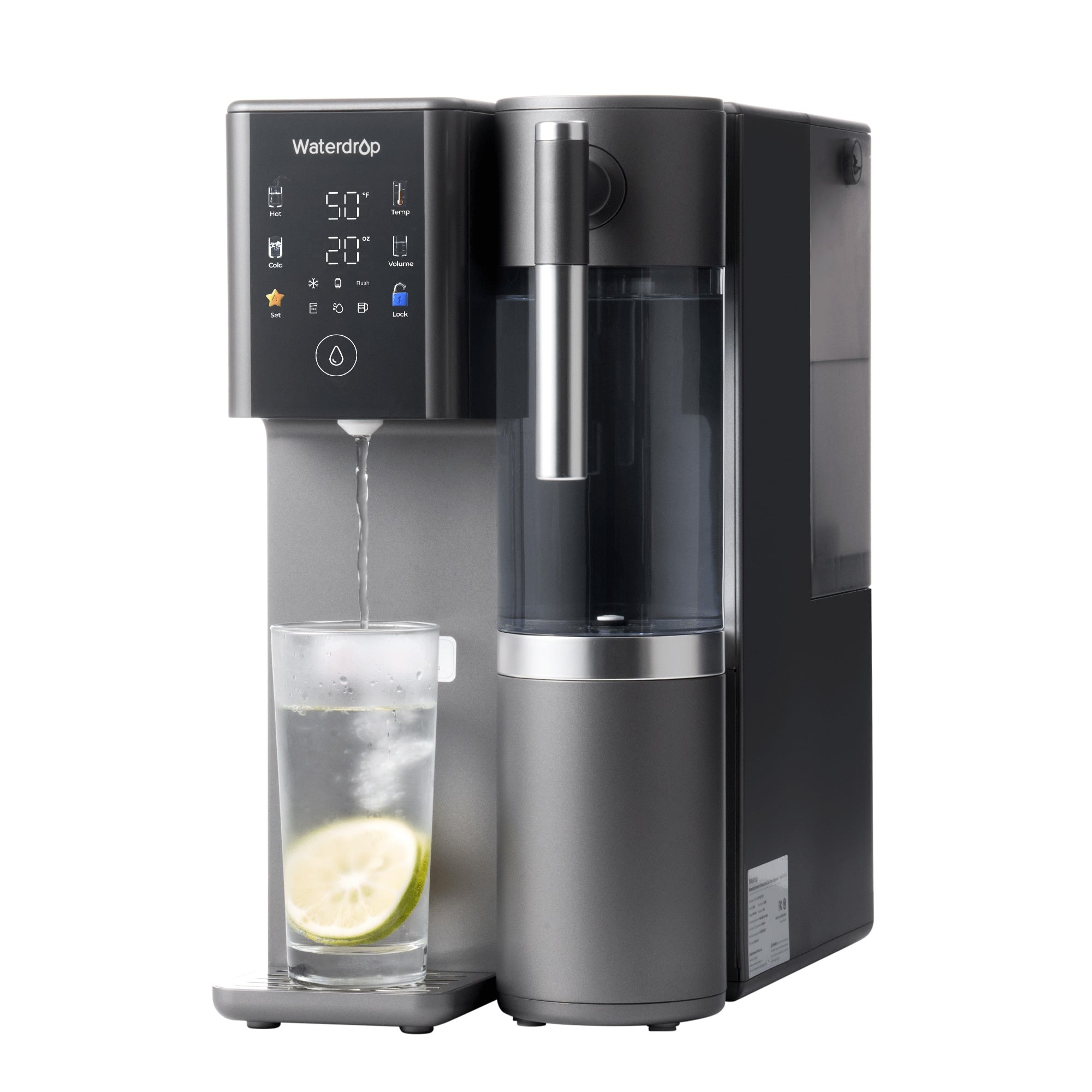
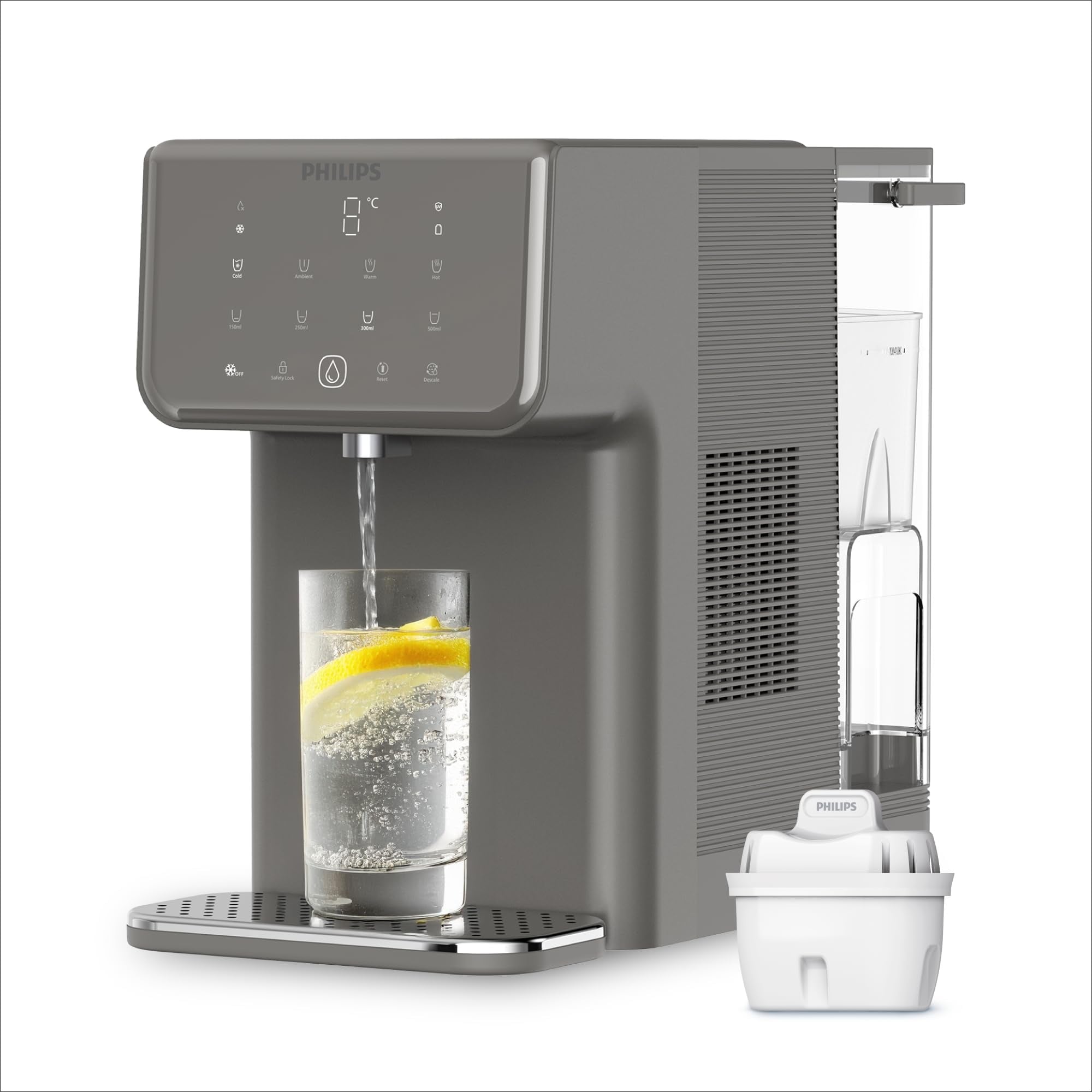
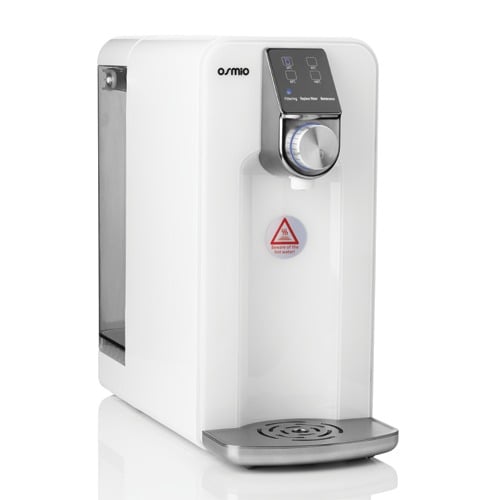
Carbon-style cartridges (BRITA MAXTRA PRO, Philips Micro X-Clean) work like a filter jug: they mainly improve taste and reduce limescale, are cheap to replace and waste no water. Reverse osmosis (Waterdrop, Osmio) filters much more finely, but sends some water to a waste tank you empty, and replacement filters cost more (around £70 for the Waterdrop A2's main filter).
Tanks in this comparison range from 2.8L (Philips) to around 6L (Waterdrop A1). Our 4-litre BRITA needs filling about twice a day with a family using it constantly, so a busy household should look at 4L or more. Heating 250ml from room temperature to 95°C uses about 0.023 kWh, roughly 0.6p at 26.32p per kWh (our estimate); models with a cooler also use power to keep water cold, and few manufacturers publish that figure. The water dispenser vs kettle running cost guide works through the numbers.
Also worth checking: cup and jug clearance (a removable drip tray helps), volume presets (up to 900ml on the YOURCE Cool), a child lock with 95°C water in a family kitchen, and worktop space, since reverse osmosis models with coolers are the bulkiest. At 95°C I find gravy granules a little tricky to dissolve, so you may still want a kettle for some jobs. If you only want better-tasting cold water, a jug is far cheaper: see water dispenser vs filter jug.
How often to change the filter
| Filter type | Typical change interval | Notes |
|---|
| BRITA MAXTRA PRO (YOURCE, YOURCE Cool) | About every 4 weeks; follow the filter reminder | Cheap and widely stocked |
| Philips Micro X-Clean (3500 Series) | When the filter-life indicator says so | Check Philips guidance for your model |
| Reverse osmosis (Waterdrop A2) | Months rather than weeks | Main filter around £70 |
| Reverse osmosis (Osmio Zero 2.0) | Roughly every 6 months | Per Osmio |
Intervals are manufacturer guidance as we understand it; always follow the manual. We refill our BRITA YOURCE's 4-litre tank about twice a day and I change the filter about once a month. Change it sooner if the reminder shows, the water tastes or smells different, flow slows, or you see more limescale in cups or on the drip tray. Monthly MAXTRA PRO cartridges add up to 12 a year (multipacks keep the cost down); reverse osmosis filters are changed less often but cost more each, so factor this into the price when you compare the models below.