Air fryers were sold to the nation as the answer to soaring energy bills, and for the most part that promise holds up. But "cheaper than the oven" is not the same as "free", and the actual cost of running one depends on the wattage, how long you cook for, and what you would otherwise have used. This guide gives you the real numbers at current UK electricity rates, the simple maths to work it out for any model, and the honest comparison against a conventional oven.
The short answer
A typical air fryer draws between 1,400W and 2,100W at full tilt. At the current UK electricity unit rate of around 25p per kWh, a 1,500W model costs roughly 37p per hour — but almost nobody runs one for a full hour. Most everyday meals take 15 to 25 minutes, which is where the useful figures come from:
- Quick job (10 minutes, reheating or chips for one): around 6p
- Typical meal (20 minutes, 1,500W): around 12p
- Bigger cook (30 minutes, 2,000W dual-drawer): around 25p
Cook in an air fryer five or six times a week and you are typically adding £3 to £6 a month to your bill. That is the number worth remembering: for most households an air fryer is a few pounds a month, not the eye-watering figure people fear when they see a 2,000W rating on the box.
How to work out the cost for any model
The maths takes ten seconds and it is worth doing before you trust any claim on the packaging:
(Wattage ÷ 1000) × hours of cooking × unit rate in pence = cost in pence
So a 1,700W air fryer running for 18 minutes (0.3 of an hour) at 25p per kWh is (1700 ÷ 1000) × 0.3 × 25 = 12.75p. Halve the time and you halve the cost — the wattage is fixed, but the minutes are where all the variation lives.
Your unit rate is the other moving part. Check what you are actually paying rather than assuming: the rate under the Ofgem energy price cap changes every three months, and anyone on a fixed or time-of-use tariff will have a different figure again. If you are on Economy 7 or an agile tariff, batch-cooking in the cheap overnight window brings the cost down further.
Why an air fryer beats the oven on cost
This is the real reason air fryers save money, and it is not because the appliance itself is especially frugal — a 2,000W air fryer and a 2,100W oven element draw almost the same power. The saving comes from two things: no preheat and a tiny cooking chamber that gets to temperature in seconds and holds it with far less energy.
| Cooking a batch of chips | Time (incl. preheat) | Approx. cost |
|---|---|---|
| Fan oven (2,100W) | 10 min preheat + 25 min | ~31p |
| Air fryer (1,500W) | 0 preheat + 18 min | ~11p |
Across a week of small-to-medium meals that gap adds up. The independent testing at Which? found air fryers use meaningfully less energy than a full-size oven for exactly this reason — small portions in a small space.
When the oven is actually cheaper
Air fryers are not always the winner, and it is worth being honest about it. If you are cooking a large batch — a full Sunday roast, a big tray of vegetables for six, several dishes at once — a single oven run does all of it together, while an air fryer forces you into two or three back-to-back batches. Once you are running the air fryer three times to feed a family, the oven's one longer cycle can come out level or cheaper. The air fryer wins on small and medium portions; the oven wins on volume.
Does drawer size change the cost?
Yes, and it catches people out. A large 9L or dual-drawer model draws more power (often 2,000–2,400W) than a compact 4L unit (around 1,400W). For a single portion, the small model is cheaper to run. But if you regularly cook for a family, the larger machine does it in one go where the small one needs two batches — so the bigger unit ends up cheaper per meal despite the higher wattage. Match the size to how you actually cook. Our air fryer size guide walks through picking the right capacity.
Six ways to cut your air fryer running costs
- Don't preheat unless a recipe demands it. Most foods cook perfectly from cold, and skipping the preheat saves two or three minutes of full-power draw every single cook.
- Cook in full batches. A drawer that is two-thirds full costs the same to run as one that is half empty — fill it and you get more food per pennyworth of electricity.
- Use the residual heat. The chamber stays hot for a few minutes after it switches off, which is enough to warm bread rolls or finish something without turning it back on.
- Pick the right drawer for the job. On a dual-zone model, running one small drawer for a snack uses far less than firing up the whole oven.
- Keep it clean. Grease build-up on the element makes the machine work harder to hit temperature. A quick wipe keeps it efficient.
- Shift big cooks to a cheaper tariff window. If you are on Economy 7 or agile, batch-cook in the cheap hours and reheat later.
How it compares to other kitchen appliances
| Appliance | Typical draw | Cost per hour |
|---|---|---|
| Microwave | 800–1,000W | 20–25p |
| Air fryer | 1,400–2,100W | 35–53p |
| Slow cooker | 150–250W | 4–6p |
| Fan oven | 2,000–2,200W | 50–55p |
| Electric hob ring | 1,500–2,000W | 38–50p |
| Kettle | 3,000W | 75p |
Per hour, an air fryer sits close to an oven — the saving is that you almost never run it for a full hour, and you never preheat an empty box. A slow cooker is the genuinely cheapest way to cook per hour, but it is a different job entirely.
Which models are cheapest to run
Look at wattage alongside capacity rather than headline power. Among the models we review, the Cosori TurboBlaze 6L is a standout for efficiency — a single generous drawer that heats fast and cooks a family portion in one batch. The Tefal Easy Fry Max 5L and Cosori Pro LE 5L are the picks if you cook mostly for one or two, with lower draw and quick cook times.
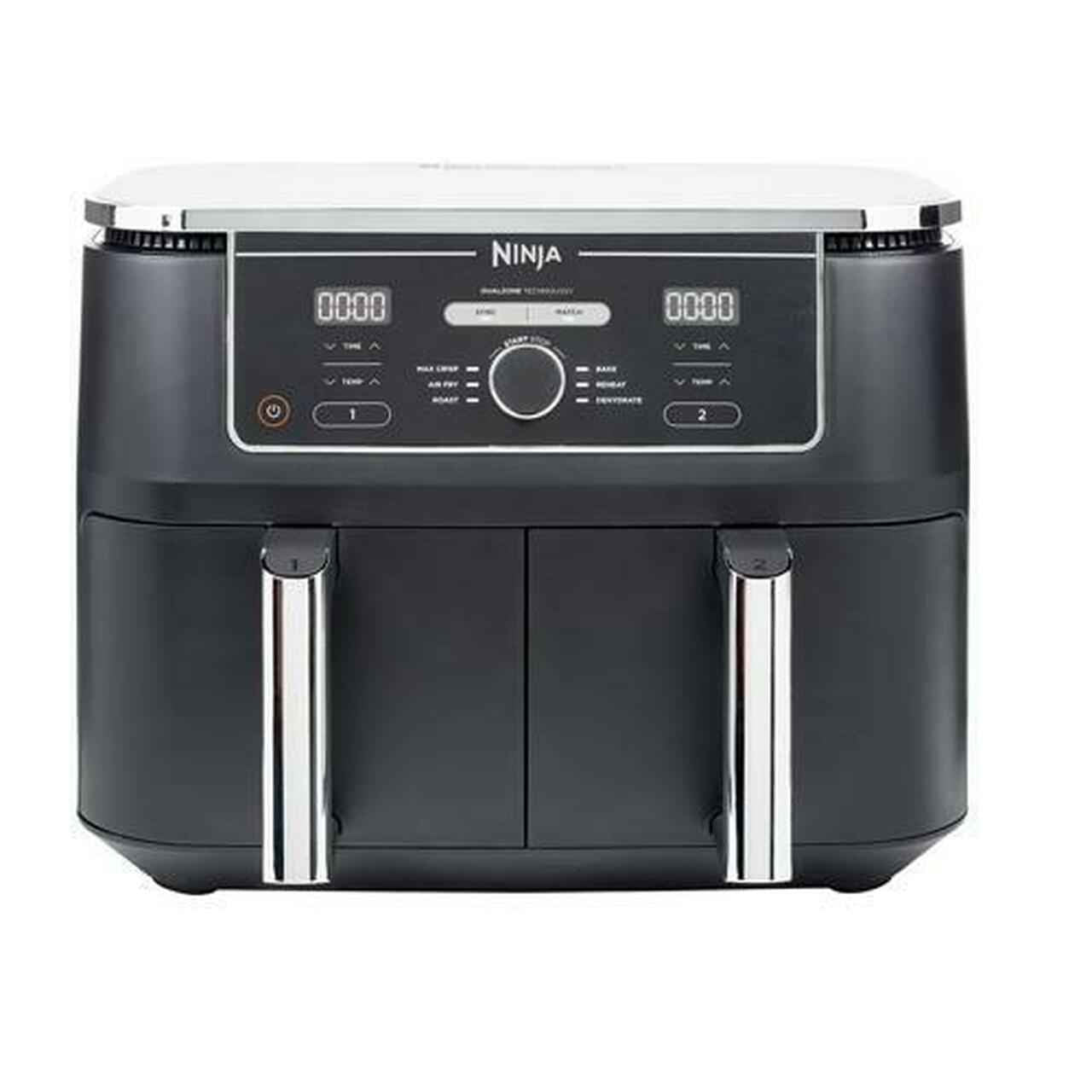
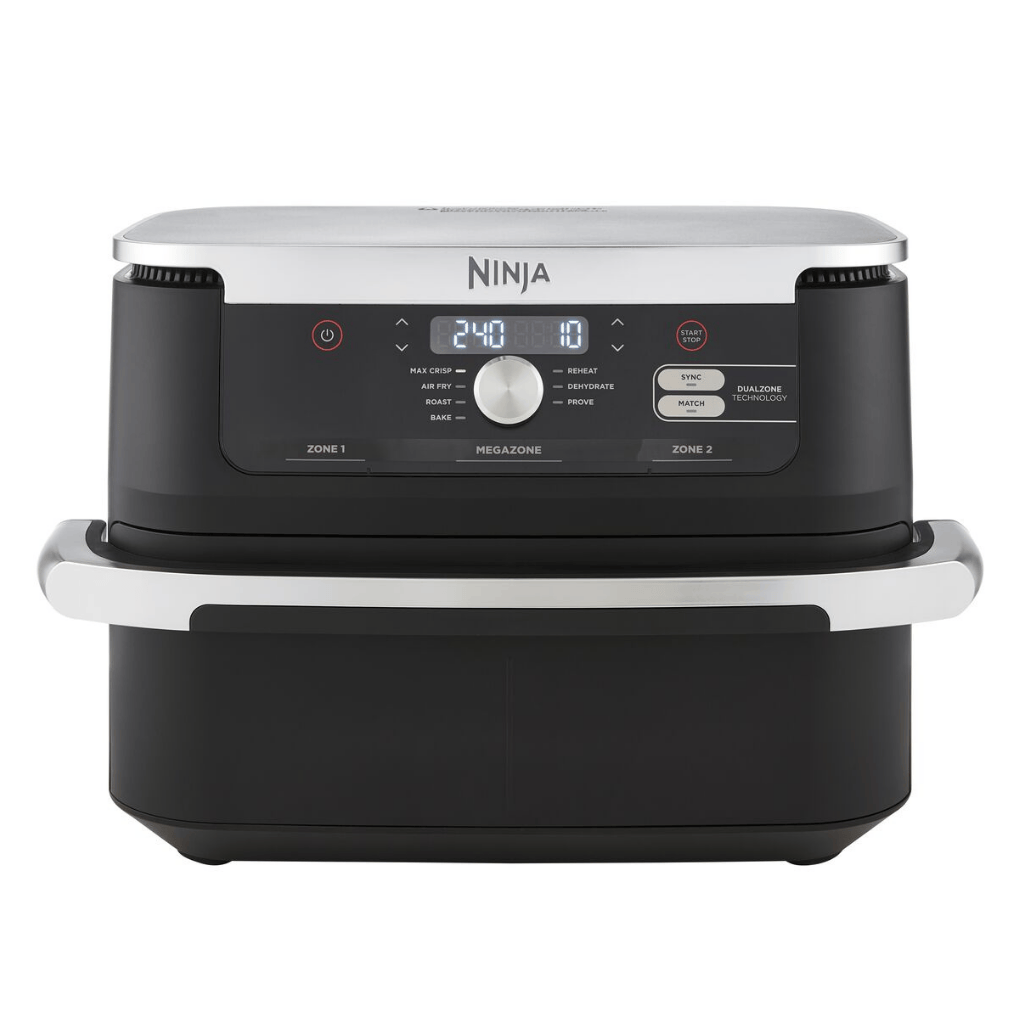
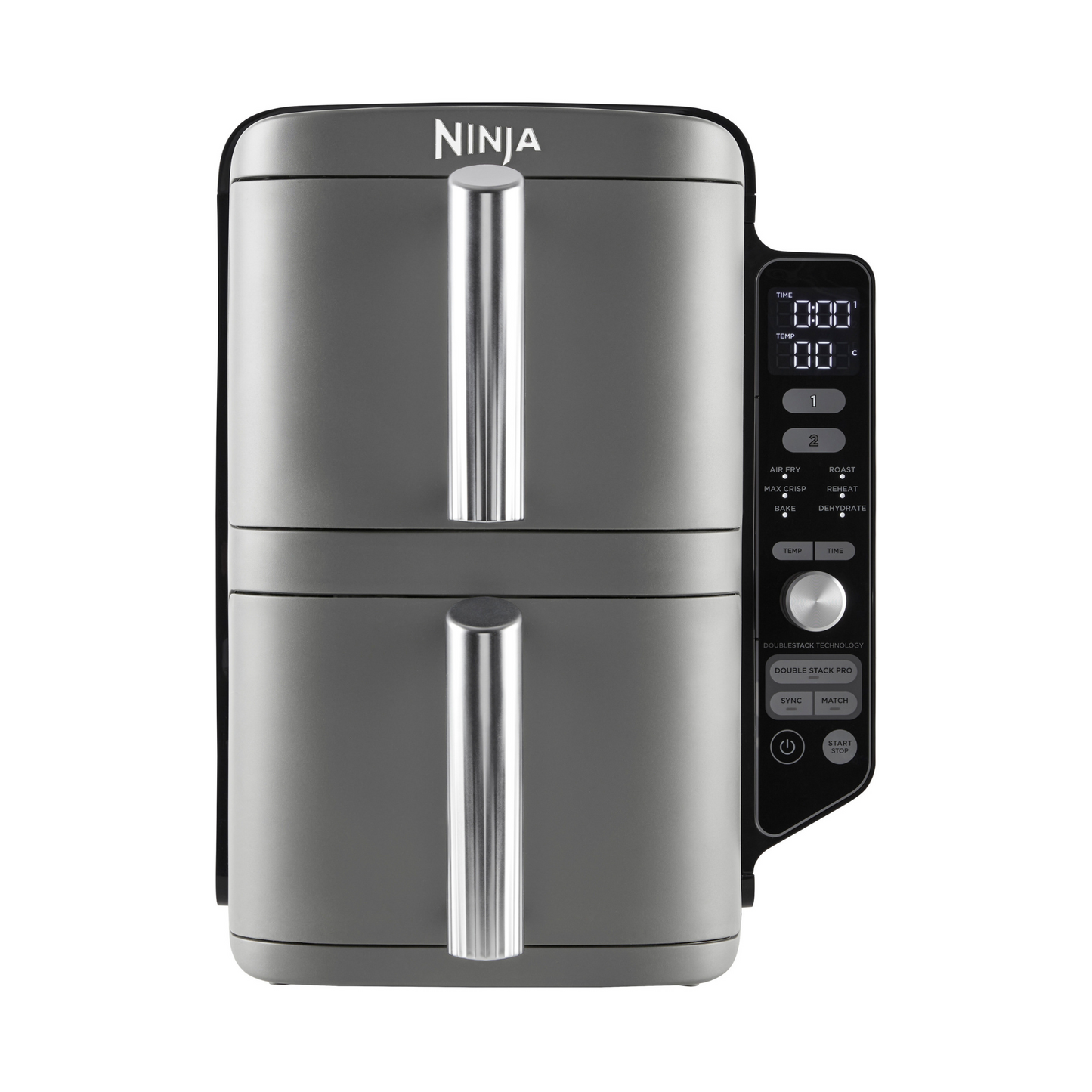
For families, a dual-drawer model like the Ninja Foodi MAX Dual Zone AF400UK costs more per hour but does a whole meal in one cook, which usually works out cheaper than running a compact unit two or three times over. If you frequently cook for a crowd, the Ninja Double Stack XL stacks four levels into one footprint and one electricity draw.
The verdict
Budget around £3 to £6 a month for regular air fryer use, and expect most individual meals to cost between 6p and 25p. Against a preheated oven for small and medium portions, the air fryer wins comfortably — the saving comes from no preheat and a small chamber, not from the appliance sipping power. Skip the preheat, fill the drawer, and match the capacity to how you actually cook, and an air fryer is one of the cheapest hot meals you can make in a British kitchen.
Still deciding whether one earns its place on your worktop? Our guide to whether air fryers are worth it weighs up the real pros and cons, and air fryer vs oven covers which jobs each does best.