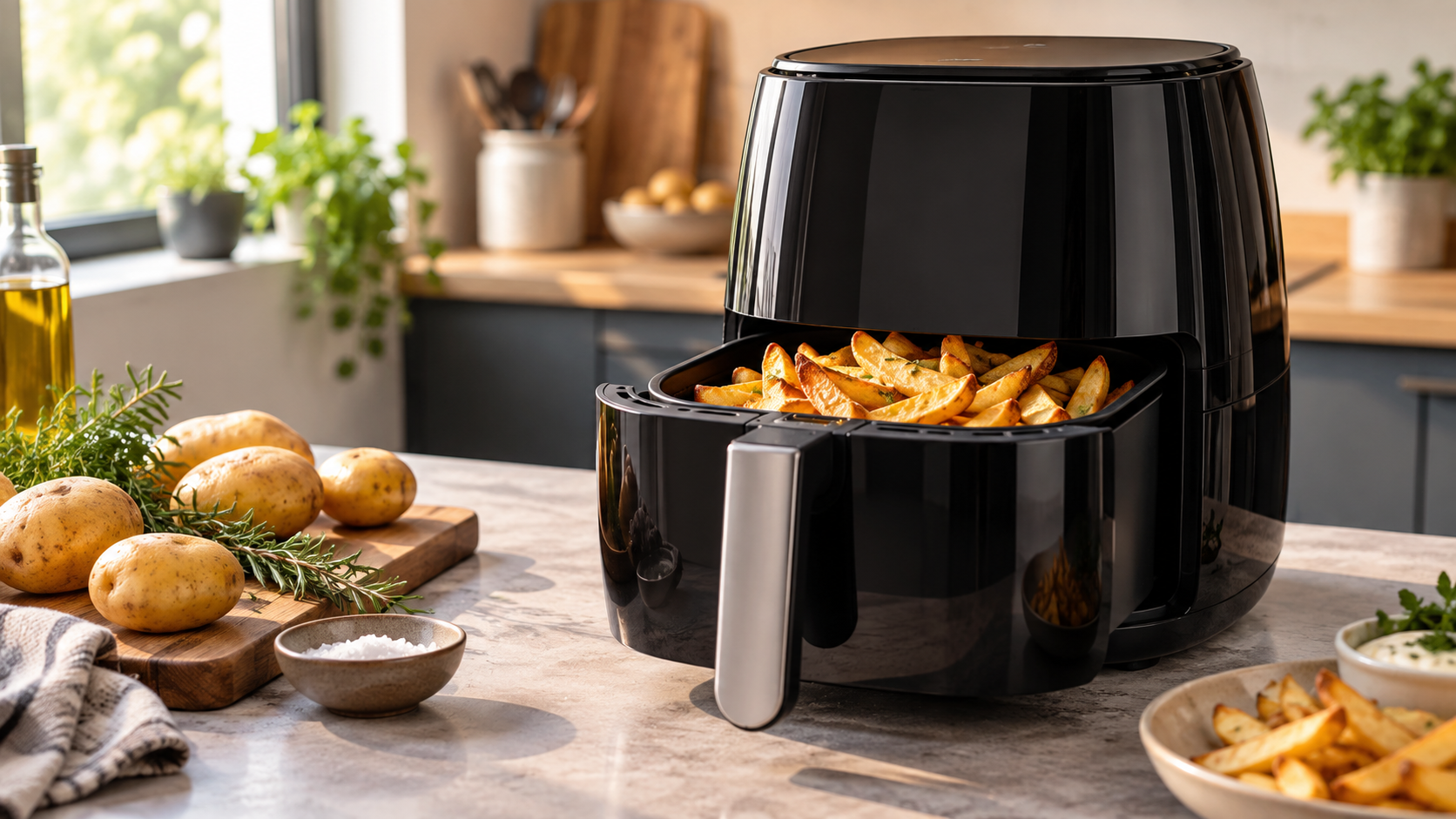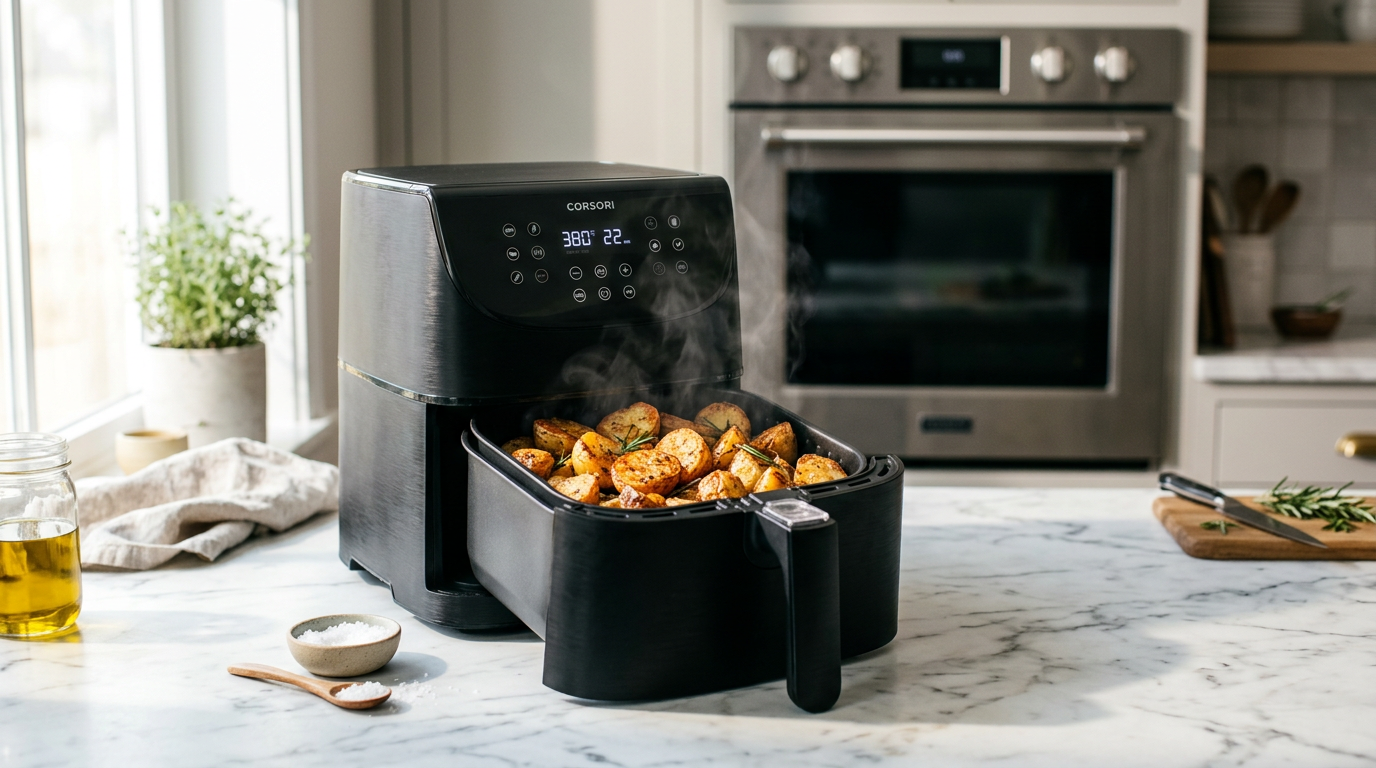
Air fryers have been sold to us as the answer to rising energy bills — crispier food, faster cooking, and a fraction of the running cost of a conventional oven. But is that actually true, or is it clever marketing?
The short answer: yes, an air fryer is genuinely cheaper to run than an oven — but only for the right kind of meal. Cook the wrong thing in it and the savings vanish. Here is the honest maths, and how to know which appliance to reach for.
Why an air fryer costs less to run
It comes down to three things, and none of them are magic:
- A much smaller space to heat. An air fryer heats a 4–8 litre basket. A domestic oven heats around 60–75 litres of air, plus the heavy metal cavity around it.
- Little or no preheating. Most air fryers are up to temperature in 2–3 minutes. An oven typically needs 10–15 minutes before you even put the food in.
- Faster cooking. The powerful fan circulates hot air aggressively, so most foods cook roughly 20–30% quicker than in a fan oven.
An air fryer usually draws more power at any given moment than you'd expect — typically 1.4–2.1 kW, not far off an oven's 2–2.5 kW. The saving isn't from lower wattage. It comes almost entirely from running for far less time.
The actual numbers
Here's an illustrative comparison for a typical batch of roast potatoes or chips, based on a UK electricity rate of around 25p per kWh:
| Air fryer | Fan oven | |
|---|---|---|
| Rated power | ~1.5 kW | ~2.1 kW |
| Preheat time | 2–3 min | 10–15 min |
| Cook time | ~20 min | ~45 min |
| Energy used | ~0.5 kWh | ~1.5 kWh |
| Cost per session | ~13p | ~37p |
These are illustrative estimates at 25p/kWh. Real figures vary with your tariff, your appliance's wattage, and the fact that ovens cycle their elements on and off once up to temperature rather than drawing full power continuously.
On that basis you're saving roughly 20–25p per meal. Cook in the air fryer five times a week instead of the oven and that's around £50–£65 a year — real money, but not the dramatic transformation some adverts imply.
When the oven actually wins
This is the part that rarely gets mentioned. The air fryer's advantage is per portion of a small meal. Once you scale up, the maths flips:
- Cooking for four or more. If you have to run the air fryer in three separate batches, you've spent as long as the oven would have taken — and used similar energy.
- Large joints and whole roasts. A chicken, a leg of lamb or a full Sunday roast simply won't fit, or won't cook evenly.
- Cooking several things at once. An oven with three shelves running simultaneously is far more efficient per dish than an air fryer doing them one after another.
- Baking. Cakes, bread and anything needing gentle, even, stable heat are generally better in an oven.
The genuinely useful rule of thumb: air fryer for one to three people or a single component; oven when you're cooking a full meal for a family.
Don't forget the rest of your kitchen
An air fryer isn't the only efficient option, and it isn't always the best one. A microwave is cheaper still for reheating. A hob with a lid on the pan beats both for boiling. And a slow cooker uses very little power over many hours.
If you're trying to bring your overall energy use down rather than just swap one appliance for another, the Government's guidance on improving home energy efficiency is a genuinely useful, independent starting point — cooking is only a small slice of a typical UK energy bill.
What about the health angle?
Air fryers are frequently marketed as the healthier choice, and there's something to it — but the reason is simple rather than miraculous. Because circulating hot air does the crisping, you need very little oil, often just a teaspoon where deep frying would use several hundred millilitres. That meaningfully reduces the fat content of chips, wedges and breaded foods.
It's worth keeping perspective, though: an air fryer doesn't make unhealthy food healthy, it just uses less oil to cook it. The British Heart Foundation's healthy eating advice puts low-oil methods like air frying, grilling and steaming in the same broad category — useful, but secondary to what you're actually cooking.
One practical tip: cooking starchy foods like chips to a golden yellow rather than a dark brown reduces acrylamide formation, which is standard food-safety advice for any high-temperature cooking method, air fryer or oven.
Is it worth buying one?
A decent air fryer costs £50–£150. At £50–£65 of annual energy savings for a household that uses it regularly, a mid-range model pays for itself in roughly one to two years — and that's before counting the convenience of not waiting 15 minutes for an oven to preheat on a weeknight.
Buy one if: you cook for one to three people, you eat a lot of chips, roast veg, chicken pieces or reheated leftovers, or you want something fast on weeknights.
Think twice if: you regularly cook full family meals, you bake a lot, or your worktop space is already tight — air fryers are bulkier than the photos suggest.
Which size should you get?
Size matters more than most people realise — we've written a dedicated guide on what size air fryer you actually need that goes deeper. And if you are still deciding whether to buy one at all, our honest take on whether air fryers are worth it covers the full picture. For the exact pounds and pence, see how much it costs to run an air fryer. Here's the quick version:
- 2–4 litres: one to two people. Compact and cheap, but limited.
- 5–6 litres: the sweet spot for most households of two to four. Fits a decent batch of chips or four chicken thighs.
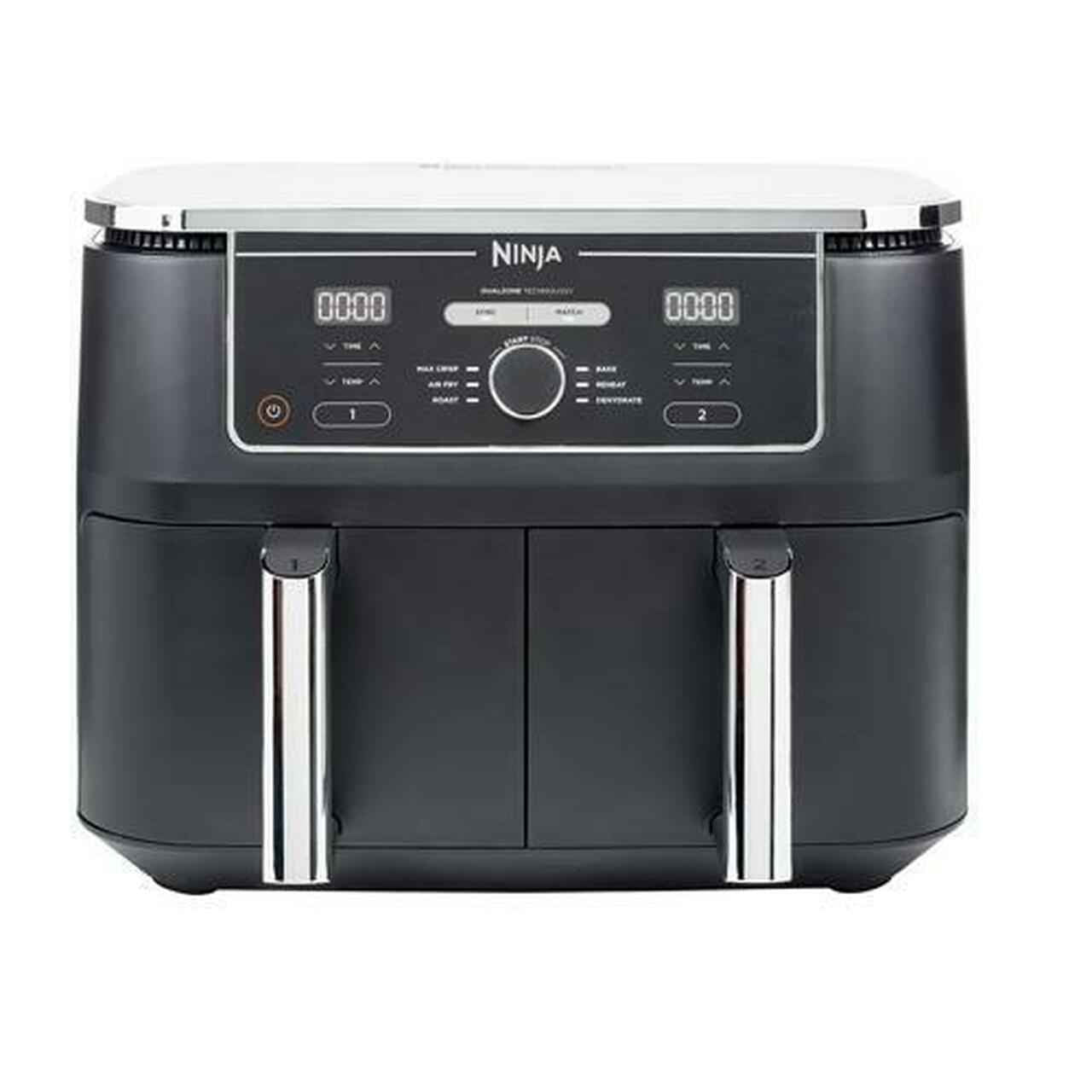
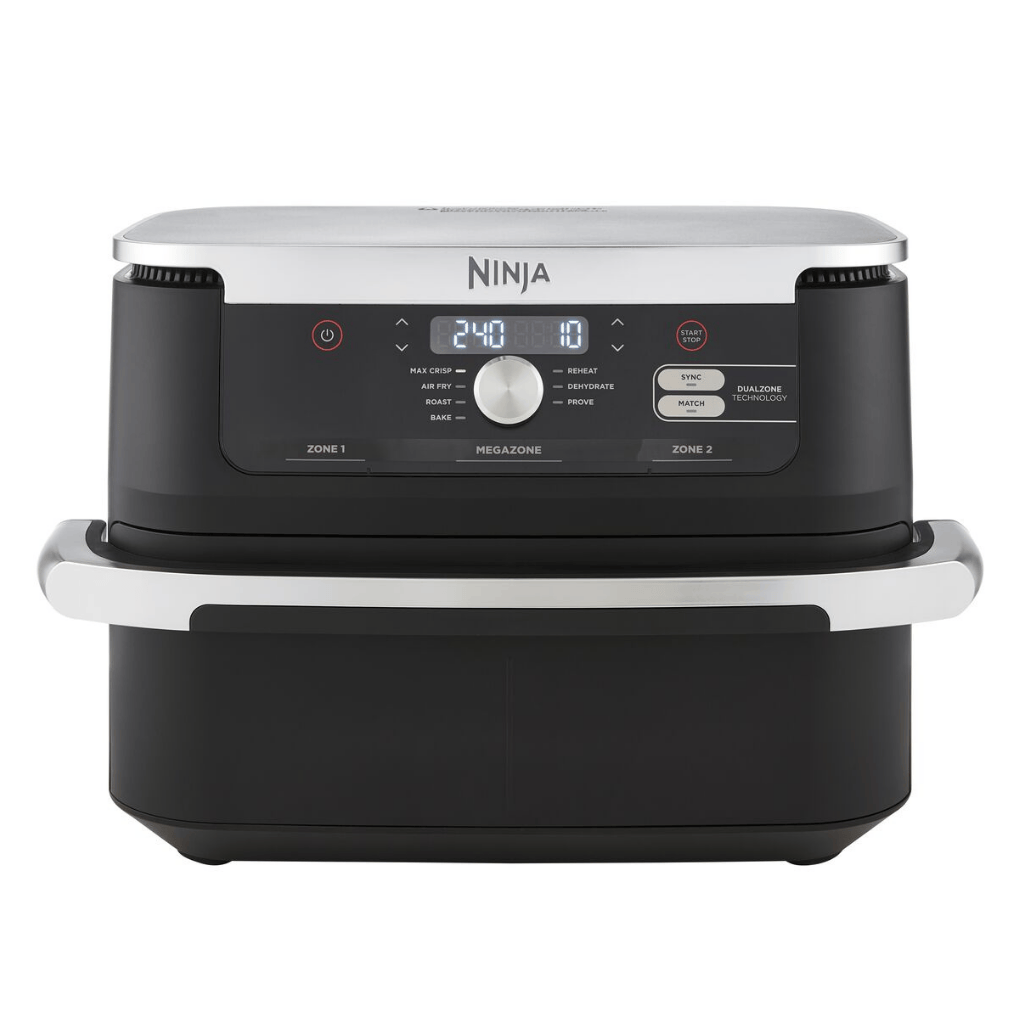
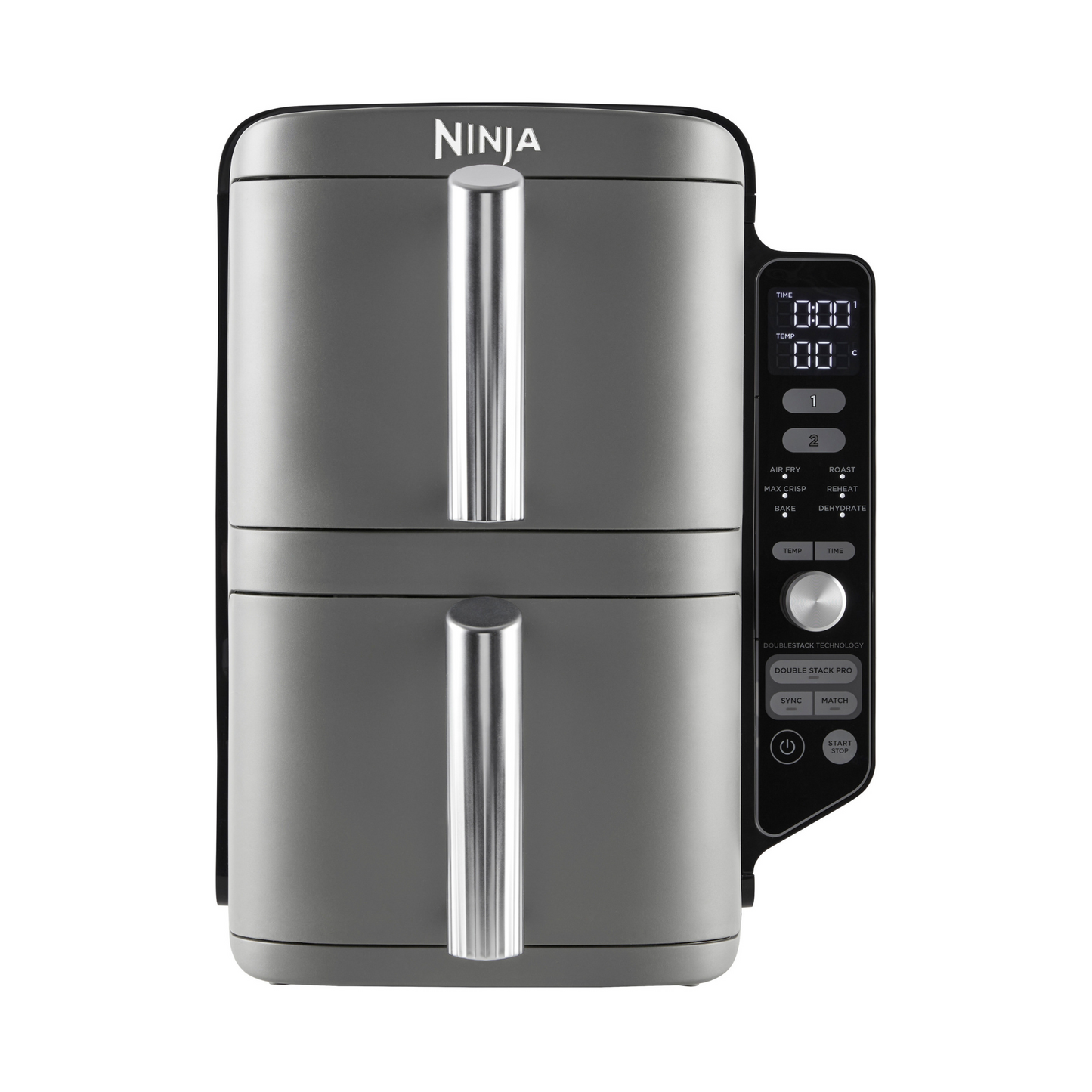
- 7–9 litres or dual-basket: families of four-plus, or anyone who wants to cook two things at different temperatures simultaneously. Dual-basket models are the single biggest quality-of-life upgrade if you cook full meals.
The verdict
An air fryer really does cost less to run than an oven — typically around a third of the energy for a small-to-medium meal. It's a genuine saving, it's faster, and for weeknight cooking it's hard to beat. Just don't expect it to replace your oven entirely, and be sceptical of any claim of enormous savings: the honest figure for most households is somewhere around £50–£65 a year, alongside a lot of saved time.
Get the size right for your household and it's one of the few kitchen gadgets that genuinely earns its worktop space. For a full walk-through of types, sizes, budgets and the specs worth paying for, see our ultimate air fryer buying guide.