The most common question people ask before buying a portable air conditioner isn't which model to get — it's how much it costs to run. The answer depends on the unit's wattage, how many hours you use it, and what you pay for electricity, and the numbers are more manageable than most people expect.
This guide breaks down the real running costs using current UK electricity rates, with honest comparisons between different unit sizes so you can see exactly what you'd pay.
The basic calculation
Running cost is straightforward arithmetic: wattage × hours × electricity rate.
The current UK average electricity rate under the Ofgem price cap is approximately 24.5p per kWh. Ofgem's price cap page has the latest figure if yours differs, and it's worth checking — your tariff may be higher or lower depending on your supplier and contract.
Using that 24.5p rate, here's what each unit size costs per hour:
| Unit wattage | Typical BTU | Cost per hour | Cost for 8 hours |
|---|---|---|---|
| 800W | 7,000–7,500 | 19.6p | £1.57 |
| 1,000W | 9,000–10,000 | 24.5p | £1.96 |
| 1,100W | 10,000–11,000 | 27.0p | £2.16 |
| 1,350W | 12,000 | 33.1p | £2.65 |
| 1,712W | 16,000 | 42.0p | £3.36 |
An 8-hour overnight run with a mid-range 10,000 BTU unit costs under £2. That's less than most people spend on a takeaway coffee.
But the compressor doesn't run all the time
The table above assumes full power for the entire period, which doesn't happen in practice. Once a portable AC reaches the target temperature, the compressor cycles off and the unit drops to fan-only mode, using a fraction of its rated wattage.
In a well-sealed room, a properly-sized unit might run the compressor for 40–60% of each hour once the initial cool-down is done. That means real-world costs are typically 30–40% lower than the worst-case figures above.
A 10,000 BTU unit running overnight at 60% compressor time costs closer to £1.20–£1.40 rather than £1.96. Over a 30-night hot month, that's £36–£42 — roughly £1.20–£1.40 per night for a cool bedroom.
What actually affects your running costs
1. Room size vs BTU output
The biggest factor in running costs isn't the unit's wattage — it's whether you've matched the BTU to the room. An undersized unit in a large room runs the compressor almost continuously, trying and failing to hit the target temperature. It uses maximum power and never reaches efficiency.
A 7,000 BTU unit in a 30m² living room will cost more to run than a 12,000 BTU unit in the same room, because the larger unit reaches temperature and cycles off, while the smaller one runs flat out all day.
2. Insulation and sun exposure
A south-facing room with single-glazed windows and no curtains will cost significantly more to cool than a well-insulated room with closed blinds. Close the curtains on sun-facing windows before turning the AC on — it's free and it cuts cooling load substantially.
3. The exhaust hose setup
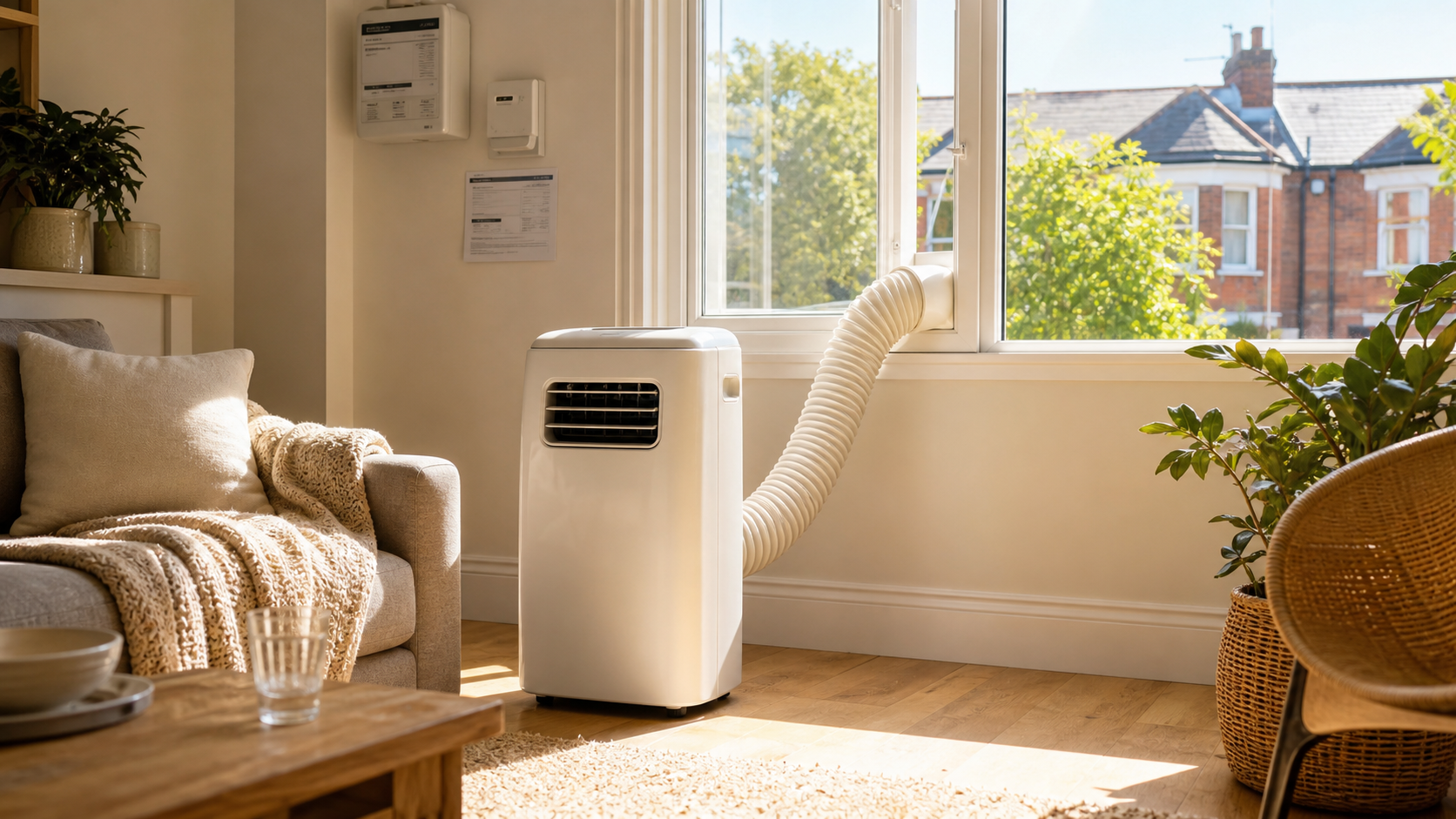
Every portable AC vents hot air through an exhaust hose to the outside. If the window gap around the hose isn't sealed properly, warm outdoor air floods back in. A good window sealing kit (most units include one) or a piece of foam board cut to fit the window gap makes a measurable difference to efficiency and therefore cost.
4. Energy rating
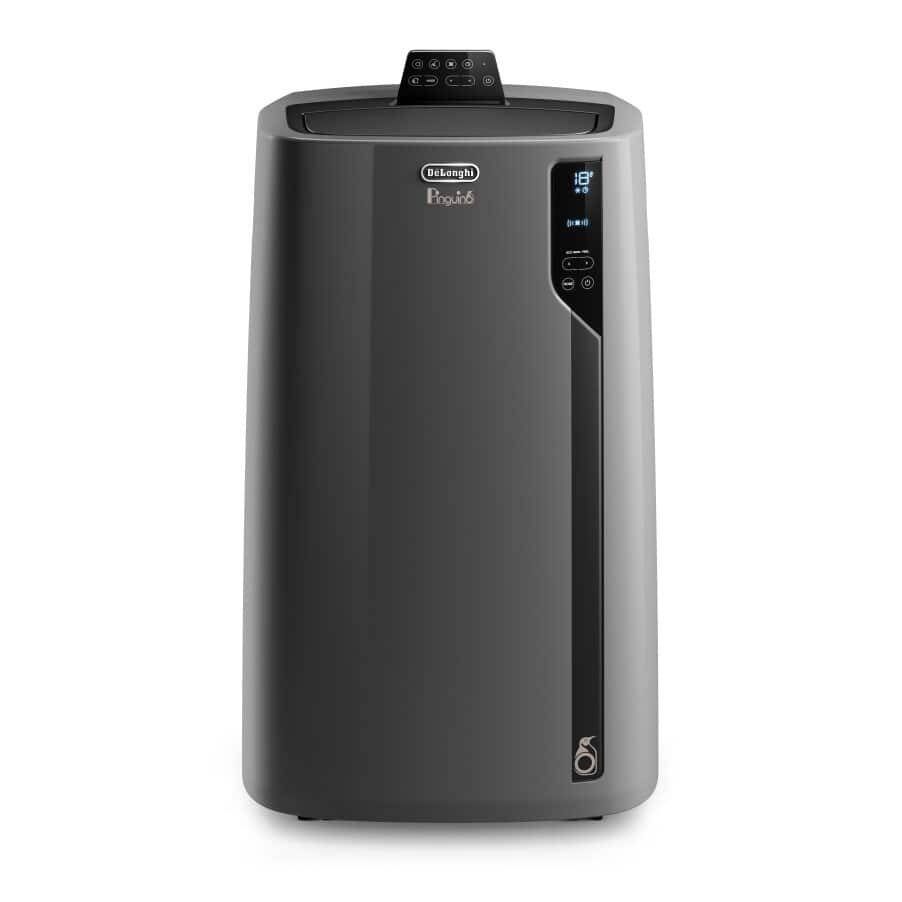
Class A+ units like the De'Longhi Pinguino PAC EL112 use less electricity for the same cooling output compared to a basic Class A model. Over a full summer, the efficiency difference can save £20–£40 in electricity. Whether that justifies the price premium depends on how much you use it.
Running costs across a typical UK summer
A "typical" UK heatwave lasts roughly 2–4 weeks of genuinely hot weather, plus another 4–6 weeks of uncomfortably warm evenings. Most people run their portable AC for about 30–45 days per year, primarily in the evening and overnight.
| Usage pattern | 7,500 BTU (800W) | 10,000 BTU (1,000W) | 12,000 BTU (1,350W) |
|---|---|---|---|
| Light use: 4 hrs/day, 20 days | £10–£12 | £13–£16 | £18–£22 |
| Moderate: 8 hrs/day, 30 days | £25–£32 | £36–£42 | £48–£56 |
| Heavy: 10 hrs/day, 45 days | £47–£56 | £65–£75 | £90–£100 |
Even heavy use of a mid-range unit tops out at around £65–£75 for an entire summer. For context, a single domestic fan running 10 hours a day for 45 days costs about £8–15 — but it doesn't actually cool the air.
Portable AC vs other cooling options
| Method | Upfront cost | Running cost per hour | Actually cools? |
|---|---|---|---|
| Desk fan | £15–£40 | 1–2p | No — moves air only |
| Tower fan | £30–£80 | 2–4p | No — moves air only |
| Evaporative cooler | £50–£150 | 3–5p | Slightly — adds humidity |
| Portable air conditioner | £260–£650 | 20–42p | Yes — genuine cooling |
| Wall-mounted split system | £1,500–£2,500+ installed | 10–25p | Yes — most efficient |
Fans are cheap to run but don't reduce the temperature. Air coolers add humidity to an already muggy UK summer, which can make things feel worse — if it is damp rather than heat that bothers you, see our compressor vs desiccant dehumidifier guide instead. A portable AC is the only plug-and-play option that genuinely cools the room — our guide to whether portable air conditioners actually work explains the physics and the setup that matters. A wall-mounted split system is more efficient per hour but costs £1,500+ to install and requires a qualified F-Gas engineer.
Tips that genuinely reduce running costs
- Close the curtains and blinds before you turn it on. Reducing the room's heat load means the compressor runs less. This alone can cut costs by 20–30%.
- Seal the window gap properly. Hot air leaking in around the exhaust hose is the most common efficiency killer. Use the included window kit, or cut foam board to fill the gap.
- Set the thermostat at 24–25°C, not 18°C. Every degree lower forces the compressor to run longer. 24°C is genuinely comfortable compared to a 32°C room, and it costs significantly less than trying to hit 18°C.
- Use a timer to pre-cool. Start the unit 30 minutes before you need the room, then let it maintain rather than pulling a very hot room down to temperature from scratch.
- Don't cool rooms you're not using. Close the door and cool only the room you're in. Trying to cool an entire house with a portable unit is the fastest way to run up costs without getting results.
- Check your electricity tariff. If you're on a time-of-use tariff, running the AC overnight on cheap-rate electricity can halve the cost. The NHS heatwave guidance actually recommends cooling your bedroom for a good night's sleep during heatwaves — doing it on a night tariff makes it even more affordable.
The bottom line
A portable air conditioner costs roughly £1–£2 per night to run in a typical bedroom, or £30–£75 across a full UK summer for moderate use. Even heavy use of a large unit rarely exceeds £100 for the entire season.
That's far less than most people assume, and for anyone who's spent a heatwave tossing and turning in a 30°C bedroom, it's an easy cost to justify. For comparison, running a hot tub costs £30–£90 per month year-round — so a portable AC for just the summer months is a relatively modest addition to your energy bill. The key is buying the right size for your room — an underpowered unit in a big room is the most expensive mistake, because it runs continuously without ever reaching temperature. Our guide to what size portable air conditioner you need walks through the BTU maths in two minutes, and if you have narrowed it down to the two biggest premium brands, our Meaco vs De'Longhi comparison puts the flagships head to head on price, noise and performance.