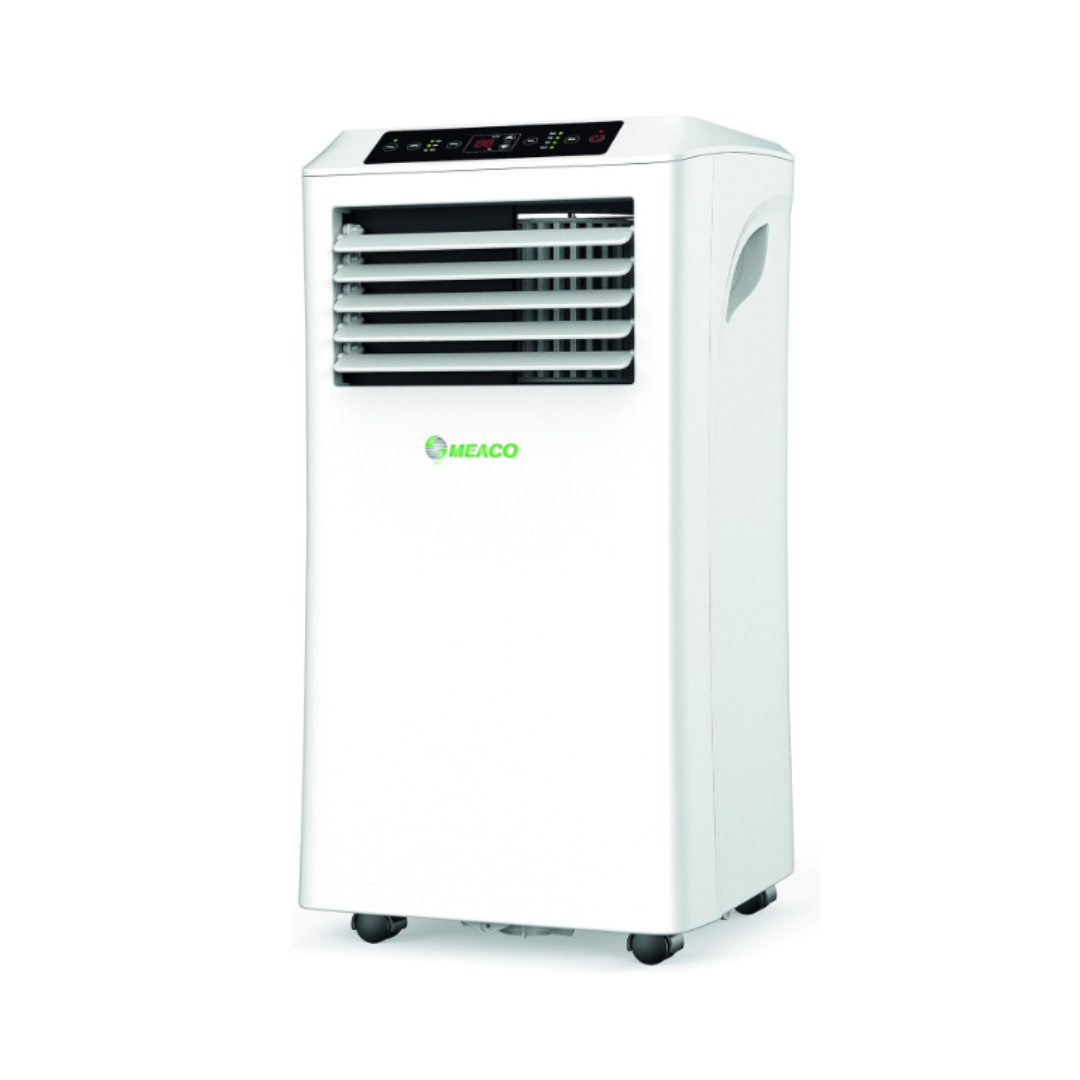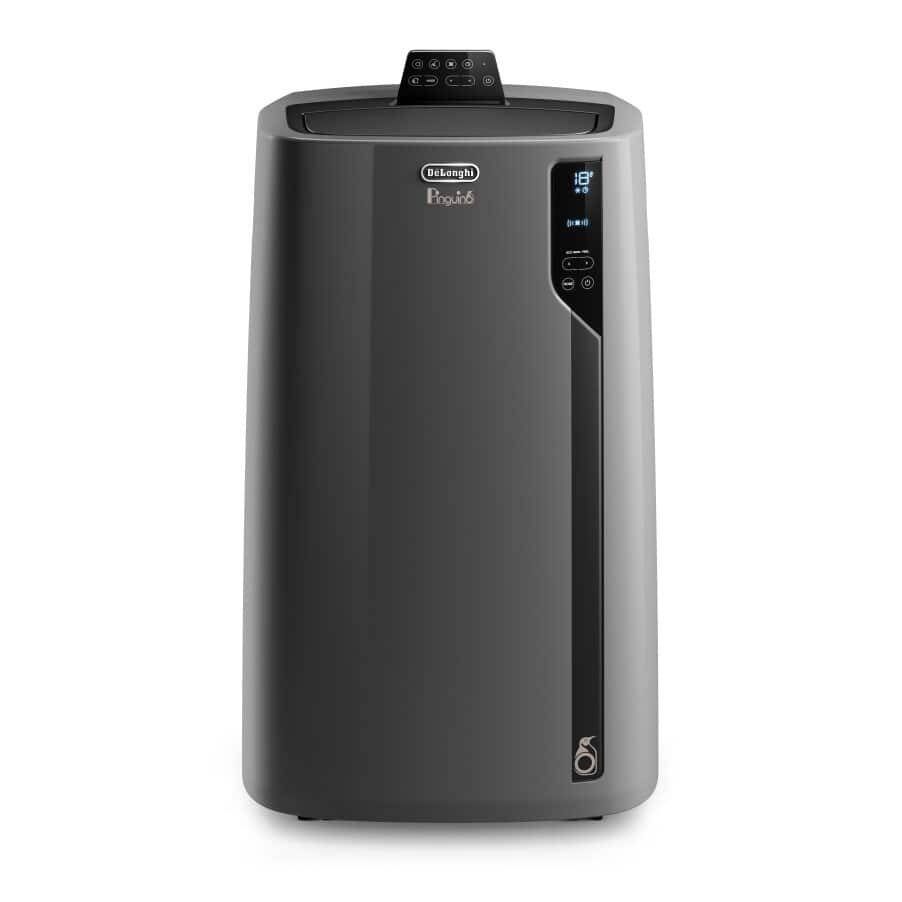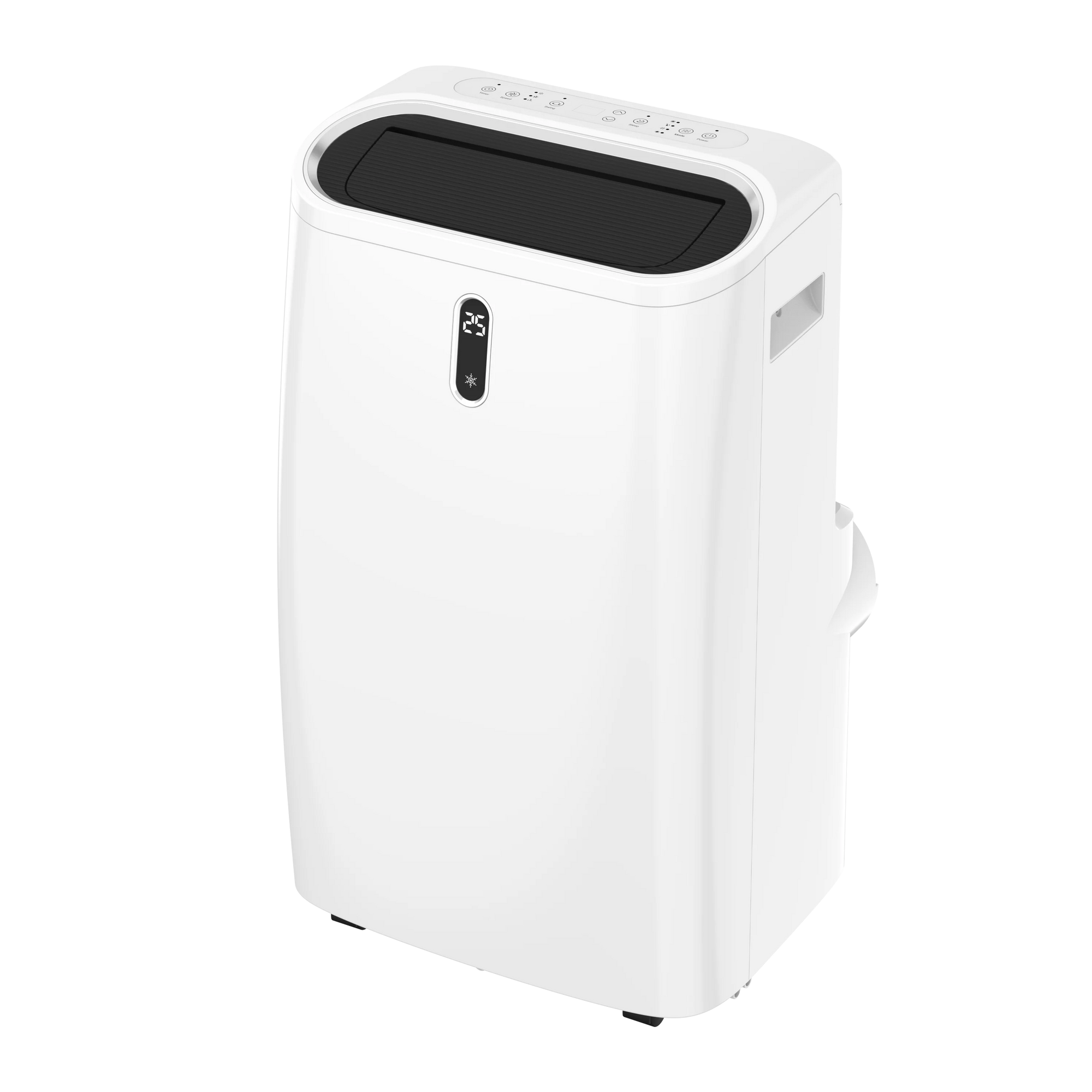
Portable air conditioners are sold on one big number: BTU. Nine thousand, twelve thousand, sixteen thousand. Bigger sounds better, and during a heatwave the temptation is to buy the biggest one you can afford and be done with it. That's usually a mistake — an oversized unit costs more to buy, more to run, and can actually leave the room feeling clammy rather than cool.
Getting the size right is the single most important decision you'll make, and it takes about two minutes of arithmetic. Here's exactly how to work out the BTU you need for your room, and why both too-small and too-big are problems worth avoiding.
What BTU actually means
BTU stands for British Thermal Unit, and in this context it measures cooling capacity — how much heat the unit can remove from a room per hour. A higher BTU figure means more heat shifted, which means a larger room cooled, or the same room cooled faster.
Portable air conditioners for UK homes almost all sit between 7,000 and 16,000 BTU. That range covers everything from a small box room to a large open-plan living space. The job is simply to match the number to the room, not to buy the biggest one on the shelf.
The quick sizing rule
The rough industry guide is around 20 BTU per square foot of floor area (roughly 215 BTU per square metre), assuming standard 2.4m ceilings. That gives you a baseline to work from:
| Room size | Approx. floor area | Baseline BTU | Typical use |
|---|---|---|---|
| Up to 14 m² | ~150 sq ft | 7,000–9,000 | Box room, small bedroom, home office |
| 14–22 m² | 150–240 sq ft | 9,000–12,000 | Double bedroom, average living room |
| 22–33 m² | 240–350 sq ft | 12,000–14,000 | Large living room, big bedroom |
| 33–45 m² | 350–480 sq ft | 14,000–16,000 | Open-plan kitchen-diner, large lounge |
To find your room's floor area, multiply length by width in metres. A 4m × 4m bedroom is 16 m², which puts it squarely in the 9,000–12,000 BTU band. That's your starting point — now adjust it.
The adjustments that matter more than people think
The baseline assumes an average room. British homes vary enormously, and a few factors push the requirement up. Add roughly 10% for each of the following that applies to your room:
- South or west-facing with large windows. Direct afternoon sun is a huge heat load — a sunny conservatory-adjacent room can need 20–30% more than the baseline suggests.
- Top-floor or loft-conversion rooms. Heat rises and roof spaces bake. These rooms are consistently the hottest in the house.
- Kitchens, or rooms with an open kitchen. The oven, hob and fridge all dump heat. Add capacity if you're cooling a kitchen-diner.
- More than two people using the room regularly. Each adult gives off around 100W of heat — add about 600 BTU per additional person for a busy living room.
- Lots of electronics. A home office with several monitors, or a lounge with a big TV and games console, adds a measurable load.
Conversely, a well-insulated, north-facing ground-floor room with small windows can sit at the bottom of its band or even one step below.
Worked example
Say you're cooling a 20 m² living room. That's about 215 sq ft, and at 20 BTU per sq ft it gives a ~10,000 BTU baseline. Now: it's west-facing with big windows (+10%), it's a first-floor room (+10%), and three or four people use it in the evening (+10%). That's +30%, taking you to around 13,000 BTU — so you'd choose a 12,000–14,000 BTU unit, not the 9,000 the raw floor area first implied. This is exactly why people who buy on floor area alone so often end up disappointed.
Why too small is a problem
An undersized unit simply can't remove heat as fast as the room gains it on a hot day. It runs flat out, never reaches the target temperature, and you conclude — wrongly — that portable air conditioners "don't really work." You also pay the maximum running cost the whole time, because the compressor never gets to cycle off. On a genuinely hot day an undersized unit is the worst of both worlds: no comfort and full electricity draw.
Why too big is also a problem
This surprises people. An oversized air conditioner cools the air to the target temperature very quickly, then switches off — before it has run long enough to pull much moisture out of the air. It short-cycles: on, off, on, off. The result is a room that's cold but damp and clammy, more compressor wear, more noise from frequent starts, and a higher purchase price for a worse experience. In cooling, right-sized genuinely beats oversized.
Single-hose vs dual-hose changes the maths
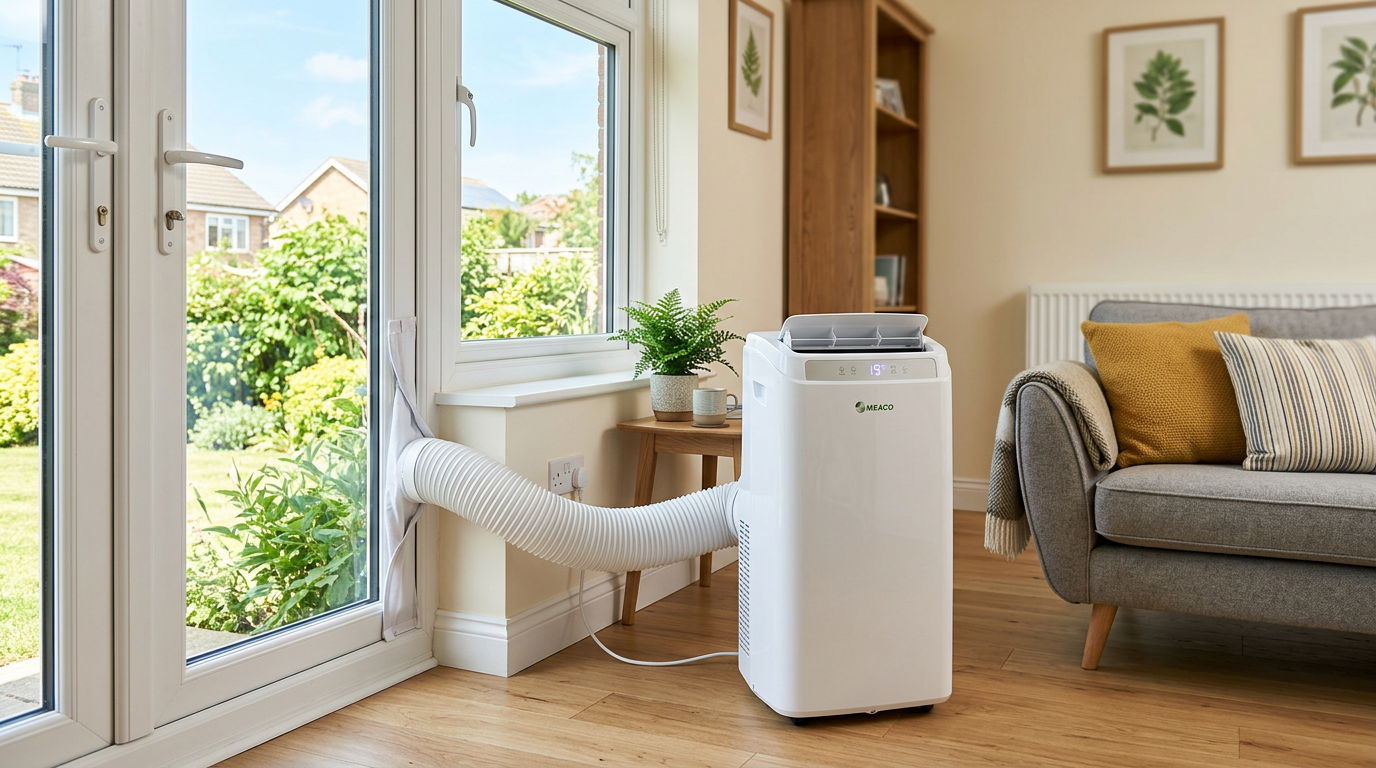
Almost every portable AC sold in the UK is single-hose: it draws room air, cools it, and expels warm air out of the window. The catch is that expelling air creates negative pressure, which sucks warm air in from the rest of the house through every gap — so the effective cooling is lower than the BTU sticker implies. It's the main reason portables have a reputation for underperforming.
Dual-hose units, like the Meaco Pro 16000 BTU, use one hose to draw outside air for cooling the condenser and the other to expel it, avoiding that negative-pressure penalty. They're more efficient in larger rooms, which is why the biggest, best-performing models tend to be dual-hose. For a small bedroom the difference is minor; for a large open-plan space it's significant.
A quick word on the newer efficiency label
Modern portable ACs carry an energy rating (A to G under the current EU/UK scheme). Two units of the same BTU can draw noticeably different wattage, and that wattage is what shows up on your bill. Inverter models such as the Dreo 318S vary compressor speed to hold a steady temperature rather than blasting and stopping, which is both quieter and cheaper to run than older fixed-speed units. If you are still weighing up whether a portable AC is the right solution, our honest guide on whether they actually work covers the fundamentals. Once you've settled the BTU band, choose the most efficient model within it — we've broken down the numbers in our guide to portable air conditioner running costs.
Matching BTU to our reviewed models
| Model | BTU | Best for room size | Type | Price |
|---|---|---|---|---|
| VonHaus 9000 BTU | 9,000 | Up to ~16 m² | Single-hose | £259.99 |
| Midea Comfee MPPH-09CRN7 | 9,000 | Up to ~16 m² | Single-hose | £299.99 |
| MeacoCool MC 10000 BTU | 10,000 | ~16–20 m² | Single-hose | £459.99 |
| Dreo 318S | ~12,000 | ~20–26 m² | Single-hose inverter | £399.99 |
| Pro Breeze 12000 BTU | 12,000 | ~20–26 m² | Single-hose | £649.99 |
| Meaco Pro 16000 BTU | 16,000 | ~30–45 m² | Dual-hose | £599.99 |
For most UK bedrooms a 9,000–10,000 BTU unit is the sweet spot. For an average living room, 12,000 BTU. Only reach for 16,000 if you're cooling a genuinely large or open-plan space — and if you are, make it a dual-hose model.
Don't forget venting and the window
Every portable AC has to vent its warm exhaust outside, usually through a window with a supplied sealing kit. This matters for sizing because a poorly sealed window lets warm air straight back in, undermining even a correctly sized unit. Casement and sash windows both work with the standard kits, but check the hose reaches your nearest window before you buy — most hoses are 1.2–1.5m. A unit that can't reach a window is no use at any BTU.
The short version
- Measure the room (length × width in metres) and start at ~215 BTU per m².
- Add ~10% each for south/west-facing, top-floor, kitchen heat, extra people or lots of electronics.
- Don't oversize — too big means a cold but clammy room and short-cycling.
- Go dual-hose for large or open-plan rooms; single-hose is fine for bedrooms.
- Pick the most efficient model in your BTU band to keep running costs down.
- Check the hose reaches a window you can seal properly.
During a heatwave, cooling is only half the comfort equation — the NHS heatwave guidance is worth reading for keeping bedrooms sleepable and knowing the warning signs of heat exhaustion, especially for young children and older relatives. For independent lab testing of how specific models actually perform against their BTU claims, Which? tests portable air conditioners on cooling power and noise. And to budget for the summer, our running costs guide uses the current Ofgem price cap rate to give you real per-hour and per-night figures.
Get the size right and a portable air conditioner is genuinely transformative on a hot night. Get it wrong — in either direction — and it's an expensive, noisy disappointment. The two minutes of measuring is worth it.