If you have decided a portable air conditioner is worth buying for a UK summer, the next question usually boils down to two brands: Meaco and De'Longhi. They sit at the top of almost every recommendation list, and for good reason — both make genuinely capable machines. But they approach the job from different angles, and the right choice depends on your room, your priorities and how much you want to spend. After researching both ranges in depth and reading hundreds of verified owner reviews, this is an honest head-to-head to help you work out which one actually suits your home.
The short answer
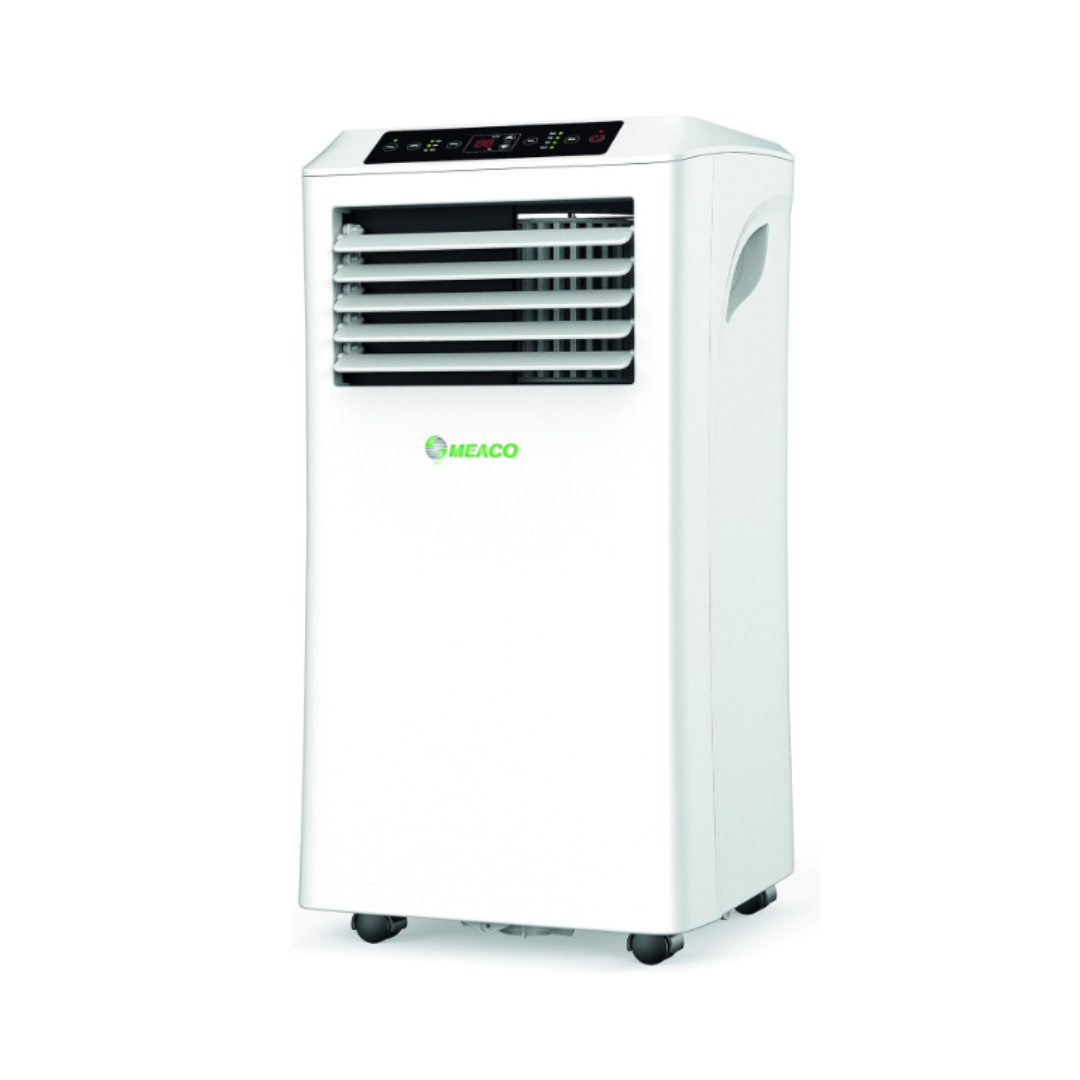
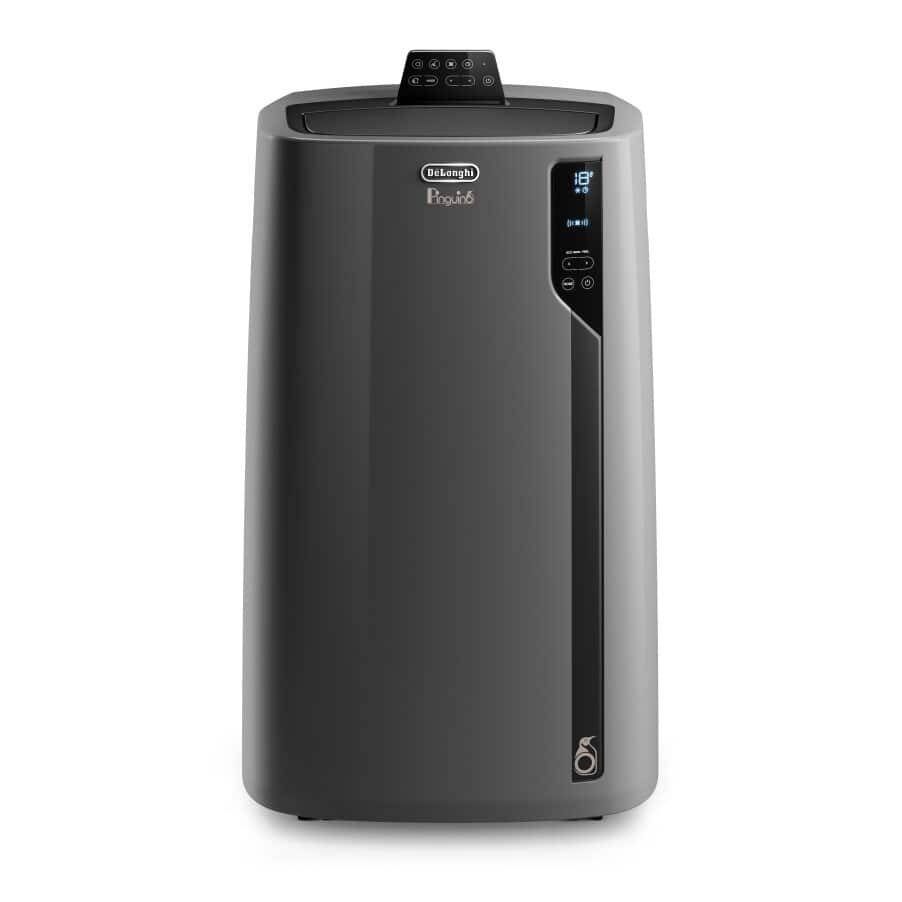
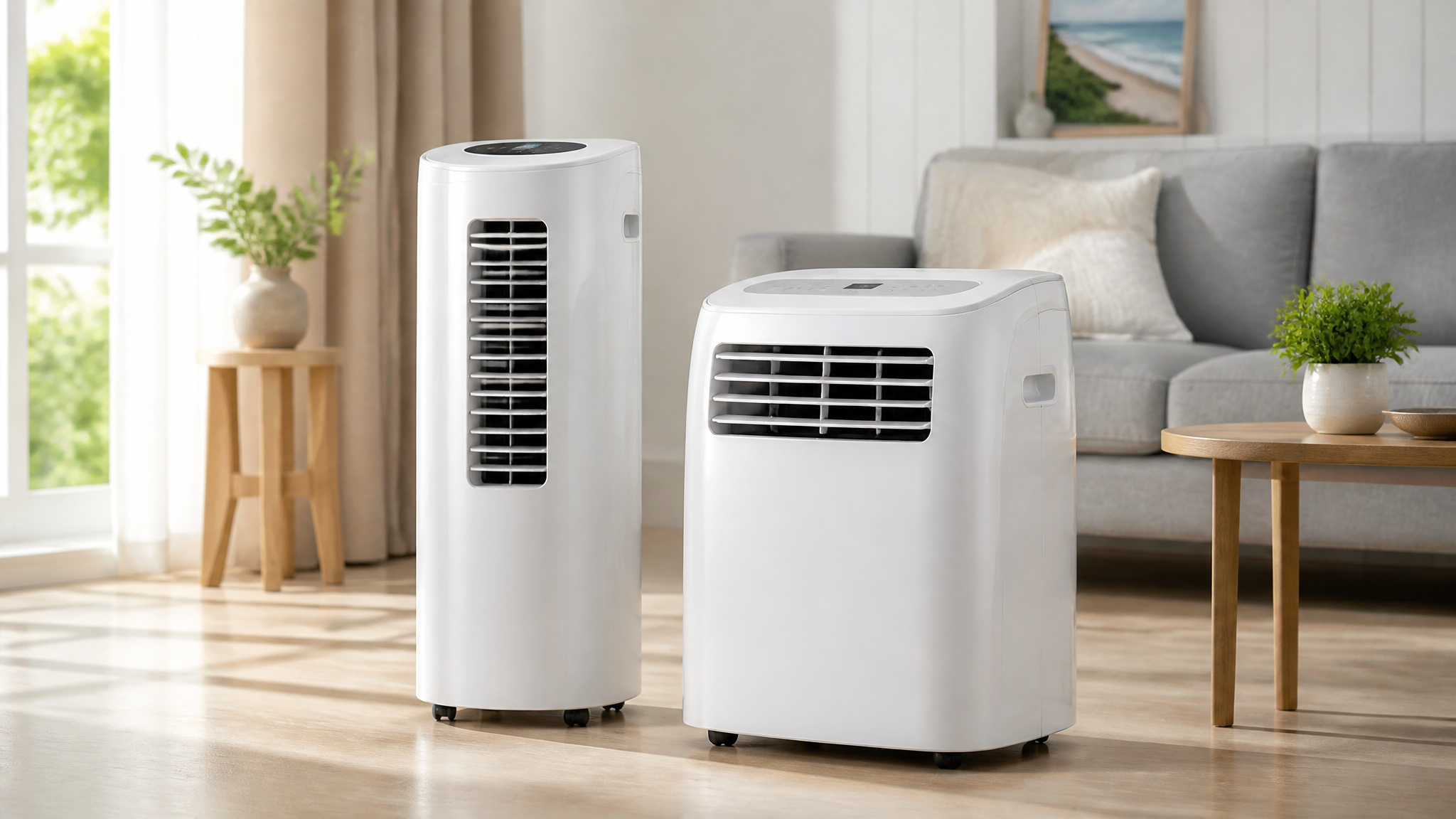
If you want the best all-round cooling performance and build quality for the money, the MeacoCool MC Series 10000 BTU is the smart buy. If you want a premium, whisper-quiet bedroom cooler from a household name and you are willing to pay a little more, the De'Longhi Pinguino PAC EL112 CST is the more polished option. That is the comparison in a sentence — but the detail is where your answer lives, so let us go through it properly.
Price: Meaco undercuts, De'Longhi justifies
The MeacoCool MC Series 10000 BTU typically lands around £459.99, while the De'Longhi Pinguino sits around £529.99 — a gap of roughly £70. Both are premium machines, so neither is a budget pick, but Meaco consistently delivers more BTU per pound. If outright value matters most, the Meaco wins on the numbers. The question is whether De'Longhi's refinements — particularly noise levels and build polish — are worth the extra for your situation.
Cooling performance
Both units deliver genuine cooling in UK summers — not just air movement, but actual temperature reduction. The Meaco 10000 BTU is rated for rooms up to about 28 m², which covers most UK bedrooms and medium living rooms comfortably. The De'Longhi, at a similar BTU rating, covers comparable space but uses a real-time climate control system that automatically adjusts output rather than simply blasting cold air and cycling off. In practice, both drop a stuffy 30°C bedroom to a comfortable low twenties within 20–30 minutes. Neither will struggle in a typical UK heatwave scenario.
If your room is larger, it is worth stepping up — the Meaco Pro 16000 BTU handles big open-plan spaces up to about 42 m². Getting the BTU right for your room is the single most important decision — our BTU sizing guide walks through the maths in two minutes.
Noise
This is where the De'Longhi pulls ahead for bedroom use. The Pinguino is one of the quietest portable ACs on the market, and owners consistently praise it for being tolerable at night. Meaco's MC Series is not loud by any means — it is competitive with most mid-range units — but it is noticeably more present than the De'Longhi when you are trying to sleep. If night-time noise is your main concern (and for most UK buyers it is, since heatwaves hit hardest at bedtime), the De'Longhi earns its premium here. The smaller Dreo 318S is another strong bedroom option if you want to save money.
Energy costs
Both draw roughly 1,000–1,100W while the compressor is running. At the current UK electricity rate of around 24.5p per kWh, that works out at about 24–27p per hour. Running one for eight hours overnight during a heatwave costs around £2, and most UK summers only need two to four weeks of heavy use, so the total seasonal cost is typically £30–£60. We broke the full sums down in our portable air conditioner running cost guide. The difference between the two brands on energy use is negligible — buy on performance and noise, not watts.
Build quality and design
De'Longhi has the edge on fit and finish. The Pinguino feels like a premium appliance — solid materials, well-finished edges, a design that does not look out of place in a bedroom. Meaco's build quality is good for the price, but it reads more "functional" than "furniture". Both come with window-seal kits and hose attachments. Meaco's kit tends to be more straightforward to set up from the box; De'Longhi's instructions are occasionally criticised in owner reviews, though the end result is the same. Neither brand has durability concerns — both are well-established UK sellers with good warranty support.
The NHS says: cool your bedroom
It is worth noting that this is not just about comfort. The NHS heatwave guidance specifically advises keeping bedrooms cool at night, especially for the elderly, young children and people with chronic health conditions. A portable AC is the most effective plug-and-play way to do that in a UK home without air conditioning — and either of these machines will do the job. Our guide to whether portable air conditioners actually work covers the physics and the setup that makes the difference.
Meaco vs De'Longhi: side by side
| MeacoCool MC Series 10000 BTU | De'Longhi Pinguino PAC EL112 CST | |
|---|---|---|
| Typical price | ~£459.99 | ~£529.99 |
| Best for | Best all-round value | Quiet bedroom cooling |
| Room size | Up to ~28 m² | Up to ~28 m² |
| Noise | Moderate (good for living rooms) | Low (strong for bedrooms) |
| Running cost (per hour) | ~25p | ~27p |
| Our rating | 9.4 / 10 | 9.2 / 10 |
Which should you buy?
Buy the MeacoCool MC Series 10000 BTU if: you want the best overall cooling performance for the money, the unit is going in a living room or home office where daytime noise is less of a concern, and you value Meaco's no-nonsense build and easy setup. At around £460 it is hard to beat for sheer value.
Buy the De'Longhi Pinguino PAC EL112 CST if: the air conditioner is primarily for your bedroom, night-time noise matters most, and you want the most refined, premium-feeling unit on the market. The extra £70 buys you genuinely lower noise and a more polished build.
If neither quite fits your budget, our honest guide to whether portable ACs work covers whether a cheaper unit or a fan would be good enough for your situation. And for independent lab data before you commit, the Which? air conditioner reviews are a good sense-check.
Ready to compare the full field? Our portable air conditioner reviews put Meaco, De'Longhi, Dreo, Pro Breeze and more side by side so you can match a unit to your room and your budget.