Buying a coffee machine is one of those purchases where the amount of choice actively works against you. There are pod machines at £60 and espresso machines at £2,500, and the marketing for both promises "barista-quality coffee at home". Somewhere between those two extremes sits the machine that is right for you — and the difference between getting that decision right and wrong is the difference between a machine you use twice a day for a decade and an expensive ornament pushed to the back of the worktop.
This guide is the complete version. It covers every type of machine sold in the UK, what you actually get at each price point, the specifications that matter and the ones that are marketing noise, what your coffee will cost per cup, and the mistakes that catch out most first-time buyers. Read it start to finish and you will know exactly what to buy. Or use the sections below to jump to the part you need.
The 60-second answer
If you want the short version before the detail:
- You drink one or two black coffees a day and value convenience above all: a pod machine or a good filter machine. £60–£200.
- You drink milky coffee daily and do not want a hobby: a bean-to-cup machine. £400–£900 is the sweet spot.
- You want the best possible cup and enjoy the process: a manual espresso machine plus a separate grinder. £600–£1,500 across both.
- You make coffee for a crowd, or drink long black coffee: a filter/drip machine, or a bean-to-cup with a large tank. £100–£600.
- You are not sure yet and do not want to overspend: a decent filter machine or a moka pot, and revisit in a year. Under £100.
The single most common mistake is buying a manual espresso machine because it looks the part, then discovering you do not enjoy the ten minutes of grinding, tamping, steaming and cleaning that each drink demands. The second most common is buying the cheapest bean-to-cup on the shelf and being disappointed that it cannot make a decent flat white. Both are avoidable, and the rest of this guide explains how.
The six types of coffee machine explained
Nearly every machine sold in the UK falls into one of six categories. Understanding what separates them is the foundation of the whole decision.
1. Pod and capsule machines
You drop in a sealed capsule, press a button, and coffee comes out. Nespresso, Dolce Gusto, Tassimo and Lavazza all operate their own capsule systems, and the machines themselves are cheap because the manufacturers make their money on the pods.
The case for: Effortless, fast, consistent, tiny footprint, almost no cleaning, and virtually no learning curve. The coffee is genuinely decent — considerably better than instant, and better than a badly made espresso from an expensive machine.
The case against: You are locked into one brand's ecosystem and pricing. At roughly 35–50p per pod you are paying the equivalent of £30–£50 per kilo of coffee, several times the price of good beans. You cannot use your own coffee, the environmental footprint is poor unless you diligently recycle, and the ceiling on quality is fixed — a pod machine cannot make a better cup than the pod allows.
2. Filter and drip machines
Hot water passes slowly through a bed of ground coffee in a paper or mesh filter, and the result collects in a jug or carafe. This is the classic office and American-style machine, and it has quietly become good again in the last few years.
The case for: Excellent for long black coffee, brilliant for making several cups at once, cheap to buy and cheap to run. A machine carrying SCA certification will brew at the correct temperature and contact time, which genuinely improves the cup. Very low maintenance.
The case against: No espresso, and therefore no proper flat whites, lattes or cappuccinos. Coffee left sitting on a hotplate deteriorates quickly. If milk drinks are your thing, this is not your machine.
3. Bean-to-cup machines
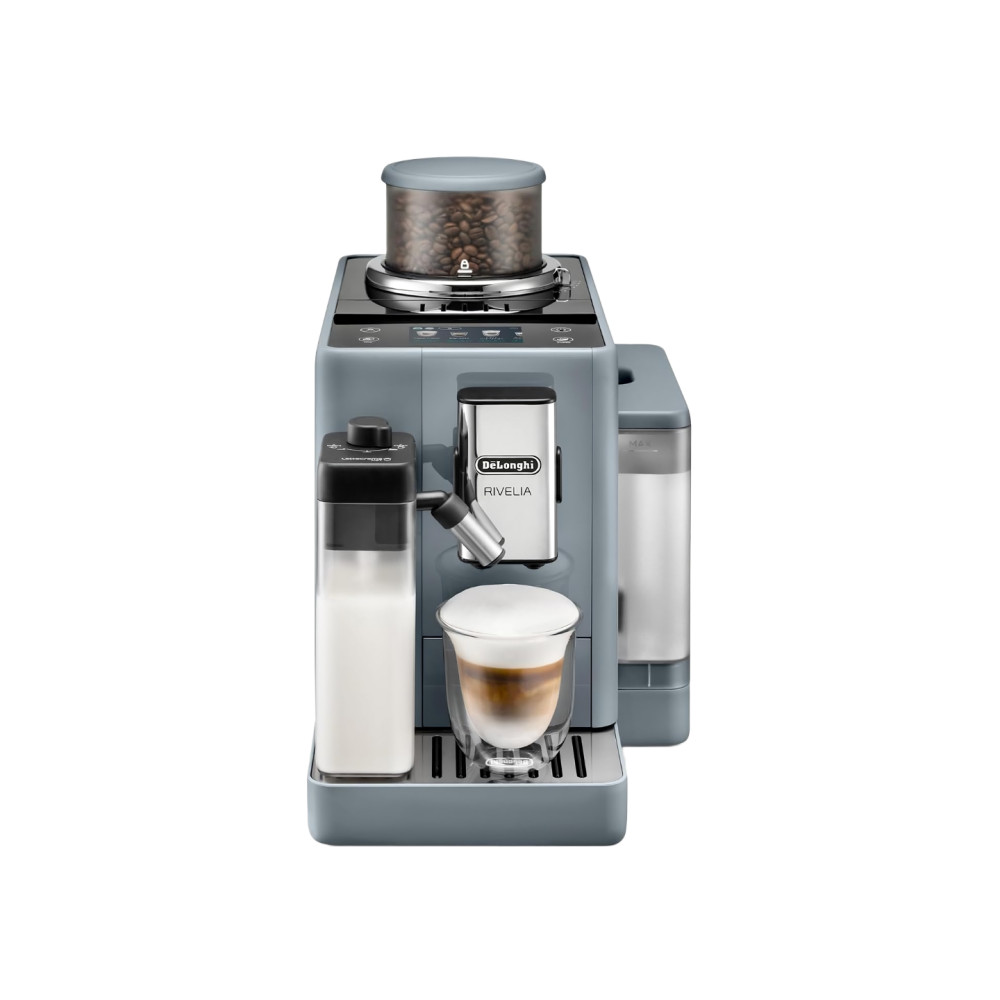
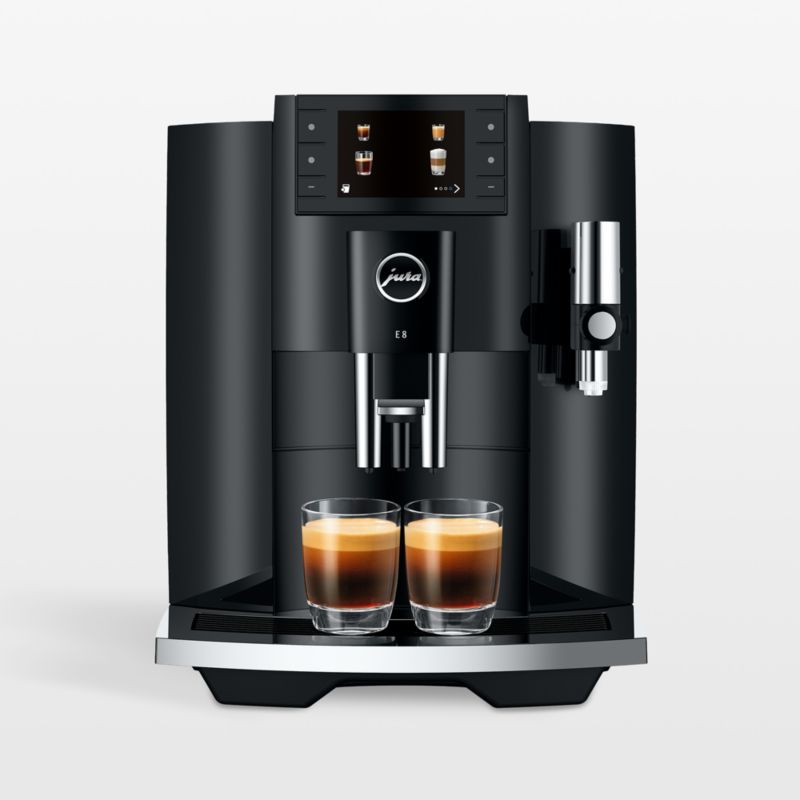
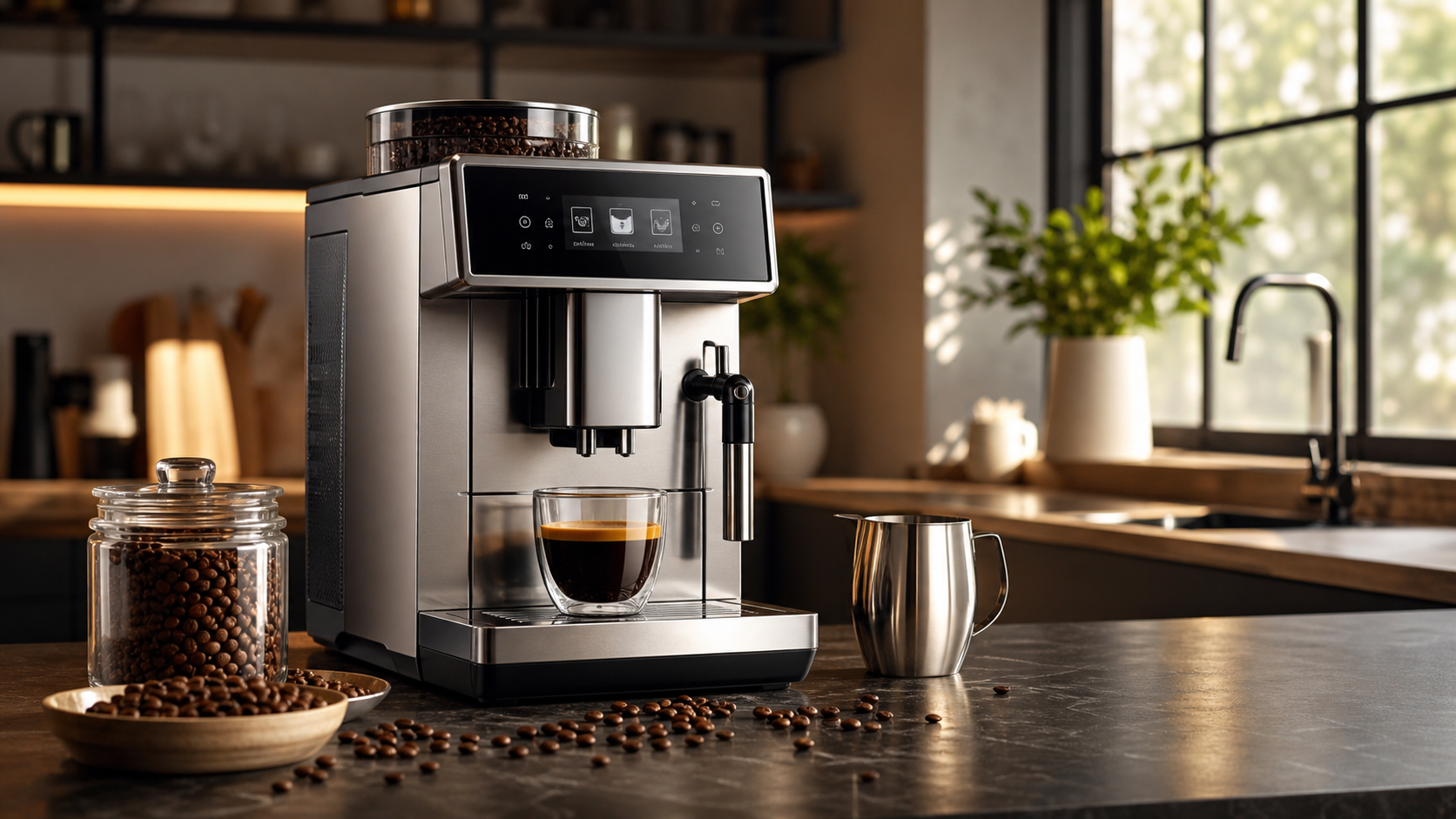
An all-in-one automatic: beans go in the hopper, the machine grinds, doses, tamps, brews and (on most models) froths the milk, all at the touch of a button. This is the fastest-growing category in the UK and the one most households end up choosing.
The case for: Fresh-ground coffee with zero skill required. Milk drinks at the press of a button. Cost per cup is a fraction of pods. Modern models remember user profiles, adjust strength and volume, and clean their own milk systems. For a household where several people want different drinks quickly, nothing else comes close.
The case against: Expensive up front. The built-in grinders are competent but rarely as good as a dedicated one. The automatic milk frothers on cheaper models produce foam that is airy rather than the glossy microfoam a steam wand gives. They are bulky, and they need regular descaling and cleaning cycles. Our bean to cup vs espresso machine comparison goes deeper on this trade-off.
4. Manual espresso machines (pump machines)
You grind, dose and tamp the coffee yourself, lock the portafilter into the group head, pull the shot, and steam the milk with a wand. This is the enthusiast's route and the only one that gives you full control over every variable.
The case for: The highest ceiling on quality by a wide margin. You control the grind, dose, tamp, extraction time and milk texture. A good manual machine with a good grinder will beat any bean-to-cup at any price. Steam wands produce proper microfoam, which is what makes latte art possible and gives milk drinks their silky texture. Machines are repairable and last decades.
The case against: It is a skill, and it takes weeks to get consistently good. Each drink takes five to ten minutes including cleaning. It demands a separate burr grinder, which is a significant extra cost people routinely forget to budget for. If nobody else in the household can operate it, you become the permanent barista.
5. Pod-espresso hybrids and semi-automatics
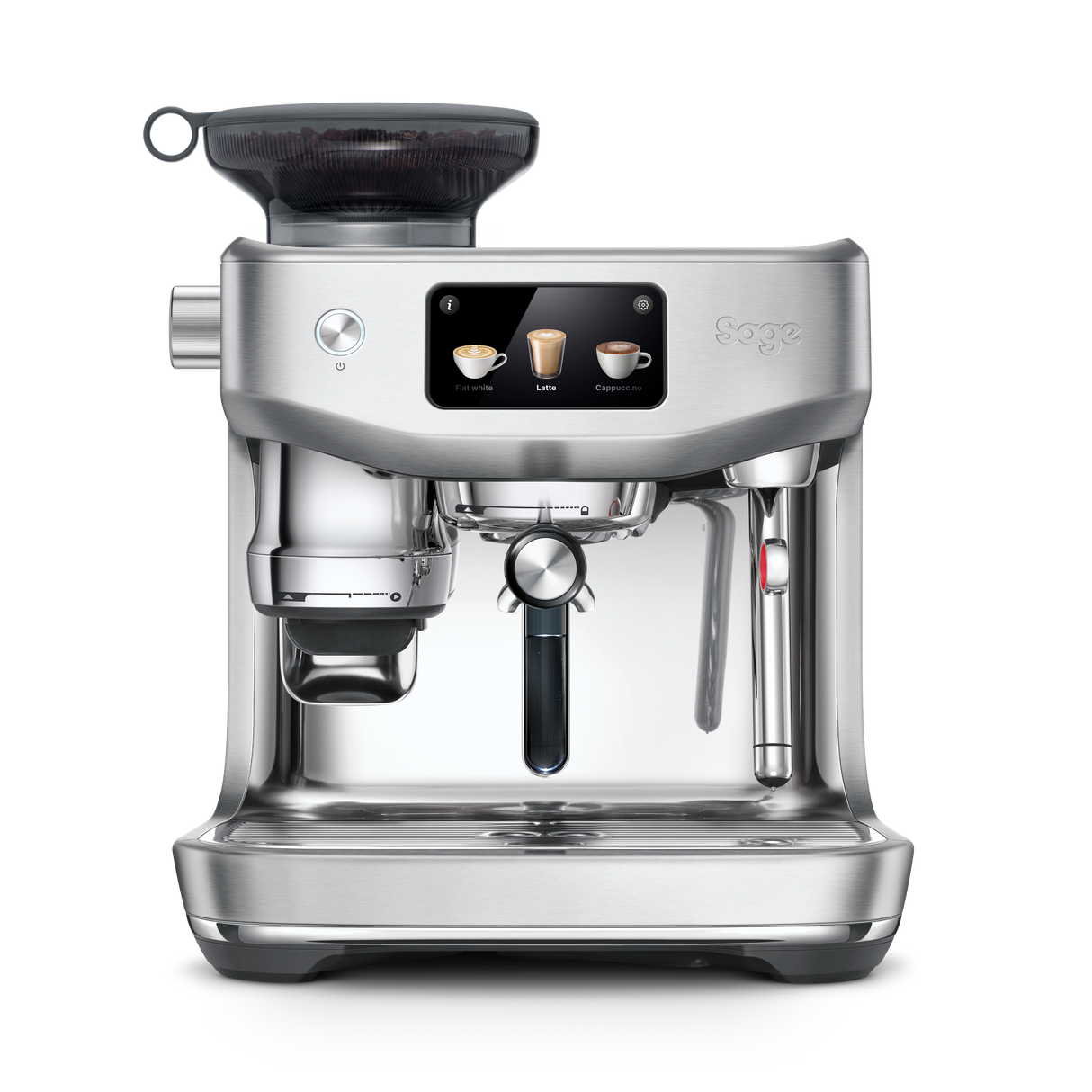
A growing middle ground: machines that take a portafilter like a manual machine but automate the harder parts. Sage's Barista range is the best-known example — it has a built-in grinder, assisted or automatic tamping, and guided extraction, but still uses a real portafilter and a real steam wand.
The case for: Most of the quality of a manual setup with much of the convenience removed from the learning curve. One appliance rather than two. Genuinely the best of both worlds for a lot of people, and the reason this category has grown so fast in the UK.
The case against: Still slower than a bean-to-cup. The integrated grinder cannot be upgraded independently. Prices climb quickly at the top of the range. Our Sage vs De'Longhi comparison covers the two dominant brands in this space.
6. Manual brewers (no electricity required)
Moka pots, French presses, AeroPress, V60 pour-over and Chemex. Not machines in the strict sense, but they belong in any honest buying guide because for a lot of people they are the right answer.
The case for: £15–£40 buys you the ability to make genuinely excellent coffee. An AeroPress or a V60 in skilled hands beats a £300 bean-to-cup. No electricity, no descaling, no breakdowns, and they take up almost no space.
The case against: Entirely manual, one cup at a time, no milk frothing, and a real technique element. Not practical for a busy weekday morning with three people wanting coffee at once.
Type comparison at a glance
| Type | Typical price | Cost per cup | Time per drink | Skill needed | Best for |
|---|---|---|---|---|---|
| Pod / capsule | £60–£250 | 35–50p | 30 seconds | None | Convenience above all |
| Filter / drip | £40–£250 | 8–15p | 5 min for a jug | Minimal | Long black coffee, groups |
| Bean-to-cup | £350–£2,000 | 12–20p | 1–2 minutes | None | Daily milk drinks, families |
| Manual espresso | £250–£2,500+ | 12–20p | 5–10 minutes | High | Best possible quality |
| Semi-auto hybrid | £400–£1,500 | 12–20p | 3–5 minutes | Moderate | Quality with less faff |
| Manual brewers | £15–£60 | 10–18p | 3–5 minutes | Moderate | Black coffee on a budget |
What your budget actually buys
Price bands in the coffee world are unusually meaningful — each one unlocks specific capabilities rather than just better finish. Here is what changes as you move up.
Under £100
Basic pod machines, entry filter machines, and all the manual brewers. At this level you are buying a way to make coffee, not a way to make espresso. A £30 AeroPress or a £60 SCA-certified filter machine will produce better coffee than a £90 pressurised "espresso" machine, which uses a pressurised basket to fake crema and cannot make a genuinely good shot. If your budget is under £100, buy a manual brewer or a filter machine and put the espresso ambition on hold.
£100–£300
Premium pod machines with milk systems, good filter machines, and the first credible entry-level espresso machines. This is where the Gaggia Classic and similar machines live — real portafilters, real steam wands, and a genuine route into espresso, provided you budget separately for a grinder. Cheap bean-to-cup machines appear here too, and they are generally best avoided; they compromise on grinder quality and milk systems in ways that show in the cup.
£300–£600
The first genuinely good bean-to-cup machines, and solid mid-range espresso machines. At this level a bean-to-cup will have a decent conical burr grinder, an adjustable grind setting, and either a steam wand or a competent automatic milk system. Expect one-touch americanos and reasonable cappuccinos. For espresso machines, this band brings better temperature stability and build quality.
£600–£1,000
The sweet spot for most serious home coffee drinkers. Bean-to-cup machines here offer one-touch milk drinks with genuinely good foam, multiple user profiles, dual hoppers on some models, and self-cleaning milk circuits. Semi-automatic machines in this band — Sage's Barista Touch and similar — combine an integrated grinder with assisted tamping and guided extraction, which is the fastest route to consistently good espresso without years of practice.
£1,000–£1,500
Premium bean-to-cup territory (Jura, Siemens, high-end De'Longhi) and serious prosumer espresso machines. You are paying for build quality, quieter and more consistent grinders, better temperature control, more refined milk systems, and app connectivity. The improvement in the cup over the £600–£1,000 band is real but diminishing; the improvement in daily experience and longevity is more noticeable.
£1,500 and above
Dual-boiler espresso machines, commercial-grade components, E61 group heads, and flagship bean-to-cup machines. Dual boilers let you pull a shot and steam milk simultaneously at optimum temperatures for each — a meaningful advantage if you make several milk drinks back to back. Above about £2,000 you are buying into diminishing returns unless you are running a small café.
The specifications that actually matter
Coffee machine marketing is full of numbers designed to look impressive. These are the ones worth paying attention to.
Pressure (bar) — mostly marketing
You will see "19 bar" or "20 bar" plastered across boxes. Espresso is properly extracted at 9 bar. Anything above that is either unused headroom or, on cheap machines, a pressurised basket compensating for a poor grind. A 15-bar pump and a 20-bar pump make identical coffee. Ignore this number entirely — it tells you nothing about quality.
Boiler type — genuinely important
This determines temperature stability, which is one of the biggest factors in how your coffee tastes.
- Thermoblock / thermocoil: heats water on demand as it flows through. Fast to warm up, compact, found in most machines under £700. Temperature can fluctuate during a shot.
- Single boiler: one boiler for both brewing and steaming. You must wait between pulling a shot and steaming milk while the temperature changes. Common on entry and mid-range espresso machines.
- Heat exchanger: one boiler, but a separate water path lets you brew and steam simultaneously. A prosumer feature.
- Dual boiler: separate boilers held at separate temperatures. The best solution, and the most expensive. Only worth it if you make several milk drinks in a row.
PID temperature control is worth looking for at any price. It holds brew temperature within about a degree instead of the several degrees a basic thermostat allows, and it produces noticeably more consistent shots.
The grinder — the most underrated component
If you take one thing from this guide, take this: the grinder matters more than the machine. A £300 espresso machine with a £250 grinder will comfortably beat a £550 machine with a £30 blade grinder. Grind consistency determines whether water flows evenly through the coffee, and uneven flow is the single biggest cause of bad espresso at home.
- Blade grinders chop coffee into wildly inconsistent fragments. Unusable for espresso. Avoid.
- Burr grinders crush beans between two surfaces at a set distance, producing uniform particles. Essential for espresso, and a significant upgrade for any brew method.
- Conical vs flat burrs: both are good. Conical burrs are cheaper, quieter and more forgiving; flat burrs give marginally more clarity at higher price points. Do not agonise over this.
- Stepped vs stepless adjustment: stepless gives finer control, which matters for espresso where a tiny grind change alters the shot substantially.
On bean-to-cup machines the grinder is built in, and its quality is one of the main things separating a £400 machine from a £900 one. Check that the grind is adjustable, and that the burrs are ceramic or hardened steel rather than plain steel.
The milk system — where the biggest quality gap lives
If you drink flat whites, lattes or cappuccinos, this deserves as much attention as the coffee side.
- Manual steam wand: you texture the milk yourself. Produces the best result by a clear margin — glossy, paint-like microfoam rather than bubbly froth. Requires practice and cleaning after every use. Look for a wand with reasonable articulation and decent steam power.
- Automatic milk carafe: the machine draws milk from a jug and froths it. Convenient, one-touch, and on premium machines the results are genuinely good. On cheaper machines the foam is airy and dissipates quickly.
- Panarello / assisted wand: a sleeve over a steam wand that injects air automatically. Easier than a bare wand but produces coarse foam. A compromise.
Whatever the system, check how it cleans. Automatic milk circuits that do not rinse themselves after every drink become unhygienic quickly. A self-cleaning cycle is worth paying for.
Other specifications worth checking
| Specification | Why it matters | What to look for |
|---|---|---|
| Water tank size | How often you refill | 1.8L+ for a busy household |
| Portafilter size | Basket availability and dose | 58mm is the industry standard |
| Warm-up time | Morning convenience | Under 45 seconds is good |
| Cup clearance | Whether your travel mug fits | Measure your tallest cup first |
| Bypass doser | Using pre-ground or decaf occasionally | Useful on bean-to-cup machines |
| User profiles | Households with different tastes | 2+ on bean-to-cup |
| Footprint and height | Whether it fits under your wall units | Measure before you buy |
What coffee actually costs you
Running cost is where the maths often surprises people, and it is a legitimate part of the buying decision — particularly if you are trying to justify a machine that costs several hundred pounds.
Cost per cup by method
| Method | Coffee cost | Electricity | Milk (if used) | Total per cup |
|---|---|---|---|---|
| High street coffee shop | — | — | — | £3.20–£4.50 |
| Pod machine | 35–50p | ~1p | ~10p | 46–61p |
| Bean-to-cup (mid-range beans) | 10–16p | ~2p | ~10p | 22–28p |
| Manual espresso + grinder | 10–16p | ~2p | ~10p | 22–28p |
| Filter machine | 8–12p | ~2p | ~10p | 20–24p |
Those coffee costs assume beans at £18–£28 per kilo, using 18g per double shot. Electricity is based on typical machine consumption at the prevailing unit rate under the Ofgem energy price cap — the standby draw of a machine left on all day is a bigger factor than the brewing itself, so switch it off between uses.
How quickly does a machine pay for itself?
If you currently buy one flat white a day at £3.60, that is roughly £1,314 a year. Making the same drink at home for around 25p costs about £91 a year. The saving is over £1,200 annually, which means:
- A £400 bean-to-cup pays for itself in about four months
- A £900 machine pays for itself in about nine months
- A £1,500 setup pays for itself in about fifteen months
Even allowing for beans, milk, descaler and the occasional repair, the economics of home coffee are genuinely compelling for anyone with a daily habit. The caveat is honesty about your actual consumption — the maths only works if you use the machine. Britain drinks around 98 million cups of coffee a day according to the British Coffee Association, and a good proportion of those are made on machines bought with the best of intentions and used far less than planned.
Water, limescale and the UK problem
This section matters more in Britain than almost anywhere else, and it is routinely ignored until a machine breaks.
Around 60% of UK households are in hard water areas — most of the south and east of England especially. Hard water deposits limescale inside the boiler and pipework of your machine, which restricts flow, reduces brewing temperature, makes the machine work harder, and eventually kills it. Manufacturers will not honour warranty claims on scale damage, and it is the single most common cause of premature failure in home coffee machines.
The fixes are straightforward. Use filtered water — either a jug filter or the manufacturer's own cartridge in the tank. Descale on schedule rather than when the machine complains. Consider a machine with a water hardness setting, which adjusts the descale interval automatically. Our UK limescale guide for coffee machines covers exactly what to do for your area.
Water quality also affects taste directly, not just machine longevity. Coffee is over 98% water, and heavily chlorinated or very hard water flattens flavour. The Specialty Coffee Association publishes water standards for brewing, and while you do not need to hit them exactly, a simple filter jug makes a noticeable difference in most UK homes.
Maintenance: what you are signing up for
Every machine needs upkeep, and the amount varies enormously by type. Knowing this before you buy prevents resentment later.
| Task | Pod | Filter | Bean-to-cup | Manual espresso |
|---|---|---|---|---|
| After each drink | Eject pod | Nothing | Rinse milk system | Knock out puck, purge and wipe wand |
| Daily | Empty tray | Rinse carafe | Empty grounds and tray | Backflush group head |
| Weekly | Wipe down | Wash filter basket | Clean brew unit | Clean baskets and screen |
| Monthly | — | — | Milk circuit deep clean | Detergent backflush |
| Every 2–3 months | Descale | Descale | Descale | Descale |
Bean-to-cup machines with removable brew units are considerably easier to keep clean than sealed ones — if you can take the brew group out and rinse it under the tap, do. Sealed units rely entirely on cleaning tablets and eventually accumulate rancid coffee oils that taint every cup.
The brands, honestly assessed
Brand reputation in coffee is reasonably well earned, and knowing each one's character narrows the field quickly.
- Sage (Breville outside the UK): dominates the semi-automatic space. Excellent integrated grinders, genuinely useful guided features, strong build. Expensive, and repairs can be costly out of warranty.
- De'Longhi: the volume leader in UK bean-to-cup. Huge range at every price point, reliable, widely serviced, and consistently good value. Milk systems on mid-range models are competent rather than exceptional.
- Jura: premium Swiss bean-to-cup. Superb build quality, excellent milk systems, very long service life. Costly, and the accessories and service are priced accordingly.
- Philips / Saeco: strong value in bean-to-cup, and the LatteGo milk system is genuinely clever — it has no tubes, so cleaning takes seconds.
- Melitta: German, well engineered, particularly good filter machines and solid bean-to-cup models with good grinders.
- Siemens / Bosch: premium bean-to-cup with excellent interfaces and app control. Beautifully made, priced to match.
- Gaggia: the classic entry route into real espresso. The Gaggia Classic is endlessly modifiable and has a devoted following.
- Smeg: styling first, performance second. Fine machines, but you are paying a premium for the look.
- Nespresso: the benchmark pod system. Best-in-class capsules, wide machine range, and the Vertuo line does long coffee well.
For a head-to-head on the two brands most UK buyers end up choosing between, our Sage vs De'Longhi guide works through the specific trade-offs.
Seven mistakes to avoid
1. Buying a machine without budgeting for a grinder
If you are buying a manual espresso machine, the grinder is not an accessory — it is half the setup. Budget at least £150–£250 for a decent burr grinder, and if that pushes you over budget, buy a cheaper machine rather than a cheaper grinder.
2. Choosing based on pressure figures
As covered above, 19 bar is not better than 9 bar. It is a marketing number. Judge machines on boiler type, temperature control, grinder quality and milk system instead.
3. Overestimating how much faff you will tolerate
Be brutally honest about your mornings. If you have twenty minutes and enjoy the ritual, a manual machine is a joy. If you have four minutes and two children to get out of the door, it will be abandoned within a month.
4. Ignoring the milk side
If 90% of your drinks are flat whites, the milk system matters as much as the coffee system. A machine with brilliant espresso and a poor frother will disappoint you every single day.
5. Not measuring the space
Check height under wall cabinets, depth including the water tank when it slides out at the back, and clearance to lift the bean hopper lid. A surprising number of machines get returned for this alone.
6. Skipping descaling
The most expensive mistake of all in UK hard water areas. Descaling costs a few pounds and twenty minutes; a scaled-up boiler costs a new machine.
7. Buying cheap beans for an expensive machine
A £1,000 machine cannot rescue stale supermarket beans roasted eight months ago. Fresh beans from a roaster, used within a month of the roast date, will improve your coffee more than any upgrade. Our guide on making barista-quality coffee at home covers technique and beans in detail.
Your decision framework
Work through these four questions in order and the answer usually presents itself.
Question one: what do you actually drink? If it is long black coffee, a filter machine or a bean-to-cup with a good americano function. If it is espresso-based milk drinks, you need a machine with a proper milk system. If it is a mixture across several people, a bean-to-cup with user profiles.
Question two: how much time will you give it, every day, on a bad morning? Under a minute means pod or bean-to-cup. Three to five minutes opens up semi-automatics. Ten minutes and genuine enthusiasm means a manual setup is on the table.
Question three: what is your total budget, including the grinder and a year of beans? Be realistic. A £600 all-in budget buys a very good bean-to-cup, or a decent espresso machine and a mediocre grinder. The former will make better coffee for most people.
Question four: who else will use it? If the answer is "several people, some of whom will not read the manual", automation is worth paying for. If it is just you and you enjoy the craft, manual control is worth the time.
Answer those four honestly and you will have narrowed a market of hundreds of machines down to a handful. From there, our individual comparisons — bean to cup vs espresso and Sage vs De'Longhi — will help you make the final call, and independent testing from Which? is a useful cross-check on reliability before you commit.
Frequently asked questions
What is the best type of coffee machine for home use in the UK?
For most UK households, a bean-to-cup machine in the £400–£900 range offers the best balance of quality, convenience and cost per cup. It makes fresh-ground coffee and milk drinks at the touch of a button with no skill required. If you drink only black coffee, a good filter machine costs far less and does the job well. If you enjoy the process and want the best possible cup, a manual espresso machine paired with a quality burr grinder is unbeatable.
How much should I spend on a coffee machine?
Spend according to what you drink and how often. Under £100 buys a good filter machine or manual brewer. £300–£600 gets a capable bean-to-cup. £600–£1,000 is the sweet spot for one-touch milk drinks with genuinely good foam. Above £1,500 you are paying for build quality and refinement rather than dramatically better coffee. Always include the cost of a grinder if you are buying a manual espresso machine.
Is a bean-to-cup machine better than an espresso machine?
Neither is universally better — they suit different people. A bean-to-cup is faster, needs no skill, and is ideal for households where several people want different drinks. A manual espresso machine produces better coffee and better milk texture but takes practice and five to ten minutes per drink. Choose based on how much time and effort you genuinely want to invest each morning.
Does the number of bars of pressure matter?
No. Espresso is properly extracted at around 9 bar, so a machine advertising 15, 19 or 20 bar offers no advantage. It is a marketing figure. Focus instead on boiler type, PID temperature control, grinder quality and the milk system, all of which genuinely affect the coffee in your cup.
Do I need a separate coffee grinder?
If you are buying a manual espresso machine, yes — it is essential, and you should budget £150–£250 for a burr grinder. A blade grinder will not produce the consistency espresso requires. Bean-to-cup and most semi-automatic machines have grinders built in, so no separate purchase is needed.
How often should I descale my coffee machine?
Every two to three months in a hard water area, or every four to six months in a soft water area. Around 60% of UK homes are in hard water areas, and limescale is the leading cause of premature machine failure. Using filtered water in the tank extends the interval significantly and improves the taste of your coffee.
How much does it cost to make coffee at home?
A home-made flat white costs roughly 22–28p using fresh beans, compared with £3.20–£4.50 in a coffee shop. A pod machine costs more at around 46–61p per cup because of capsule pricing. For anyone with a daily coffee habit, a £400 machine typically pays for itself within four months.
Which coffee machine brand is most reliable in the UK?
De'Longhi and Philips have strong reliability records with wide UK service networks and readily available parts. Jura and Siemens are exceptionally well built but expensive to repair. Sage machines perform excellently but can be costly out of warranty. Whichever brand you choose, descaling on schedule has more impact on longevity than the badge on the front.