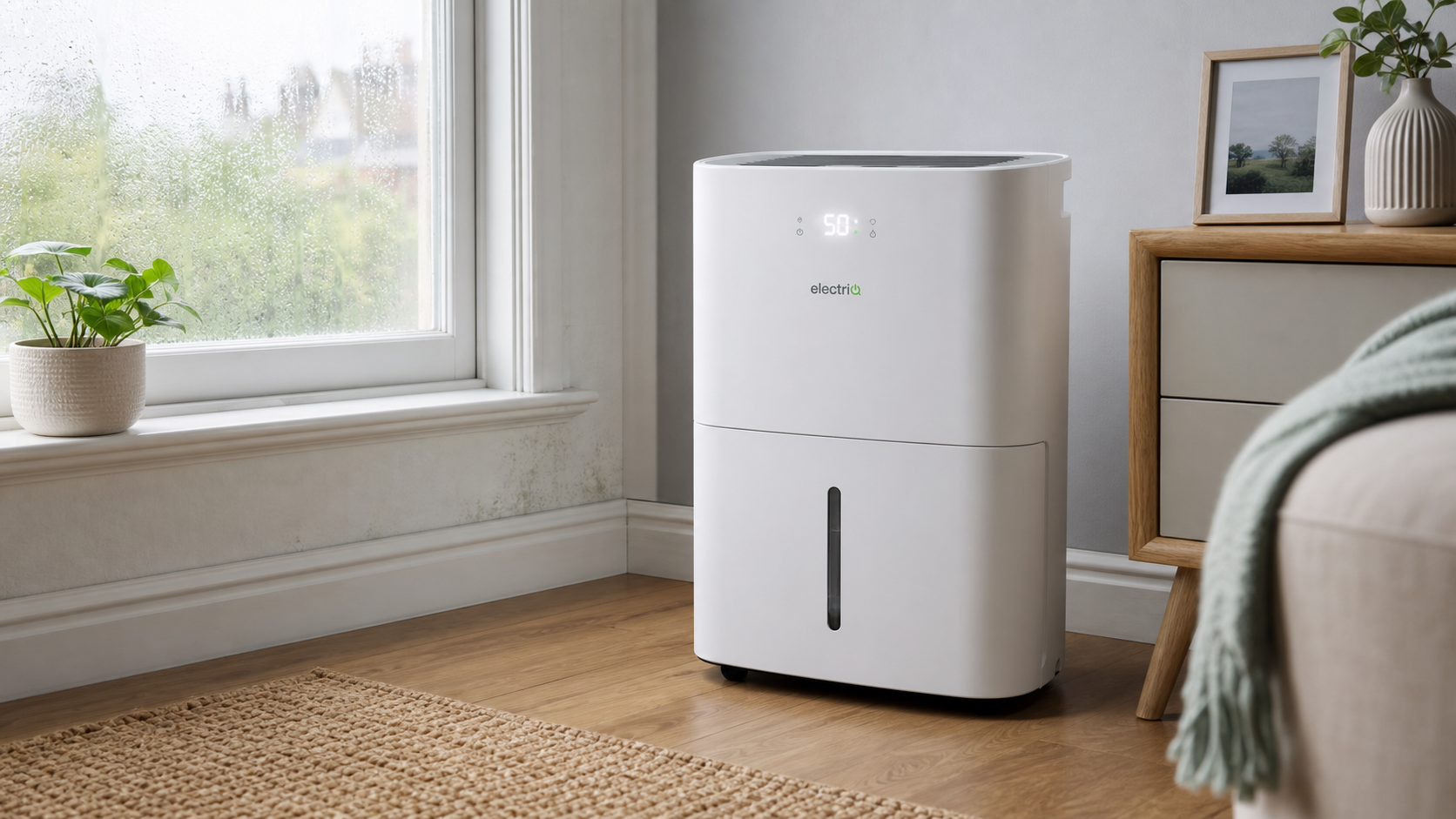
Dehumidifiers are sold by their "litres per day" rating — 12L, 20L, 25L and so on — and it is the single most confusing number when you are trying to buy one. Too small and it runs constantly without ever winning; too big and you have overpaid for capacity you never use. This guide explains exactly what that litre rating means, how to match it to your home, and which size is right for the most common UK situations.
The short answer
For most UK homes, the sweet spot is a 12L to 20L dehumidifier:
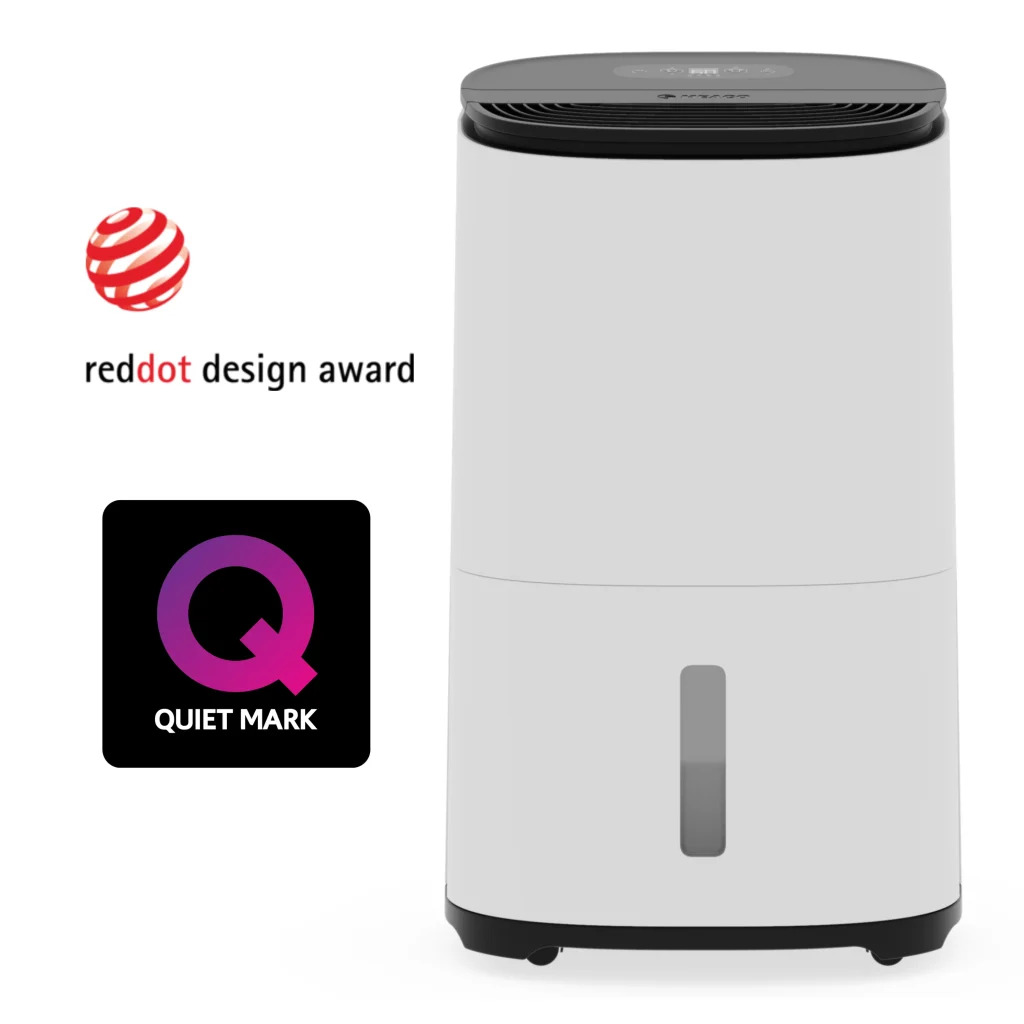
- Flat or small house (1–2 bedrooms), mild damp: a 10–12L model like the MeacoDry Arete One 12L
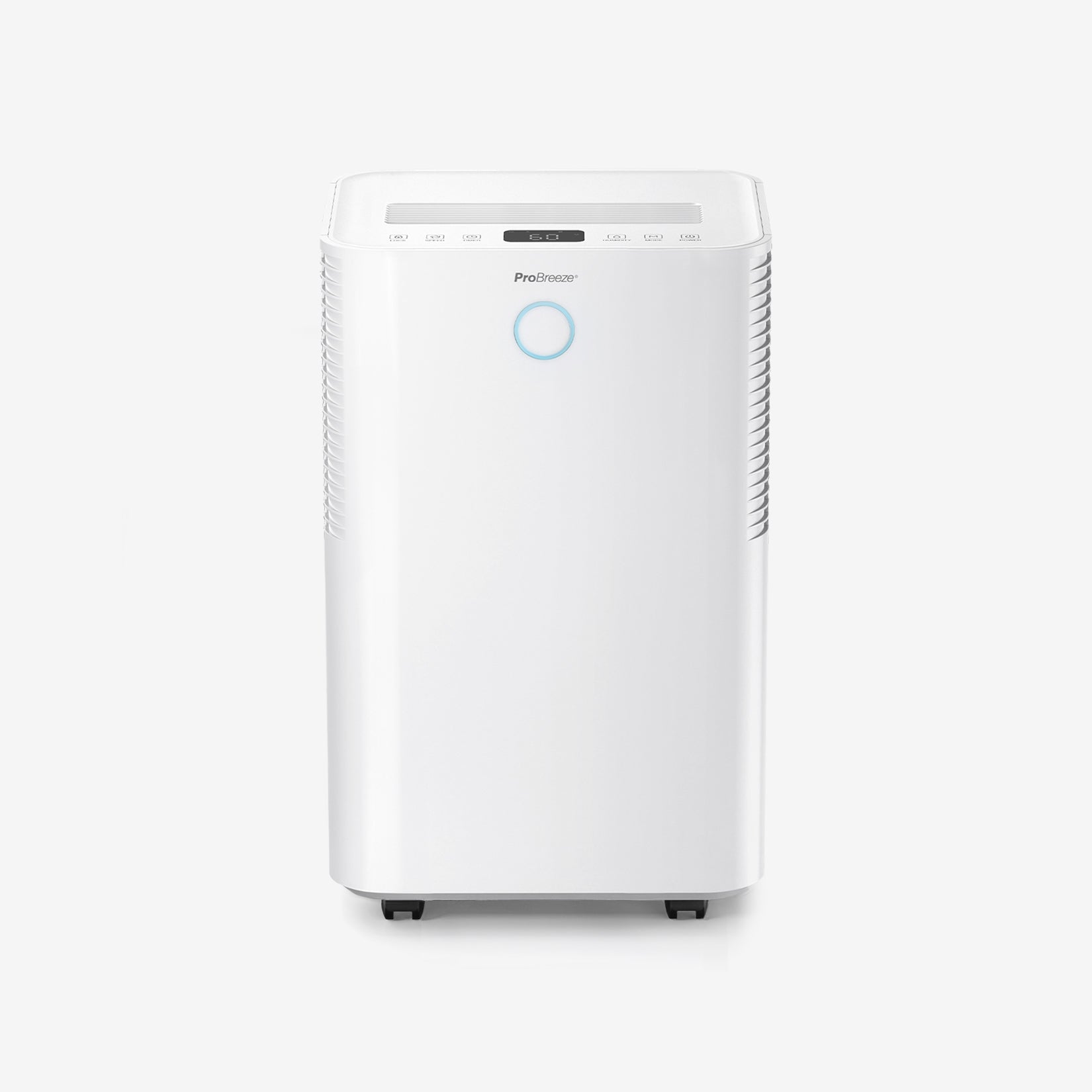
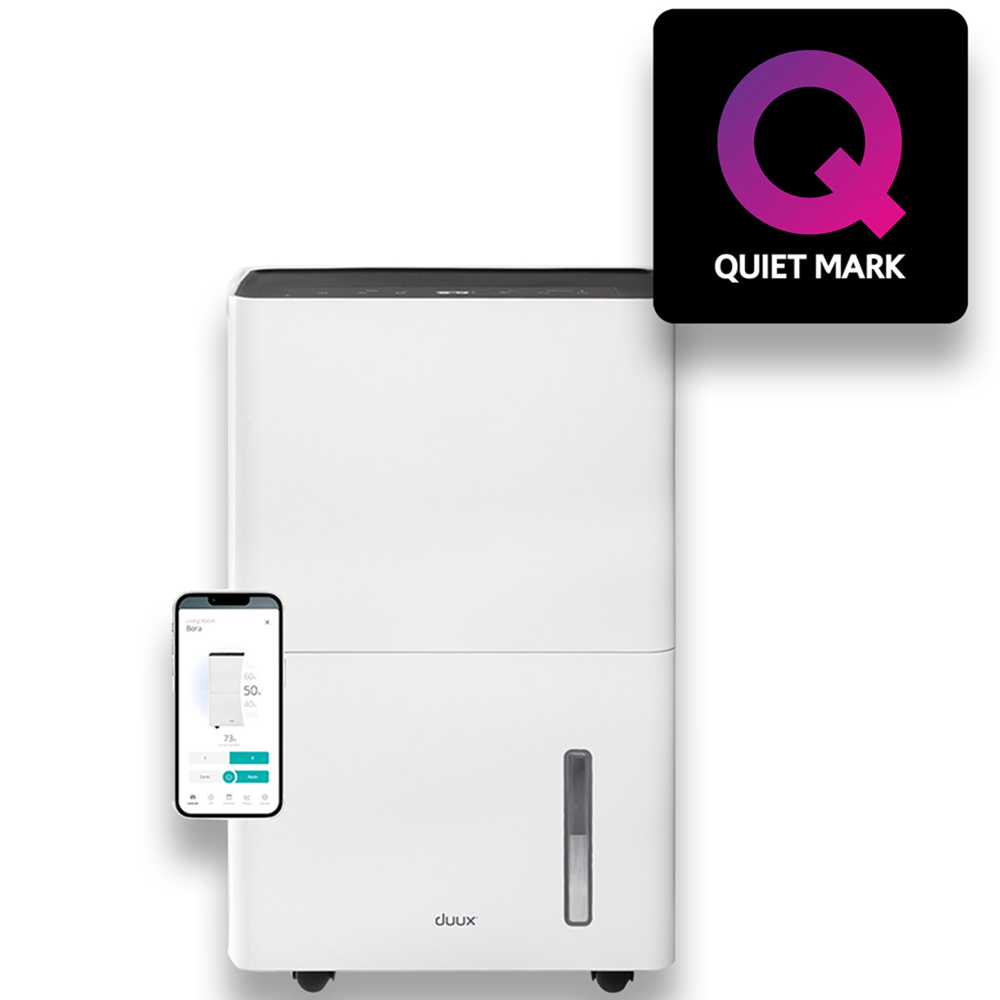
- Average family home (2–4 bedrooms), condensation and drying washing: a 20L model like the MeacoDry Arete One 20L or Pro Breeze OmniDry 20L
- Larger or older house, persistent damp, or a specific mould problem: a 20–25L model run with the humidistat doing the work
When in doubt, size up rather than down. A larger dehumidifier does not extract more moisture than the room contains — it simply reaches the target humidity faster and then idles, which actually uses less electricity than a small unit grinding away all day.
What the "litres per day" rating actually means
The headline figure — 12L, 20L, 25L — is the maximum amount of water the machine can pull from the air in 24 hours under laboratory test conditions (typically 30°C and 80% humidity). Your cooler, drier British home will never hit that number in real life. A "20L" dehumidifier in a normal UK room in autumn might realistically extract 4–8 litres a day.
This matters because the rating is really a measure of capability and speed, not how much water you will empty from the tank. A higher rating means the machine can cope with a bigger space and hit your target humidity faster. It does not mean it will flood the tank every day.
How to size a dehumidifier for your home
Three things decide the size you need: the size of the space, how damp it is, and what you are asking it to do.
1. Size of the space
As a rough rule of thumb for a moderately damp home:
| Home size | Recommended capacity | Example use |
|---|---|---|
| 1–2 rooms / studio flat | 10–12L | Bedroom condensation, small flat |
| 2–3 bedroom home | 12–20L | General damp, occasional washing |
| 3–4 bedroom home | 20L | Whole-home damp, regular washing drying |
| 4+ bedrooms / large or old house | 20–25L | Persistent damp, poor ventilation |
2. How damp the space is
The severity of the problem pushes you up a size. A home with light seasonal condensation on the windows needs less capacity than one with visible black mould, musty smells, or damp patches on the walls. If you can already see or smell the problem, size up.
3. What you are asking it to do
Drying laundry indoors is one of the biggest moisture loads in a British home — a single wash load can put 2 litres of water into the air. If you plan to dry washing on an airer (which is far cheaper than a tumble dryer), a 20L model will clear a room far faster than a 12L one. Our guide to dehumidifier running costs shows why using one to dry washing usually saves money overall.
Compressor vs desiccant: size interacts with type
Capacity is not the only variable — the technology matters too, and it changes what a given litre rating means for you:
- Compressor models (like the EcoAir DD3 and most 20L units) are the most efficient in warm and moderate conditions. They are the default choice for living spaces and are cheaper to run.
- Desiccant models (like the Meaco DD8L Zambezi) work better in cold spaces — garages, conservatories, unheated rooms — and are lighter, but use more electricity for the same extraction.
A cold garage might need a desiccant model even at a lower litre rating, because a compressor unit loses efficiency below about 15°C. Our full compressor vs desiccant comparison covers which suits which room.
Common UK situations and the right size
Bedroom condensation on the windows
A 10–12L compressor model is plenty. Run it for an hour or two in the evening with the humidistat set to 55%. The MeacoDry Arete One 12L is the quiet, efficient pick for bedrooms.
Drying washing without a tumble dryer
Go for 20L. A larger machine clears the moisture from a wash load quickly, so clothes dry overnight in a closed room. The Pro Breeze OmniDry 20L and MeacoDry Arete One 20L both have dedicated laundry modes.
Whole-house damp in an older property
A 20–25L compressor unit with a good humidistat, left to run automatically, is the answer. It will cycle on when humidity rises and idle when the target is met, treating the whole floor if you leave internal doors open.
Cold garage, conservatory or caravan
Choose a desiccant model such as the Meaco DD8L Zambezi. It keeps working in the cold where a compressor would struggle, even though the litre rating looks lower on paper.
Don't forget the tank (or the pump)
Two machines with the same litre rating can have very different tank sizes. A bigger tank means fewer trips to empty it — useful if the unit is somewhere awkward. Better still, most decent dehumidifiers offer continuous drainage: attach a hose and let it drain into a sink or drain so you never empty a tank at all. If the machine sits below the drain, look for a model with a built-in pump. For persistent damp where the unit runs daily, continuous drainage is close to essential.
Why bigger is usually the safer bet
It is worth repeating because it is counter-intuitive: an oversized dehumidifier does not over-dry your home or waste money. It reaches your target humidity faster and then sits idle, drawing next to nothing. An undersized one runs flat out, never quite wins, and ends up costing more in electricity while doing a worse job. Damp is also a health issue — the UK government's guidance on the health risks of damp and mould makes clear that tackling it promptly matters, so err towards a machine that will win comfortably.
The verdict
For the majority of UK homes, a 20L compressor dehumidifier is the safe, versatile choice — big enough to dry washing and treat whole-home condensation, efficient enough to run cheaply. Drop to 12L only for a single room or small flat, and step up to desiccant for genuinely cold spaces. Set the humidistat to 50–55%, use continuous drainage if you can, and let the machine do the thinking.
For the wider picture — types, specs, running costs, brands and the mistakes that catch people out — read our complete UK dehumidifier buying guide.
Still not sure a dehumidifier will fix your problem? Our guide to whether a dehumidifier stops condensation and mould covers what it can and cannot solve, and the Which? dehumidifier reviews are a good independent sense-check on extraction and noise before you buy. When you are ready to compare models, our dehumidifier reviews rank every unit on extraction, running cost, noise and value.
Frequently Asked Questions
What size dehumidifier do I need for a 3-bedroom house?
A 20L compressor dehumidifier is ideal for a typical 3-bedroom UK home. It has enough capacity to treat whole-home condensation and dry laundry, while running efficiently and idling once it hits your target humidity.
Is a bigger dehumidifier more expensive to run?
Not necessarily — often the opposite. A larger dehumidifier reaches your target humidity faster and then idles, whereas an undersized one runs constantly. Over a day, the bigger unit can use less electricity while doing a better job.
What does the litres-per-day rating actually mean?
It is the maximum water the machine can extract in 24 hours under warm, very humid lab conditions (around 30°C, 80% humidity). In a normal cooler UK home you will extract far less — a 20L model might pull 4–8 litres a day. Treat the rating as a measure of capability and speed, not daily tank output.
What size dehumidifier do I need just for drying washing?
A 20L model with a dedicated laundry mode. Drying clothes indoors releases a lot of moisture quickly, and a larger unit clears it fast enough for clothes to dry overnight in a closed room — usually cheaper than running a tumble dryer.
Do I need a desiccant dehumidifier for a cold garage?
Usually yes. Compressor dehumidifiers lose efficiency below about 15°C, so in an unheated garage, conservatory or caravan a desiccant model keeps working reliably even though its litre rating may look lower on paper.