Running costs updated 1 October 2026. Every electricity figure on this page is costed at the Ofgem price cap average electricity unit rate of 26.32p per kWh, which applies from 1 October to 31 December 2026. Your own tariff may be higher or lower, so check your latest bill before relying on these numbers.
Quick answer: a compressor dehumidifier in a small, closed room typically dries a normal load on an airer in 3 to 6 hours. Add a heated airer and it can drop to around 2 to 4 hours. In a large, cold or open-plan room it can take 8 hours or more. At 26.32p per kWh, a 4-hour session on a 200W machine costs about 21p.
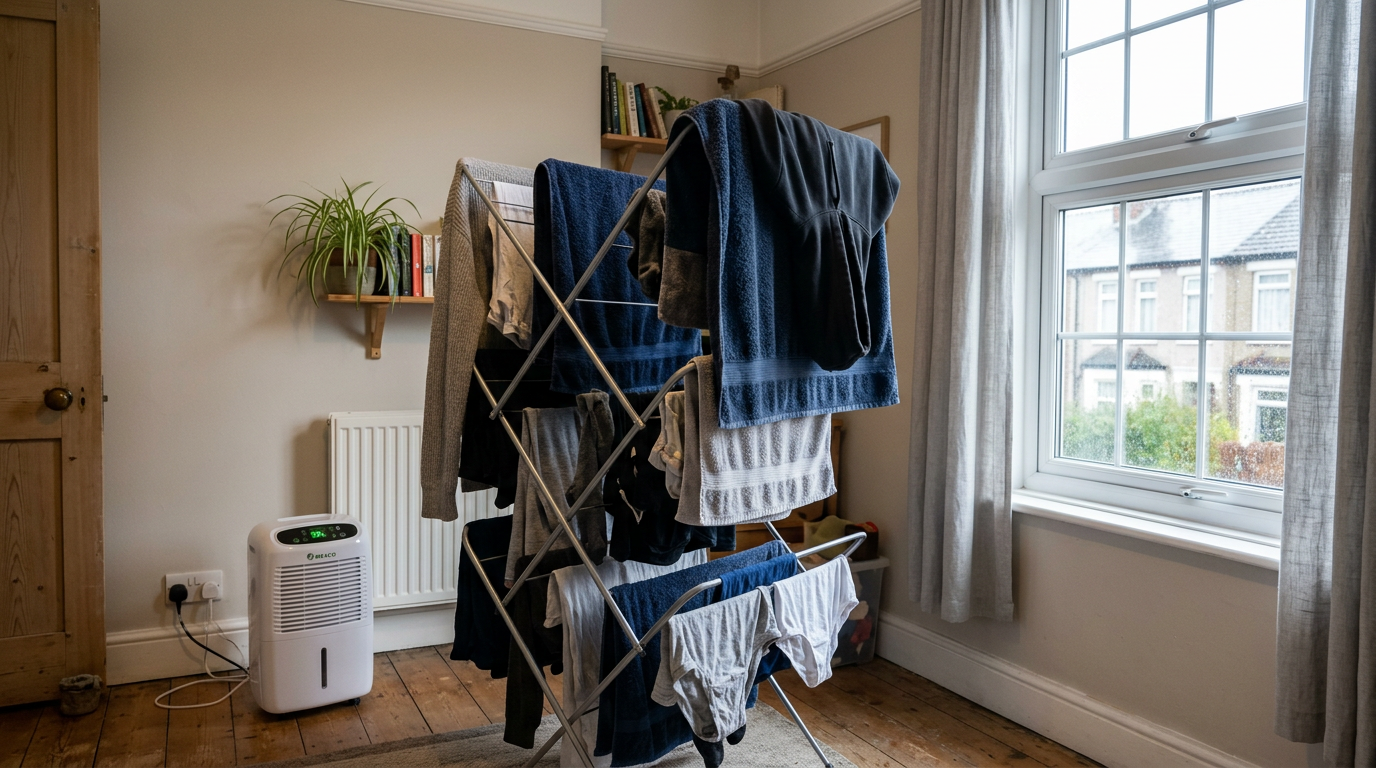
Drying washing indoors is a fact of life in Britain from October to April. Left on an airer in the lounge, a load can take a day or more and fill the house with damp. With a dehumidifier running beside it, the same load is usually dry by bedtime. But how long it actually takes depends on a handful of things you can control.
Typical drying times
| Method | Typical time for a normal load | Notes |
|---|---|---|
| Airer alone, heated room | 12–24 hours | Moisture goes into the room |
| Compressor dehumidifier, small closed room | 3–6 hours | The most common set-up |
| Dehumidifier + heated airer | 2–4 hours | Fastest indoor method without a dryer |
| Dehumidifier in a large or open-plan room | 6–10+ hours | Machine is drying the whole space |
| Desiccant dehumidifier, cold room (under 15°C) | 4–8 hours | Compressors slow badly here |
These are typical ranges drawn from manufacturer guidance and owner reports, not lab tests. A load of lightweight shirts will be at the fast end; jeans, towels and hoodies at the slow end.
What affects how long it takes
Room size and whether the door is shut
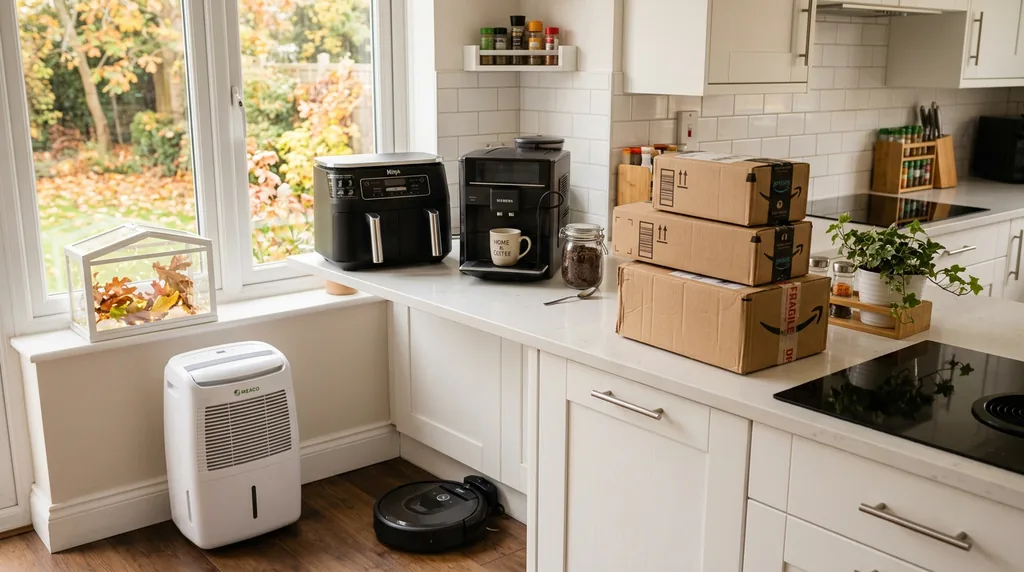
This is the biggest factor. In a box room or utility room with the door closed, the dehumidifier only has a few cubic metres of air to dry, so humidity falls fast and the clothes give up their water quickly. In an open-plan living area, it is fighting the whole downstairs. Pick the smallest room you can and shut the door.
How well the load is spun
A 1,400rpm spin leaves noticeably less water in a load than 1,000rpm. If your machine allows it, use the highest spin the fabric can take. It is free time saved.
Spacing on the airer
Clothes bunched together dry from the outside in. Leave a gap between items, hang thick things on the outer rails, and turn heavy items halfway through.
The dehumidifier's size and mode
A 20L machine extracts faster than a 12L one. Most models have a laundry mode that runs the fan and compressor flat out and ignores the humidistat until you stop it. Use it. My guide to the best dehumidifier for drying clothes covers which features matter.
Temperature
Warm air holds more moisture, so clothes dry faster in a heated room. A compressor dehumidifier also works best above about 15°C. In a cold utility room or garage, a desiccant model is the better tool; see compressor vs desiccant.
Airflow direction
Point the dehumidifier's outlet at the clothes, about a metre away. Moving air strips moisture from the fabric surface far faster than still air.
The fastest way to dry a load with a dehumidifier
- Spin the load as hard as the fabrics allow.
- Choose the smallest room you can and shut the door.
- Space the clothes out on an airer, thick items on the outside.
- Put the dehumidifier about a metre away with the airflow pointing at the clothes.
- Switch to laundry mode, or set the humidistat to its lowest setting.
- Empty the tank first, or use continuous drainage, so it does not stop halfway.
- Turn heavy items after two hours.
Want it faster still? Pair it with a heated airer. The airer warms the fabric while the dehumidifier pulls the moisture out of the air. My dehumidifier vs heated airer guide compares the two, and the best heated clothes airers page has my picks.
How much does it cost per load?
At the Ofgem price cap rate of 26.32p per kWh, at full power:
| Dehumidifier | 4 hours | 6 hours |
|---|---|---|
| Arete One 12L (151W) | 15.9p | 23.8p |
| VonHaus 12L (200W) | 21.1p | 31.6p |
| Arete One 20L (216W) | 22.7p | 34.1p |
| Daewoo 16L (380W) | 40.0p | 60.0p |
| EcoAir DD3 (600W, desiccant) | 63.2p | 94.8p |
A compressor model is cheaper per load than any vented or condenser tumble dryer. My dehumidifier vs tumble dryer cost article runs the full numbers, and you can test your own with the dehumidifier running cost calculator.
Which dehumidifier dries clothes fastest?
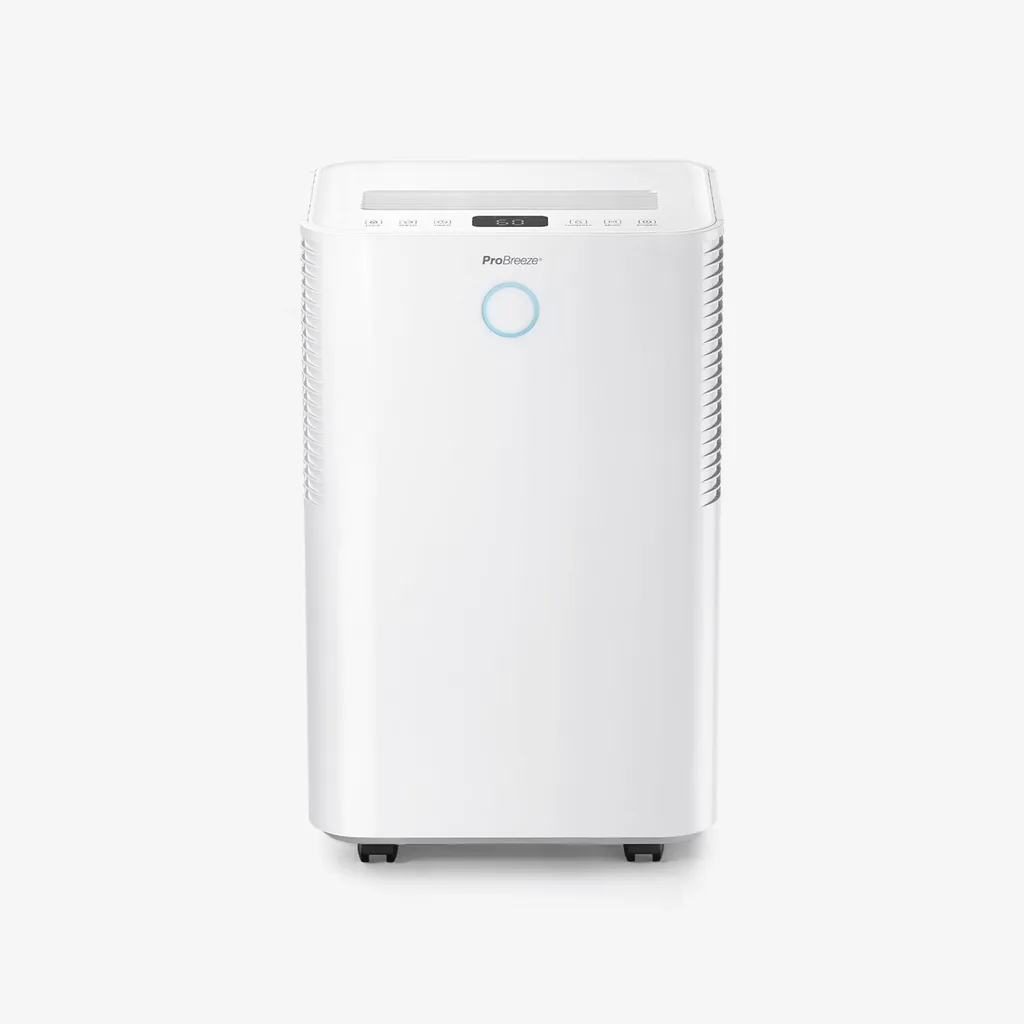
For laundry, extraction rate and tank size matter most. The MeacoDry Arete One 20L is my pick: 20L a day, a laundry mode, a 4.8L tank and only 216W. The Pro Breeze OmniDry 20L is a strong alternative with a laundry mode and app control. For cold utility rooms, the EcoAir DD3 works from 1°C and its slightly warm output helps. All ten are compared in my best dehumidifiers UK guide.
Dehumidifier and drying guides
By room and problem
- Best dehumidifier for a cold bedroom
- Best quiet dehumidifier for bedrooms
- Best dehumidifier for a conservatory
- Best dehumidifier for a 2-bed house
- Best dehumidifier for mould and condensation
Choosing one
- Dehumidifier size calculator
- Compressor vs desiccant dehumidifier
- Dehumidifier buying guide
- Can you leave a dehumidifier on overnight?
Drying clothes for less
- Dehumidifier vs tumble dryer cost
- Heated airer vs tumble dryer cost
- Do heated airers actually save money?
Not sure what size you need? Try the dehumidifier size calculator.
Frequently Asked Questions
How long does a dehumidifier take to dry clothes overnight?
In a small room with the door shut, most loads are dry within 3 to 6 hours, so an overnight run is more than enough. Thick towels and jeans may need turning or an extra hour or two.
Is it quicker to dry clothes with a dehumidifier or a heated airer?
A dehumidifier in a small closed room is usually quicker and more even, especially for thick items. Using both together is faster still, typically around 2 to 4 hours.
Does a bigger dehumidifier dry clothes faster?
Generally yes. A 20L model removes moisture from the air faster than a 12L one, which speeds up drying, particularly with large loads or in bigger rooms.
Why are my clothes still damp after using a dehumidifier?
The usual causes are a room that is too big or has the door open, a full tank that stopped the machine, clothes packed too tightly, or a compressor model in a cold room. Fix those and drying times drop sharply.
How much does it cost to dry a load with a dehumidifier?
About 16p to 34p for a typical 151–216W compressor model running 4 to 6 hours at 26.32p per kWh. A 600W desiccant costs roughly 63p to 95p for the same time.