Running costs updated 1 October 2026. Every electricity figure on this page is costed at the Ofgem price cap average electricity unit rate of 26.32p per kWh, which applies from 1 October to 31 December 2026. Your own tariff may be higher or lower, so check your latest bill before relying on these numbers.
Quick answer: for condensation and mould in a heated home, the MeacoDry Arete One 20L is my pick: strong extraction, low running cost and a HEPA H13 filter that captures airborne spores. For a cold house or unheated rooms, choose the desiccant EcoAir DD3 Classic MK3. In a small flat, the Arete One 12L is enough.
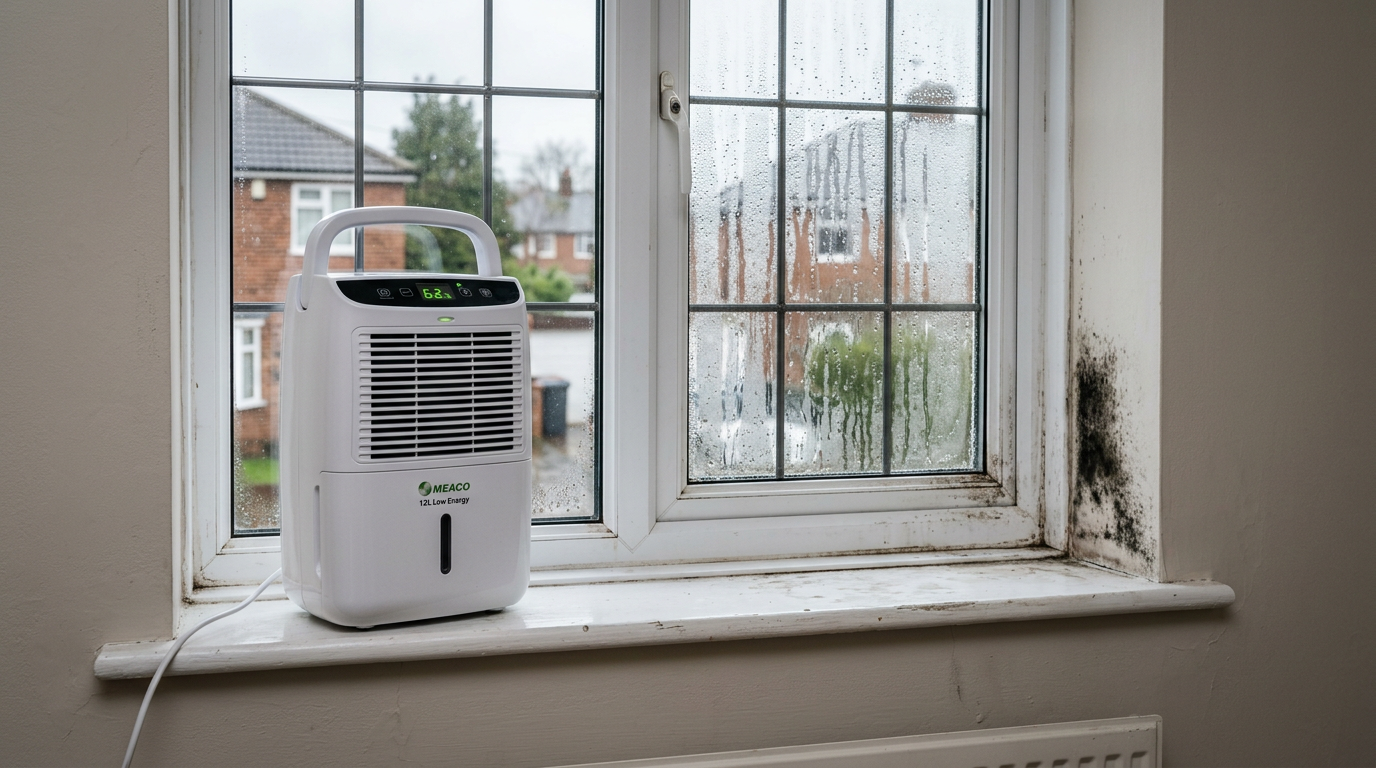
Black spots on the window seals, a musty smell in the wardrobe, a grey bloom behind the sofa: condensation mould is the most common damp problem in British homes. A dehumidifier is one of the most effective ways to stop it coming back, but it has to be big enough, the right type for the temperature of your rooms, and run in the right way.
This guide is about choosing the machine. If you are still working out whether a dehumidifier will help at all, start with my explainer, will a dehumidifier stop condensation and mould?, which covers the causes and when damp needs a builder rather than an appliance.
What to look for in a dehumidifier for mould
- Enough capacity. Mould means the air has been too wet for weeks. A 20L compressor gets humidity down quickly and then cycles off. In a small flat, 12L is usually enough.
- The right type for your temperature. Compressor models suit rooms at 15°C or above. If rooms are colder, a desiccant keeps working down to about 1°C. My compressor vs desiccant guide explains why.
- A humidistat and display. Mould struggles to grow when relative humidity stays below about 60%. You want a machine that shows the reading and holds it at 50–55%.
- Continuous drainage. A machine that stops overnight with a full tank lets the humidity creep back. A hose to a sink or drain removes that problem.
- A filter, as a bonus. A HEPA filter captures airborne particles including mould spores. It does not kill mould growing on walls, so it is a helpful extra, not a cure.
The best dehumidifiers for mould and condensation
| Model | Type | Extraction | Filter | Power | Best for |
|---|---|---|---|---|---|
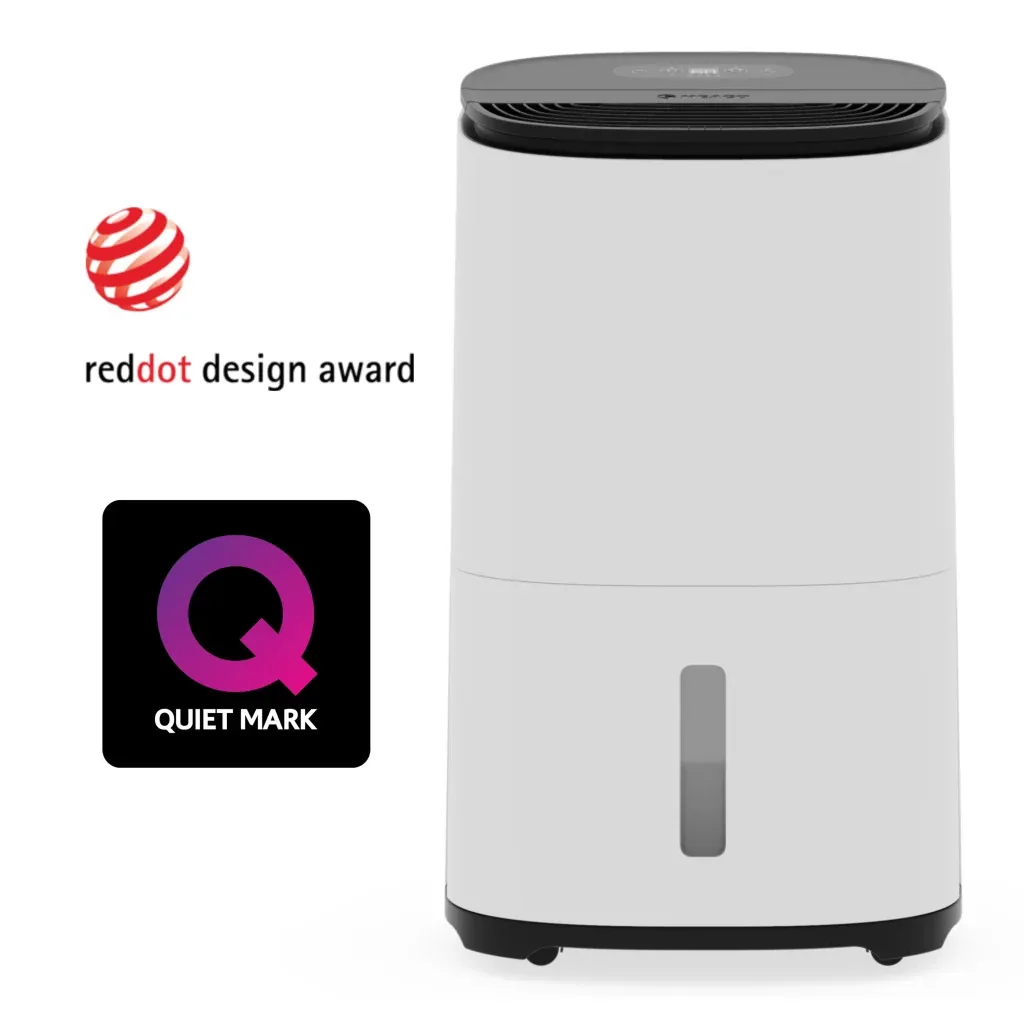
| MeacoDry Arete One 20L | Compressor | 20L/day | HEPA H13 | 216W | Heated homes with mould |
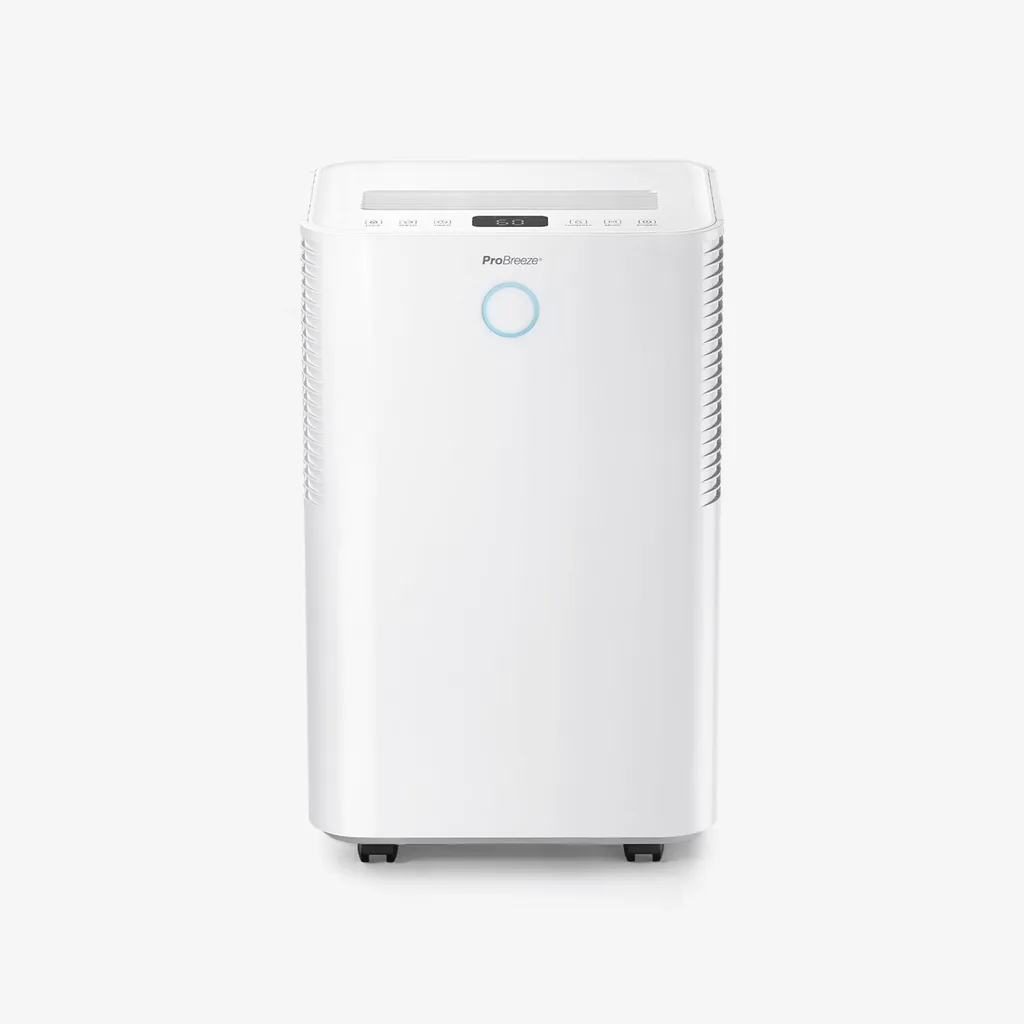
| EcoAir DD3 Classic MK3 | Desiccant | 11L/day | Standard | 600W | Cold homes and unheated rooms |
| MeacoDry Arete One 12L | Compressor | 12L/day | HEPA H13 | 151W | Flats and small homes |
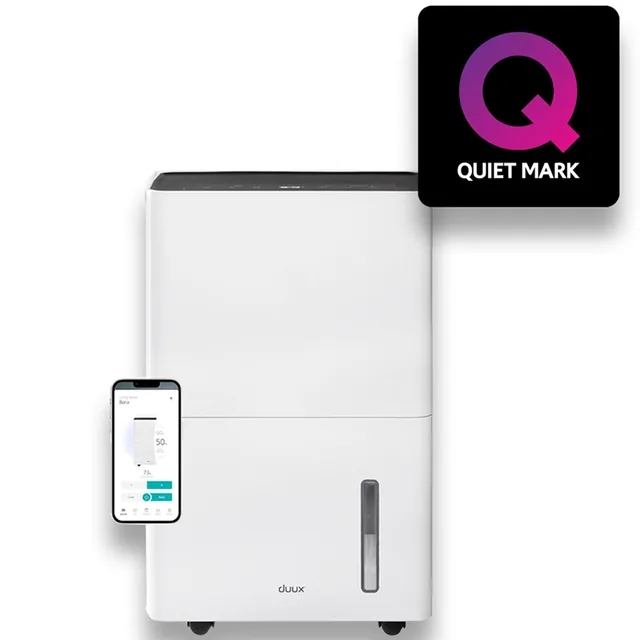
| Duux Bora Smart 20L | Compressor | 20L/day | Carbon (odours) | ~260W | Musty smells, app control |
1. MeacoDry Arete One 20L: best for most mouldy homes
It combines 20L of extraction with a 216W draw, which is the combination that matters when you need to run a machine for long hours through winter. The HEPA H13 filter captures airborne spores while it works, the 4.8L tank lasts longer between empties, and there is a continuous drainage outlet. Meaco offers a long warranty too. It is the top-rated dehumidifier in my line-up. Read the Arete One 20L review.
2. EcoAir DD3 Classic MK3: best for cold houses
Mould is often worst in the coldest rooms: the north-facing bedroom, the box room with the radiator off, the conservatory. A compressor struggles there. The DD3 is a desiccant, works from 1°C, and gives off a little warmth, which helps keep surfaces above the dew point. It costs more per hour (600W, about 15.8p), but it actually extracts in conditions where a cheaper-to-run compressor does not. See my EcoAir DD3 review and my guide to the best dehumidifier for a cold bedroom.
3. MeacoDry Arete One 12L: best for flats
Same HEPA filter and controls as the 20L in a smaller, cheaper machine that draws just 151W. For a one- or two-bed flat with window condensation and early mould spots, it is plenty. The 2.5L tank means more emptying in a very damp spell. My Arete One 12L review has the detail, and my 2-bed house guide covers sizing.
4. Duux Bora Smart 20L: if the smell is the problem
The Bora has a carbon filter that genuinely reduces musty odours, plus app and Alexa control. It lacks a HEPA filter, and owners report the app can drop connection. A good choice if a damp smell bothers you more than visible mould. See the Duux Bora review.
How to use a dehumidifier to stop mould coming back
- Clean the mould first. Wipe small patches on hard surfaces with a mould remover, wearing gloves and keeping the window open. Large areas, or mould that returns quickly, need investigating.
- Run it in the worst room with the door shut for the first week or two, at a 50% setting, until the readings settle.
- Then hold the house at 50–55%. Move it to the landing or hallway with doors open, and back into the worst room in the evenings.
- Tackle the moisture sources. Lids on pans, extractor fans on, a closed bathroom door after showers, and do not dry washing on radiators without the dehumidifier running in the same room.
- Keep furniture 5–10cm off external walls so air can circulate behind wardrobes and sofas.
What it costs to run
At 26.32p per kWh, running at full power for eight hours a day:
| Model | Per hour | 8 hours | 8 hours a day for a month |
|---|---|---|---|
| Arete One 12L (151W) | 4.0p | 31.8p | £9.67 |
| Arete One 20L (216W) | 5.7p | 45.5p | £13.83 |
| Duux Bora 20L (~260W) | 6.8p | 54.7p | £16.64 |
| EcoAir DD3 (600W) | 15.8p | £1.26 | £38.41 |
Once humidity is under control, the humidistat cuts these figures substantially. Plug in your own tariff and hours with the dehumidifier running cost calculator.
When a dehumidifier will not fix it
A dehumidifier deals with condensation, which is moisture from inside the home. It will not fix a leaking gutter, a failed damp-proof course, a bridged cavity or a roof leak. Warning signs are damp that worsens after rain, a tide mark low on a wall, or wet patches on walls with no window nearby. If you rent from a council or housing association in England, Awaab's Law (in force since October 2025) requires landlords to investigate damp and mould hazards within set timescales, so report it in writing. Private tenants should also report damp to their landlord in writing.
The verdict
For condensation mould in a heated home, buy the MeacoDry Arete One 20L. If your rooms are cold, the EcoAir DD3 is the one that will actually work. In a small flat, the Arete One 12L does the job for less. Compare all ten models in my best dehumidifiers UK guide.
Dehumidifier and drying guides
By room and problem
- Best dehumidifier for a cold bedroom
- Best quiet dehumidifier for bedrooms
- Best dehumidifier for a conservatory
- Best dehumidifier for a 2-bed house
Choosing one
- Dehumidifier size calculator
- Compressor vs desiccant dehumidifier
- Dehumidifier buying guide
- Can you leave a dehumidifier on overnight?
Drying clothes for less
- How long a dehumidifier takes to dry clothes
- Dehumidifier vs tumble dryer cost
- Heated airer vs tumble dryer cost
- Do heated airers actually save money?
Not sure what size you need? Try the dehumidifier size calculator.
Frequently Asked Questions
Will a dehumidifier get rid of mould?
It will not remove mould that is already there, so clean it off first. What it does is keep humidity low enough that mould struggles to grow back, which is the part most people find hardest.
What humidity stops mould growing?
Keeping relative humidity below about 60% makes it hard for mould to grow. Setting a dehumidifier to 50–55% gives you a margin, especially near cold windows.
What size dehumidifier do I need for mould?
For an average heated house with visible mould, a 20L compressor. In a small flat, 12L is usually enough. For cold rooms, an 8–11L desiccant. The dehumidifier size calculator gives a tailored suggestion.
Does a HEPA filter in a dehumidifier help with mould?
It captures airborne particles including mould spores as air passes through the machine, which is a useful extra. It does not kill mould growing on walls or fabrics, so cleaning and humidity control still matter most.
How long does it take a dehumidifier to stop condensation?
Most people see less window condensation within a few days of running one daily in the worst room. Getting a damp house consistently below 60% can take a couple of weeks, after which the machine runs far less.