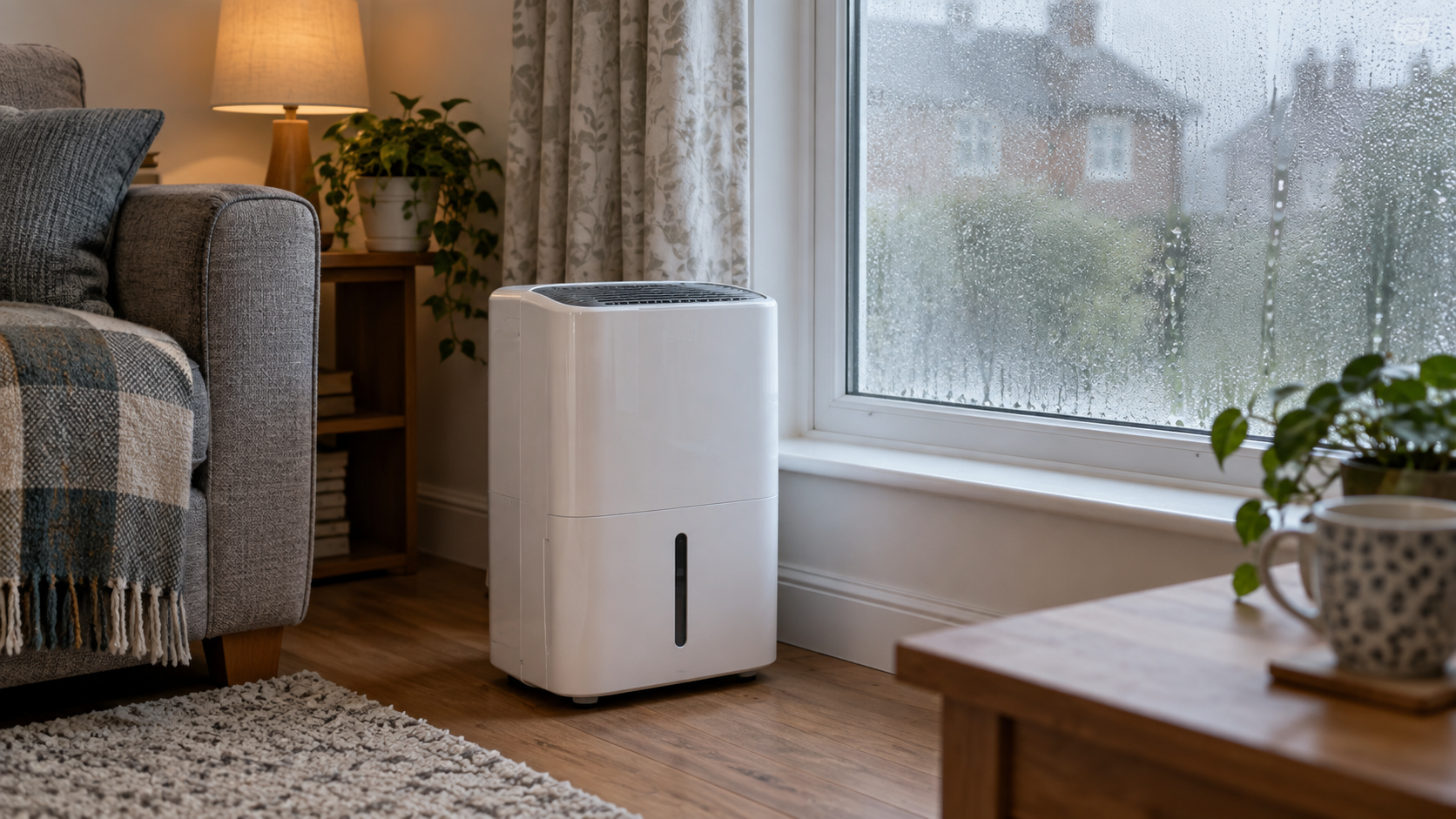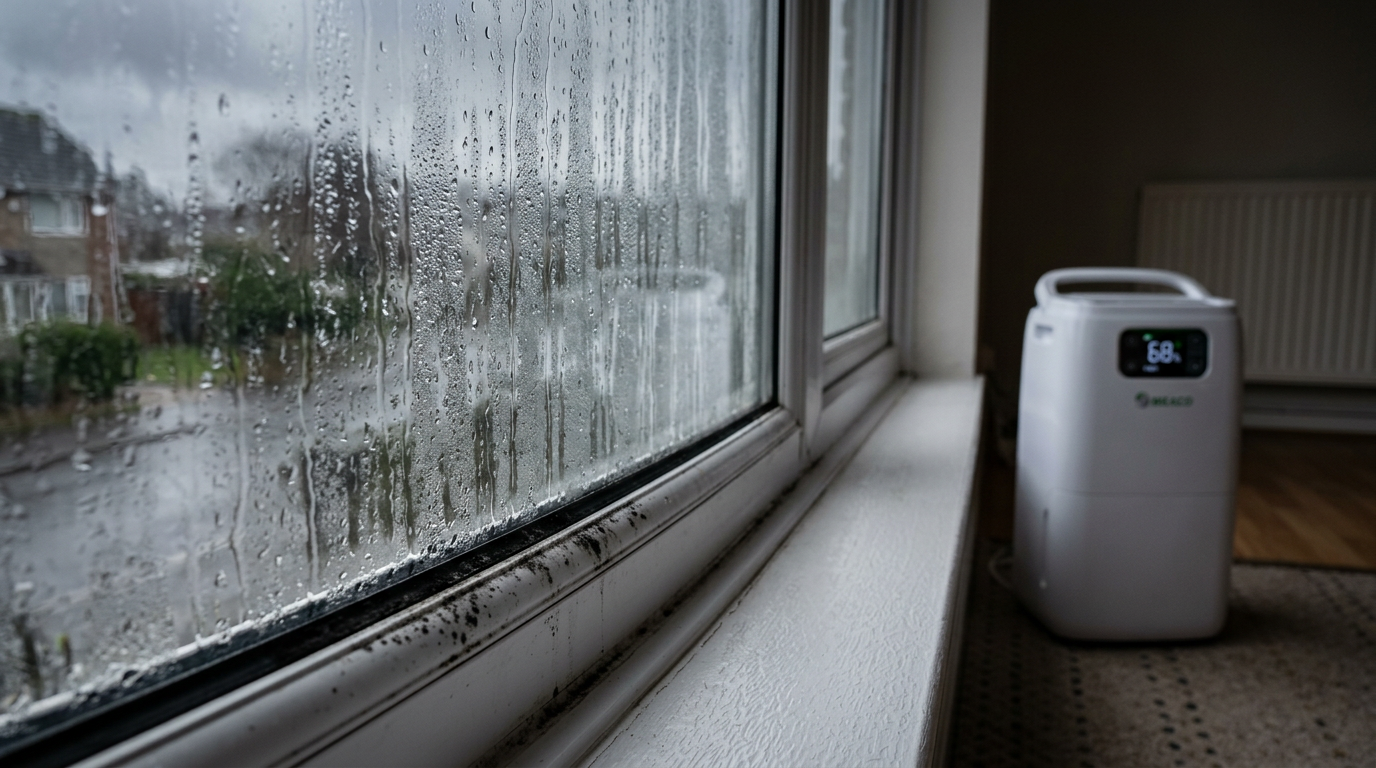
Every October the same thing happens in British houses. The heating goes on, the windows go shut, and one morning you pull the curtains back to find the glass streaming with water and a grey-black bloom creeping along the sealant. By February it's on the wall behind the wardrobe.
The obvious question is whether a dehumidifier fixes it. The honest answer is that it fixes most of it, very reliably — but only if the damp is condensation, and roughly one in four UK damp problems isn't. Here's how to tell which you've got, and what a dehumidifier will and won't do about it.
The short answer
- Condensation on windows and cold walls: yes. A correctly sized dehumidifier will largely eliminate it, usually within a few days.
- New mould growth: yes, it stops it. Mould needs sustained high humidity to germinate; take that away and it can't establish.
- Mould that's already there: no. You have to clean it off first. A dehumidifier prevents it coming back — it doesn't remove what's grown.
- Rising damp, penetrating damp, a leaking gutter or a failed roof: no. A dehumidifier will run continuously, cost you money and never win, because water is entering the structure faster than you can pull it out of the air.
Why British houses get condensation in the first place
A household of four generates somewhere in the region of 10 to 15 litres of water vapour a day without doing anything unusual. Breathing accounts for a surprising amount of it — roughly a quarter of a litre per person overnight. A shower adds about a litre, cooking a Sunday roast a couple, and a single load of washing dried on an indoor airer releases 2 to 3 litres into the house as it dries.
Warm air holds that vapour happily. Cold air can't. When moisture-laden air from the kitchen or bathroom drifts into a cooler room and touches a surface below its dew point — single-glazed glass, the cold corner of an external wall, the back of a wardrobe against a north-facing wall — the vapour condenses out as liquid water. That's condensation, and it's why it always shows up on the coldest surface in the room first.
Two things make UK housing stock especially prone to it. Our winters are mild and wet rather than properly cold, so outdoor air is often at 85–95% relative humidity, meaning ventilating with fresh air brings moisture in as well as out. And decades of draught-proofing, double glazing and loft insulation have sealed homes that were originally designed to leak air — the moisture no longer has anywhere to go.
The number that actually matters
Relative humidity, not temperature, decides whether you get mould. The thresholds are well established:
| Relative humidity | What happens |
|---|---|
| Below 40% | Uncomfortably dry — static, dry throats, shrinking timber. No need to go this low. |
| 45–55% | The target range. Comfortable, no condensation, dust mites struggle. |
| 55–65% | Condensation likely on cold glass overnight. Dust mites thrive. |
| Above 65% sustained | Mould spores germinate on surfaces. This is the line you don't want to sit above. |
| Above 80% | Rapid mould growth, musty smell, damage to plaster and fabrics. |
Aim for 50% on the humidistat. Most modern units let you set a target and then cycle on and off to hold it, which is far cheaper than running flat out. A £10 hygrometer in the worst room in the house is the single best diagnostic purchase you can make before spending anything on a dehumidifier.
How to tell condensation from real damp
This matters more than which model you buy, because the two problems need completely different solutions.
It's condensation if…
- It's worst in the morning, and worst in winter.
- It appears on the coldest surfaces — window glass, window reveals, external wall corners, behind furniture.
- The mould is black speckling on the surface of paint, sealant or wallpaper, and wipes off.
- It's worse in rooms where you dry washing, or in bedrooms with the door shut overnight.
- The wall feels cold but not actually wet to the touch.
It's structural damp if…
- There's a tide mark a metre or so up a ground-floor wall — that's classic rising damp.
- The patch is in one specific place, doesn't move, and is there in summer too.
- Plaster is blown, crumbling, or salt is crystallising on the surface.
- It appears or worsens after heavy rain — look at gutters, downpipes, pointing and roof flashing.
- The wall is genuinely wet, not just cold and beaded.
If you're seeing the second list, stop and get the cause fixed. A dehumidifier in that situation is a very expensive way to pretend nothing's wrong — and the damage carries on behind the plaster regardless.
What about existing mould, and does it matter?
Clean it before you dehumidify, or you'll simply have dry mould. Wipe hard surfaces with a proprietary mould remover or a diluted bleach solution, ventilate while you do it, wear gloves, and bin cloths rather than rinsing them. Don't brush or hoover dry mould with an ordinary vacuum — that flicks spores into the air. Mould in soft furnishings, plasterboard or behind wallpaper usually needs the material replacing rather than cleaning.
It's worth doing properly. The NHS advises that damp and mould in the home can cause or worsen respiratory problems, allergies and asthma, with babies, children, older people and anyone with an existing lung condition or weakened immune system most at risk. Controlling humidity isn't decorating — for some households it's a health measure.
What size dehumidifier do you need?
Capacity is quoted in litres extracted per 24 hours under test conditions (usually 30°C and 80% humidity, which is nothing like a British winter — expect roughly half the headline figure in a real 18°C room). Choose by property size, not by the size of the puddle on the windowsill:
| Property | Capacity | Typical price |
|---|---|---|
| Flat, or one or two problem rooms | 10–12L | £110–£170 |
| 2–3 bedroom house, general damp control | 12L | £120–£180 |
| 3–4 bedroom house, or regular laundry drying | 20L | £200–£280 |
| Large or persistently damp house, 4+ bedrooms | 20–25L | £250+ |
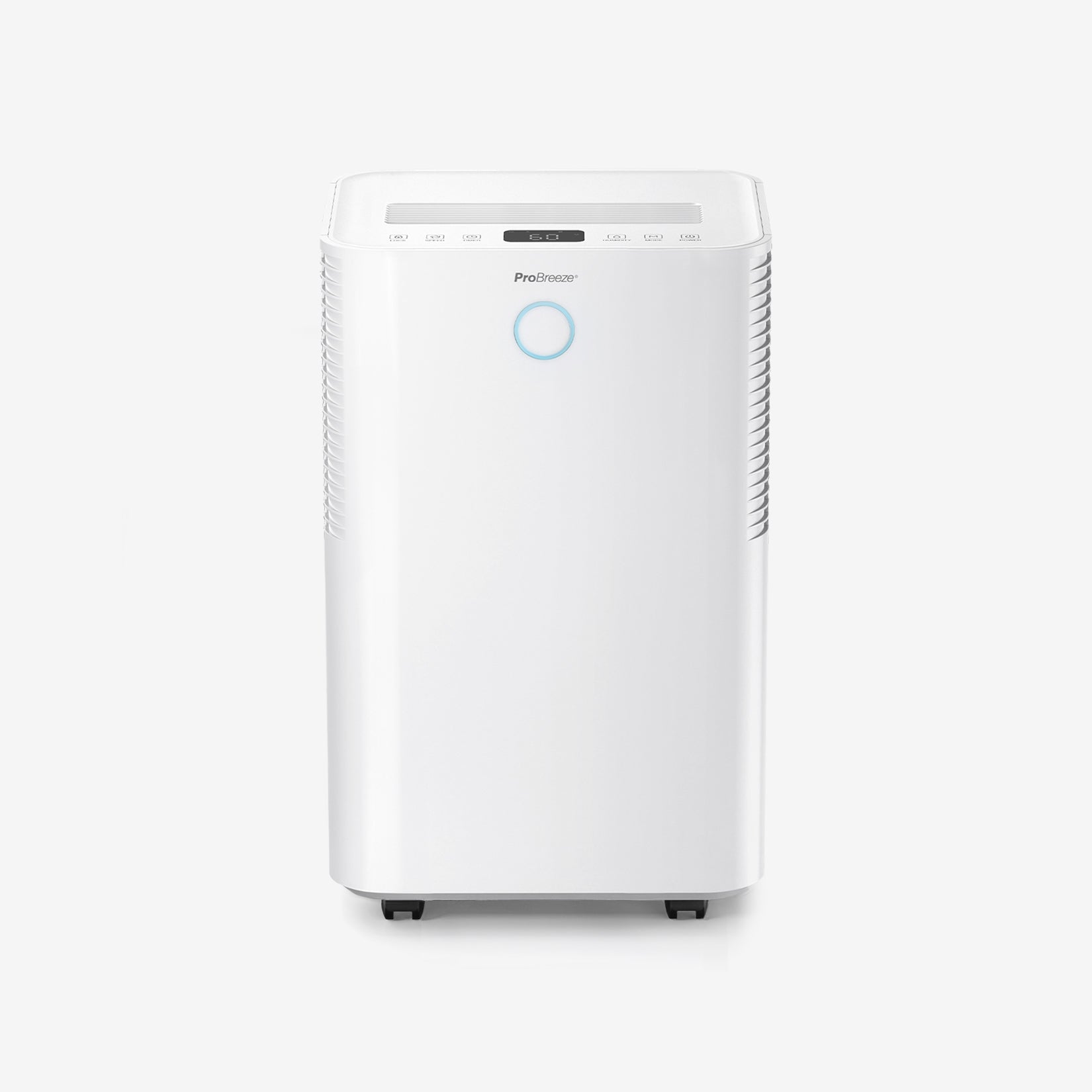
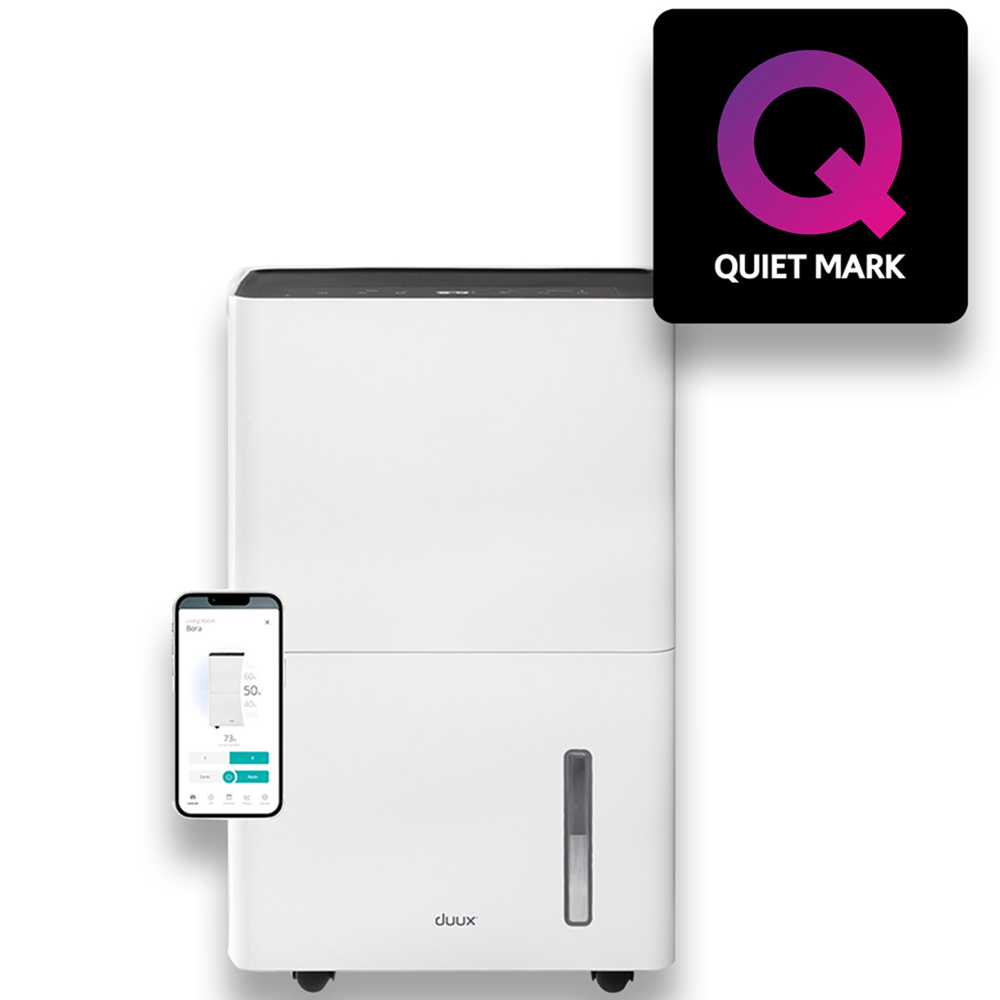
A larger unit does not cost proportionally more to run, because it reaches the target humidity sooner and then idles. Undersizing is the more common mistake: a 10L unit fighting a whole damp house runs constantly and never quite gets there. For most three-bedroom homes the MeacoDry Arete One 12L at £169.99 is the sensible default, and the 20L version is the one to choose if you're drying washing indoors most weeks. If budget is the constraint, the Pro Breeze 12L at £119.99 does the same core job with fewer refinements.
One important exception: cold rooms
Standard dehumidifiers are compressor models, and they lose most of their effectiveness below about 15°C — the coils frost up and the machine spends its time defrosting rather than extracting. So for a garage, cellar, unheated conservatory or caravan you need a desiccant model such as the EcoAir DD3 Classic MK3, which works down to 1°C. It costs more to run — see our dehumidifier running cost breakdown for the figures — and we've set out the full trade-off in our guide to compressor vs desiccant dehumidifiers. Buying the wrong type for a cold space is the most common way people conclude, wrongly, that dehumidifiers don't work. If you are trying to choose between the two specialist UK brands, our Meaco vs EcoAir comparison puts the flagship compressor and desiccant models side by side.
What it costs to run
A typical 12L compressor dehumidifier draws around 200W while the compressor is running. At the Ofgem price cap rate of roughly 24.5p per kWh, that's about 4.9p an hour.
| Usage pattern | Hours per year | Approximate cost |
|---|---|---|
| 4 hours a day, autumn and winter only | ~730 | £36 |
| 6 hours a day, 200 days a year | 1,200 | £59 |
| Continuous through a damp winter | ~2,900 | £142 |
In practice the humidistat means you rarely pay the top figure — once the room hits 50% the compressor cycles off and consumption drops to fan-only, perhaps 40W. Expect £35 to £60 a year for normal household use, which is less than most people assume and considerably less than the cost of redecorating a mould-damaged bedroom.
There's a small heating dividend too. Removing moisture releases latent heat, so a dehumidifier warms the room it's in by a degree or so, and dry air feels warmer than damp air at the same temperature. Worth noting that this cuts the other way in summer: if you're running a portable air conditioner during a heatwave it's already dehumidifying as it cools, so you don't need both running at once.
Getting the most out of it
- Put it in the middle of the house, not the wettest corner. A dehumidifier dries the air, and air moves. One unit on a landing with internal doors open will treat a whole floor better than the same unit shut in the bathroom.
- Close external windows while it runs. Otherwise you're dehumidifying the whole of Britain. Ventilate properly for ten minutes, then shut up and let the machine work.
- Leave 20–30cm of clearance around the intake and exhaust so airflow isn't choked.
- Use the continuous drain. Almost every model takes a hose to a sink or drain, which removes the daily emptying chore and stops the unit shutting off with a full tank overnight.
- Run it while drying laundry, in a closed room. This is where a dehumidifier is transformative: it costs a fraction of a tumble dryer and stops those 2–3 litres per load ending up on your bedroom walls. See our guide to the best dehumidifier for drying clothes for the full method.
- Set 50% and use the timer or night mode. Constant target-based running beats blasting it for an hour a day.
- Clean the filter monthly. A blocked filter quietly halves extraction.
Do the free things as well
A dehumidifier handles the symptom brilliantly, but it's cheaper still to make less moisture in the first place. Lids on pans while cooking. The extractor fan on during and for fifteen minutes after every shower, with the bathroom door shut. Washing spun at the highest speed the machine offers before it comes out. Furniture pulled a few centimetres off external walls so air can circulate behind it. Trickle vents left open in bedrooms. None of it costs anything, and together it takes a meaningful chunk out of that 10–15 litres a day.
If you want an independent view on which specific models extract closest to their claimed figures, Which? lab-tests dehumidifiers for extraction rate, energy use and noise, which is a useful cross-check against manufacturer claims.
Getting the capacity right matters as much as the type — our guide to what size dehumidifier you need matches 12L, 20L and 25L models to different UK homes and damp levels.
The verdict
For the ordinary British winter problem — streaming windows, black speckling on the sealant, mould behind the wardrobe, washing that takes three days to dry — a dehumidifier is one of the highest-value appliances you can buy. Around £150 up front, £35 to £60 a year to run, and the problem generally disappears inside a week.
Just be honest about the diagnosis first. Clean off what's already grown, check for tide marks and rain-driven patches that point to a structural fault, buy a compressor model for heated rooms and a desiccant one for cold ones, and set it to hold 50% rather than running it flat out. Do that and you're not managing damp any more — you've removed the conditions it needs.
If you are still choosing a machine, our complete UK dehumidifier buying guide covers sizing, specifications, running costs and the brands worth paying for.