If you have started shopping for a dehumidifier in the UK, two brands come up in practically every recommendation thread: Meaco and EcoAir. They are the specialist names — both British-founded, both laser-focused on humidity control rather than tacking a dehumidifier onto the end of a white-goods catalogue. But they approach the job from different directions, and the right choice depends on your home, your climate and the room the machine will live in. After researching both ranges in depth and reading hundreds of verified owner reviews, this is an honest head-to-head to help you decide which one actually suits your situation.
The short answer
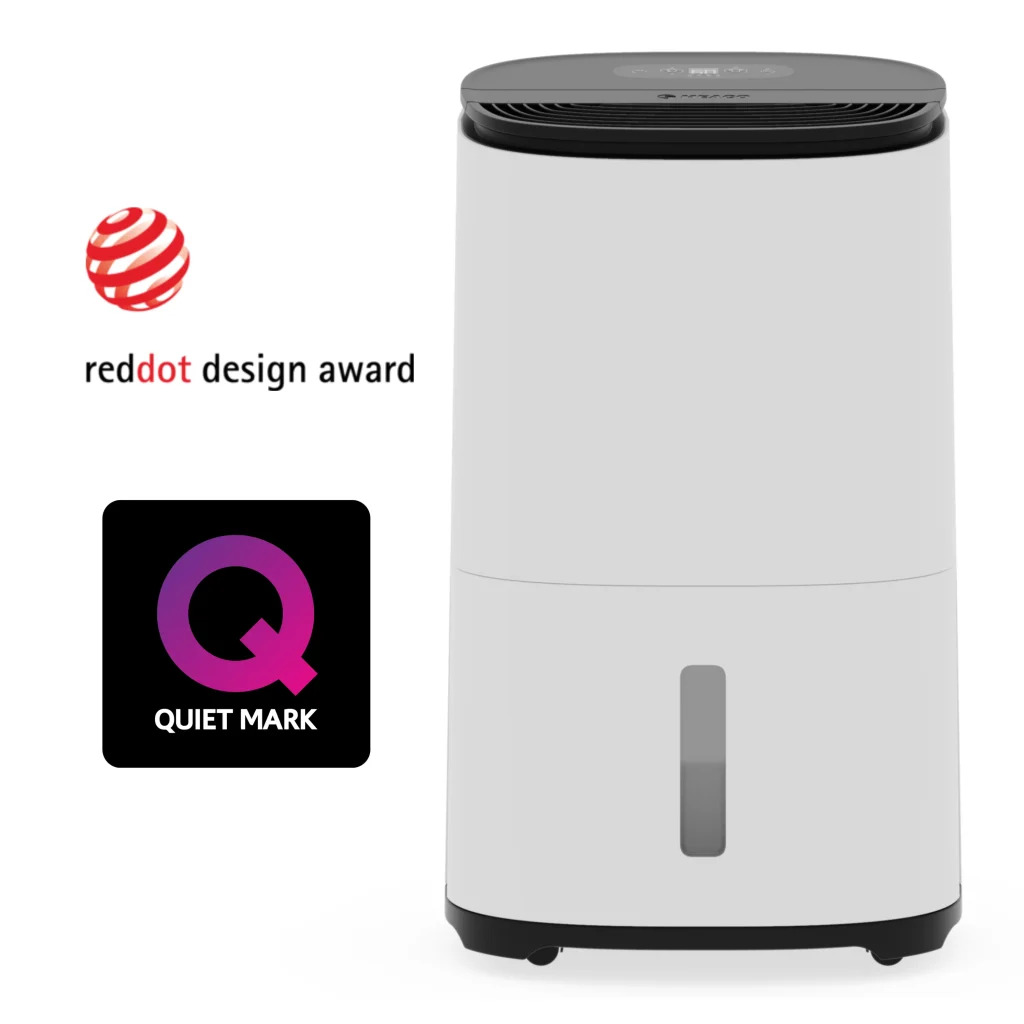
If you want a quiet, energy-efficient compressor dehumidifier for a heated living space — bedrooms, living rooms, open-plan flats — the MeacoDry Arete One 20L is the standout. If you need something that works hard in cold, unheated spaces — garages, conservatories, caravans, cellars — the EcoAir DD3 Classic MK3 is the machine to beat. That is the comparison in a sentence, but the detail matters, so let us go through it properly.
The technology divide: compressor vs desiccant
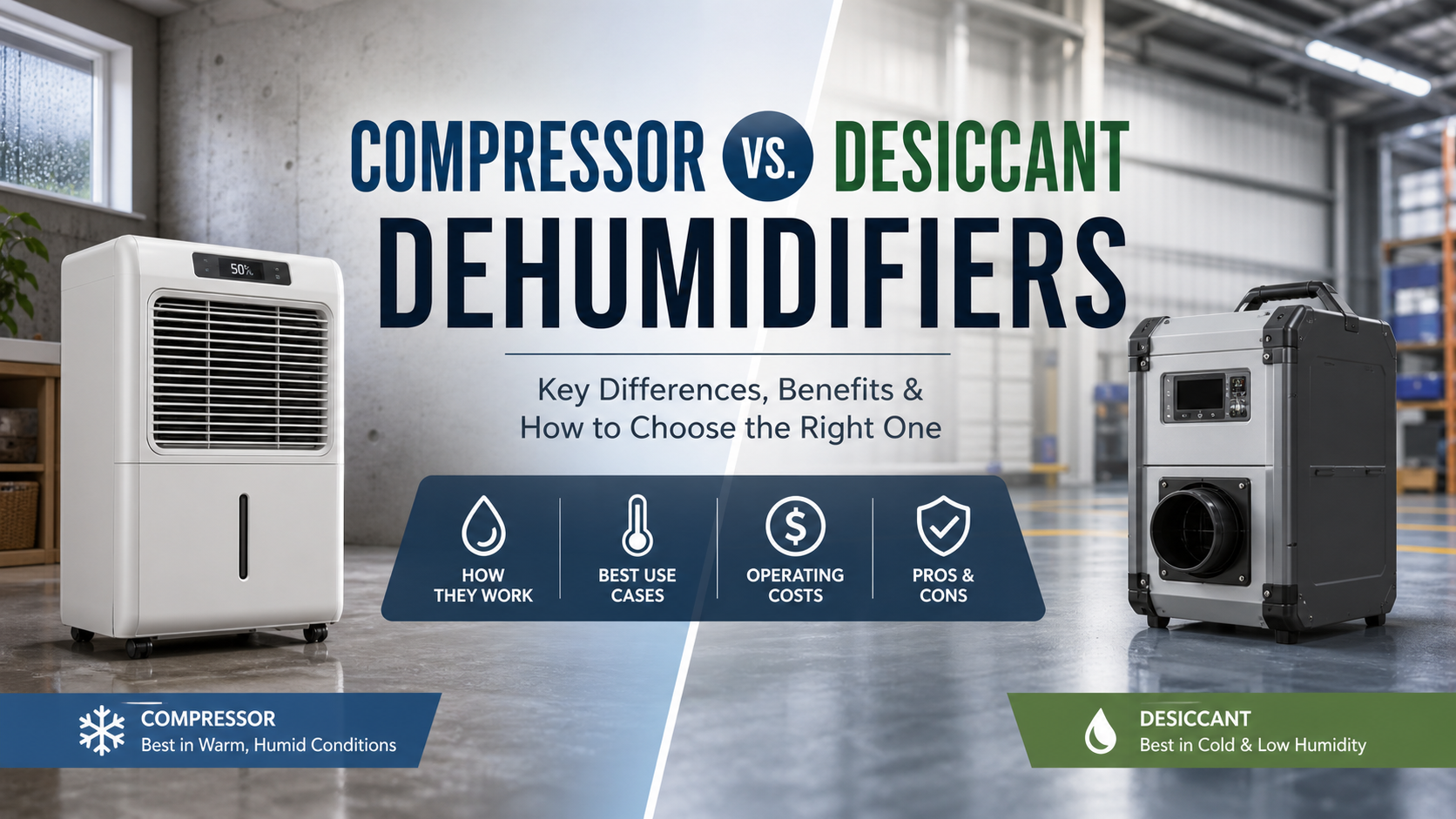
This is the heart of the decision and where the two brands genuinely diverge. Meaco has made its name with compressor dehumidifiers — they pull air across cold coils to condense moisture, and they do it very efficiently in rooms above about 15°C. The Arete One is whisper-quiet, frugal on electricity and excellent in any heated home. Below roughly 10–15°C, though, the coils start to frost up, the machine spends its time defrosting and extraction drops off a cliff.
EcoAir's flagship is a desiccant dehumidifier. Instead of cold coils it uses a slowly rotating desiccant wheel that absorbs moisture and then releases it into a tank via an internal heater. This technology works right down to 1°C, which is why it dominates recommendations for garages, boats and unheated outbuildings. The trade-off is higher energy use — a desiccant typically draws 500–600W versus 200–350W for a good compressor model. We broke the running-cost numbers down properly in our dehumidifier running cost guide, and the full technology trade-off is covered in our compressor vs desiccant comparison.
Noise
This is where Meaco has a clear lead. The Arete One 20L runs at around 34–39 dB on its quietest setting — genuinely unobtrusive in a bedroom overnight. EcoAir's DD3 is louder; desiccant machines in general produce more of a warm-air hum because of the internal heater. If the dehumidifier is going in a bedroom, nursery or living room where you will hear it, the Meaco is the more liveable choice by a noticeable margin.
Extraction rate and room size
Both the Arete One 20L and the DD3 Classic are rated for homes up to about four or five bedrooms, so on paper they cover similar ground. In practice, the Meaco extracts more litres per day in a warm room, and the EcoAir extracts more in a cold one — each technology plays to its strengths. For a typical UK house kept at 18–21°C, the Meaco will be the more productive machine. For an unheated garage at 5°C, the EcoAir will be the only one still working.
Energy costs
Compressor wins here. The Meaco Arete One draws around 255W, the EcoAir DD3 around 580W. At current UK electricity rates (roughly 24.5p per kWh), running the Meaco for eight hours a day costs around 50p; the EcoAir costs closer to £1.14 for the same hours. Over a damp-season October-to-March run, that difference adds up to roughly £60–70. It is worth it if the EcoAir is the only machine that functions in your space, but if both would work, the Meaco is significantly cheaper to run.
Build quality and longevity
Both brands have loyal followings precisely because owners report multi-year reliability. Meaco's UK customer service is frequently praised in reviews, and the Arete One feels well-finished for its price. EcoAir's DD3 has been through several revisions (now the MK3) and has a long track record in tough environments — owners running them year-round in garages and boats report surprisingly few failures. On build quality it is close to a draw, with EcoAir perhaps having the edge in extreme-environment resilience simply because desiccant machines have fewer frost-related failure modes.
Dealing with condensation and mould
Both machines will tackle condensation and surface mould effectively — a dehumidifier that keeps indoor humidity below 60% removes the conditions mould needs to grow. The UK Government's guidance on damp and mould health risks makes clear how serious prolonged exposure can be, especially for children and people with respiratory conditions. A dehumidifier is not a cure for structural damp — leaking pipes or rising damp need fixing at source — but for the condensation damp that plagues most UK homes in winter, either of these machines will make a real difference. Our guide to whether a dehumidifier stops condensation and mould covers what they can and cannot fix in detail.
Meaco vs EcoAir: side by side
| MeacoDry Arete One 20L | EcoAir DD3 Classic MK3 | |
|---|---|---|
| Typical price | ~£249.99 | ~£269.99 |
| Technology | Compressor | Desiccant |
| Best for | Heated living spaces (bedrooms, flats) | Cold spaces (garages, conservatories, boats) |
| Noise (low setting) | ~34 dB (very quiet) | ~42 dB (noticeable hum) |
| Power draw | ~255W | ~580W |
| Works below 10°C? | Poorly | Yes, down to 1°C |
| Our rating | 9.5 / 10 | 9.2 / 10 |
Which should you buy?
Buy the MeacoDry Arete One 20L if: the dehumidifier is going in a heated room — a bedroom, living room, flat or any space you keep above about 15°C. It is quieter, cheaper to run and extracts moisture more efficiently in normal indoor temperatures. At around £250 it is superb value for a machine of this calibre, and Meaco's customer support is a genuine bonus.
Buy the EcoAir DD3 Classic MK3 if: you need a dehumidifier for a garage, unheated conservatory, caravan, boat, cellar or any space that drops below 15°C regularly. It costs more to run, but it is the only type of machine that will work properly in the cold. Owner reports from people running them in genuinely harsh conditions are consistently positive.
If neither quite fits — perhaps you want something smaller or cheaper — it is worth checking whether a dehumidifier is even the right solution for your problem. Our honest look at whether dehumidifiers stop condensation and mould covers the situations where better ventilation or fixing a leak would save you money. And for independent lab test data before you commit, the Which? dehumidifier reviews are a good sense-check.
New to dehumidifiers altogether? Start with our complete UK dehumidifier buying guide, which explains every type, size and specification in plain English.
Ready to compare the full field? Our dehumidifier reviews put Meaco, EcoAir, Pro Breeze, Duux and more side by side so you can match a machine to your home and your budget.