Running costs updated 1 October 2026. Every electricity figure on this page is costed at the Ofgem price cap average electricity unit rate of 26.32p per kWh, which applies from 1 October to 31 December 2026. Your own tariff may be higher or lower, so check your latest bill before relying on these numbers.
Quick answer: at 26.32p per kWh, drying a load with a compressor dehumidifier costs roughly 12p–41p, against 66p–92p for a condenser tumble dryer and 79p–£1.18 for a vented one. Drying four loads a week through a 26-week winter, a 185W dehumidifier costs about £20 against £82 for a typical condenser dryer. A heat pump dryer (32p–53p a load) narrows the gap to around £20 a winter.
If you are choosing between a dehumidifier and a tumble dryer for winter washing, or wondering whether to stop using the dryer you already have, the running cost is usually the deciding factor. This article sets out the numbers at the current price cap rate, then the things the numbers leave out: speed, space, and what each does to your home.
Cost per load
All figures use the Ofgem average unit rate of 26.32p per kWh. Tumble dryer energy use varies a lot by model, age and programme, so these are ranges; check the energy label on your own machine.
| Method | Energy per load | Cost per load | Typical time |
|---|---|---|---|
| Compressor dehumidifier + airer (150–260W) | 0.45–1.56 kWh | 12p–41p | 3–6 hours |
| Desiccant dehumidifier + airer (600W) | 2.4–3.6 kWh | 63p–95p | 4–6 hours |
| Heat pump tumble dryer | 1.2–2.0 kWh | 32p–53p | 2–3 hours |
| Condenser tumble dryer | 2.5–3.5 kWh | 66p–92p | 1.5–2 hours |
| Vented tumble dryer | 3.0–4.5 kWh | 79p–£1.18 | 1.5–2 hours |
Two things stand out. A compressor dehumidifier is the cheapest powered option per load. And a desiccant dehumidifier, at 600W, costs about the same as a condenser dryer per load, so it only makes sense if you need it for a cold room anyway. My compressor vs desiccant guide explains when that is.
Cost over a winter and a year
Using a typical figure for each: a 185W compressor dehumidifier running four hours (19.5p a load), a condenser dryer at 3 kWh (79.0p) and a heat pump dryer at 1.6 kWh (42.1p).
| Four loads a week | Dehumidifier | Heat pump dryer | Condenser dryer |
|---|---|---|---|
| Winter (26 weeks, 104 loads) | £20.26 | £43.80 | £82.12 |
| Year-round (52 weeks, 208 loads) | £40.53 | £87.59 | £164.24 |
Swapping a condenser dryer for a dehumidifier for winter washing saves about £62 a winter on these assumptions. Against a heat pump dryer, the saving is closer to £24. Put in your own wattage and hours with the dehumidifier running cost calculator.
How long until a dehumidifier pays for itself?
If it replaces condenser dryer cycles, the saving per load pays back the purchase price over time. At prices at our last check:
| Dehumidifier | Price at our last check | Cost per load (4h) | Saving vs condenser | Loads to pay back |
|---|---|---|---|---|
| Devola 12L (185W) | £119.99 | 19.5p | 59.5p | About 200 |
| Arete One 12L (151W) | £169.99 | 15.9p | 63.1p | About 270 |
| Arete One 20L (216W) | £249.99 | 22.7p | 56.2p | About 445 |
At four loads a week, the Devola pays for itself in about a year of use. That ignores the dehumidifier's other job, which is keeping condensation and mould down. If you would buy one for damp anyway, the laundry savings are a bonus.
What the cost figures leave out
Speed
A tumble dryer wins clearly: 1.5–3 hours against 3–6 for a dehumidifier. If you need a school uniform dry in an hour, a dryer is the tool. See how long a dehumidifier takes to dry clothes for ways to speed it up.
Space and convenience
A dehumidifier needs an airer and ideally a small room you can shut. A dryer needs a permanent spot (and a vent hose for vented models) but no floor space while clothes dry. Towels come out softer from a dryer; air-dried towels can feel stiffer.
What it does to your home
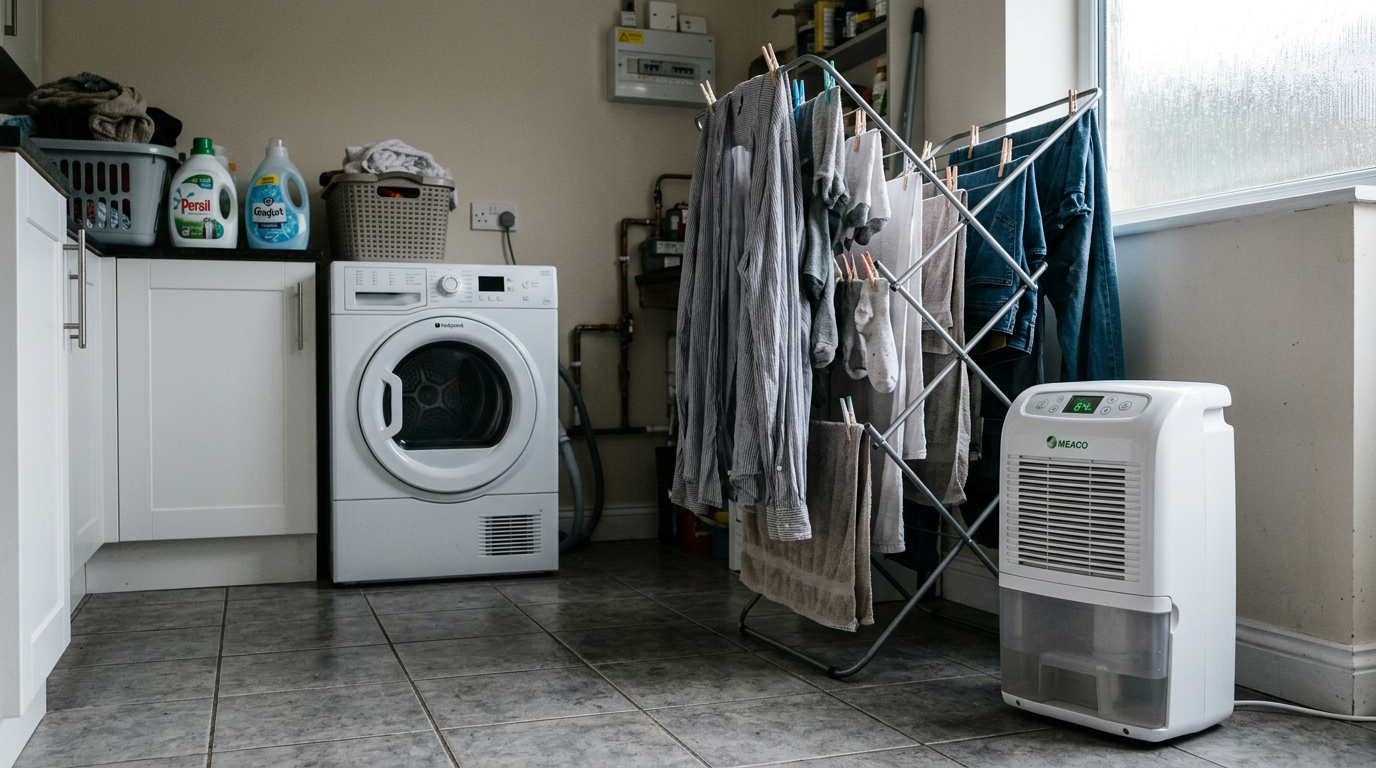
This is where a dehumidifier pulls ahead. A tumble dryer only dries the clothes. A dehumidifier dries the clothes and the room, so the two litres or so of water in a load ends up in the tank, not on the windows. Vented dryers push moisture outside; condenser and heat pump dryers collect it, but neither does anything about the condensation from cooking, showers and breathing.
Fabric care
Air drying with a dehumidifier is gentler on clothes and avoids shrinkage. Wool and delicates that should never go in a dryer can go on the airer.
So which should you choose?
- Choose a dehumidifier if you dry washing indoors most of the winter, have condensation or mould, or want the lowest running cost. The MeacoDry Arete One 20L is my all-round pick; the Devola 12L is the budget choice.
- Keep or buy a heat pump dryer if speed matters, you have a big family, and damp is not a problem.
- Use both: dehumidifier and airer for everyday loads, dryer for towels and emergencies. That is what many households end up doing.
A heated airer is the third option. My heated airer vs tumble dryer and dehumidifier vs heated airer comparisons cover it, and my guide to the best dehumidifier for drying clothes has the method.
Dehumidifier and drying guides
By room and problem
- Best dehumidifier for a cold bedroom
- Best quiet dehumidifier for bedrooms
- Best dehumidifier for a conservatory
- Best dehumidifier for a 2-bed house
- Best dehumidifier for mould and condensation
Choosing one
- Dehumidifier size calculator
- Compressor vs desiccant dehumidifier
- Dehumidifier buying guide
- Can you leave a dehumidifier on overnight?
Drying clothes for less
- How long a dehumidifier takes to dry clothes
- Heated airer vs tumble dryer cost
- Do heated airers actually save money?
Not sure what size you need? Try the dehumidifier size calculator.
Frequently Asked Questions
Is a dehumidifier cheaper than a tumble dryer?
Yes, for compressor models. At 26.32p per kWh, a compressor dehumidifier costs roughly 12p–41p a load against 66p–92p for a condenser dryer and 79p–£1.18 for a vented one. A heat pump dryer (32p–53p) is closer.
How much does a dehumidifier save compared with a tumble dryer?
Drying four loads a week through a 26-week winter, a 185W dehumidifier costs about £20 against about £82 for a typical condenser dryer, a saving of roughly £62. Against a heat pump dryer the saving is about £24.
Is a desiccant dehumidifier cheaper than a tumble dryer?
Not by much. At 600W, four to six hours costs about 63p–95p, similar to a condenser dryer. Desiccants earn their place in cold rooms where compressor models struggle.
Does a dehumidifier dry clothes as well as a tumble dryer?
It dries them fully, just more slowly: usually 3–6 hours in a small closed room. Towels feel softer from a dryer, but air drying is gentler on fabrics.
Should I get a heat pump dryer or a dehumidifier?
If you have condensation or mould, a dehumidifier solves both problems for less. If speed and capacity matter most and your home is not damp, a heat pump dryer is the better laundry tool.