Running costs updated 1 October 2026. Every electricity figure on this page is costed at the Ofgem price cap average electricity unit rate of 26.32p per kWh, which applies from 1 October to 31 December 2026. Your own tariff may be higher or lower, so check your latest bill before relying on these numbers.
Quick answer: if your bedroom sits below about 15°C on winter nights, buy a desiccant dehumidifier. The Meaco DD8L Zambezi is my pick for most cold bedrooms: it keeps extracting down to 1°C and gives off a little warmth. If the room is heated to 15°C or more, a quiet compressor model such as the MeacoDry Arete One 12L is cheaper to run.
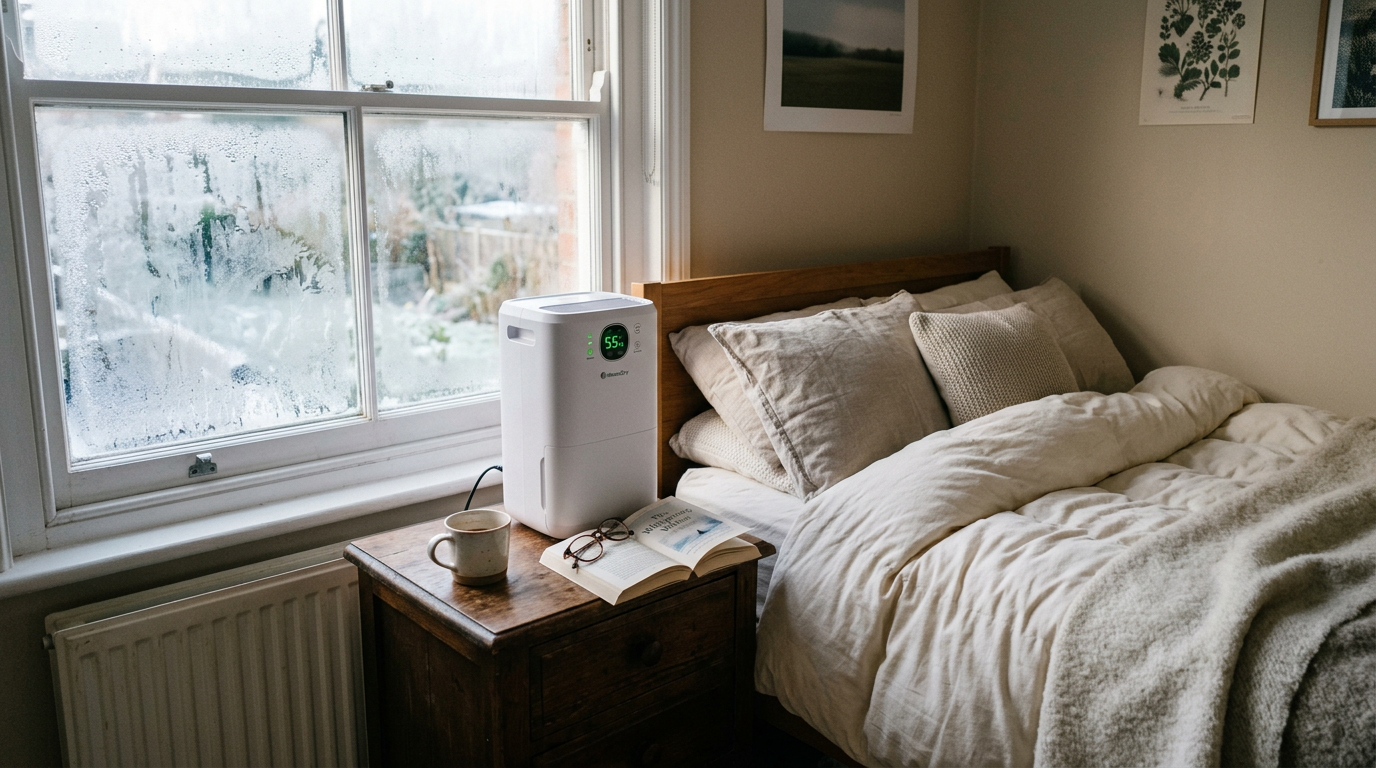
Cold bedrooms are where British damp does its worst work. The radiator goes off at night, the window is the coldest surface in the room, and by morning there is water running down the glass and a black line creeping along the sealant. A dehumidifier fixes that, but only if you choose the right type. The wrong one will sit humming in the corner and collect a cupful of water.
I cover which type works in a cold room and why, the models I would shortlist, what they cost to run overnight, and how to get the most from one without disturbing your sleep.
Why cold bedrooms need a different dehumidifier
Most dehumidifiers sold in the UK are compressor models. They work like a fridge, chilling a coil so moisture in the air condenses on it. That works brilliantly in a warm room. In a cold one there is less moisture in the air to begin with, the coil is closer to freezing and the machine spends time defrosting instead of extracting. Performance drops noticeably once the room is below about 15°C and falls away badly near 5°C.
A desiccant dehumidifier uses an absorbent wheel instead of a cold coil, so temperature barely affects it. It also blows out air that is a few degrees warmer than the room, which is welcome in a chilly bedroom. The trade-off is power: desiccant models draw around 600W against 150–260W for a compressor. My compressor vs desiccant comparison goes into the detail.
So the first question is simple: how cold does your bedroom actually get? A £10 thermometer-hygrometer left on the bedside table for a week will tell you. If it reads under 15°C most nights, go desiccant.
The best dehumidifiers for a cold bedroom
| Model | Type | Works from | Noise (maker's figure) | Power | Our score |
|---|---|---|---|---|---|
| Meaco DD8L Zambezi | Desiccant, 8L/day | 1°C | 41 dB | 600W | 9.0/10 |
| EcoAir DD3 Classic MK3 | Desiccant, 11L/day | 1°C | 36–47 dB | 600W | 9.2/10 |
| MeacoDry Arete One 12L | Compressor, 12L/day | Best above 15°C | 35–38 dB | 151W | 9.0/10 |
1. Meaco DD8L Zambezi: best for most cold bedrooms
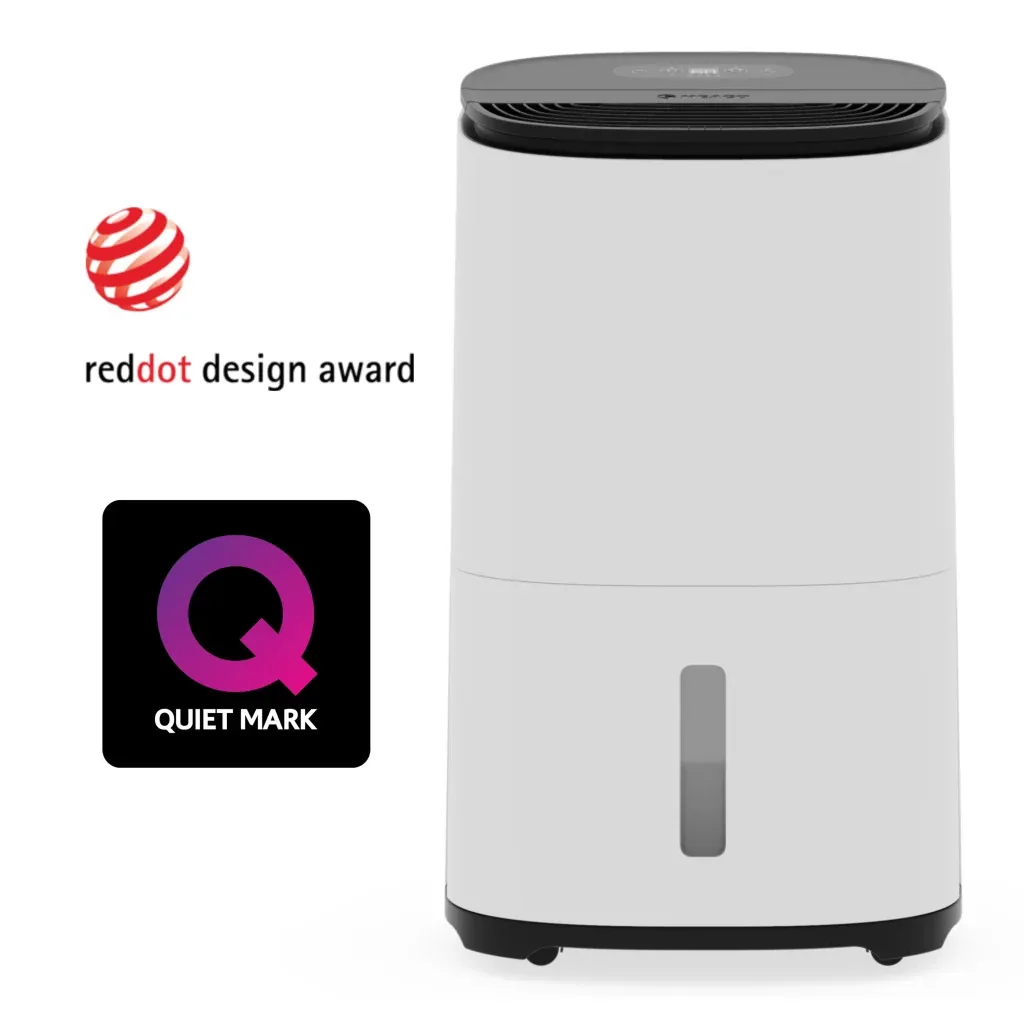
The Zambezi is the one I would put in an unheated back bedroom. It keeps working from 1°C, it is light enough (7.8kg) to carry between rooms, and it has a proper humidity display so you can see the number fall. The Daily Run timer is the feature that matters here: you can set it to run for a few hours in the evening, clear the air before you go to bed and switch off before it disturbs you. The 3L tank is small, so in a very damp room you will empty it daily unless you use continuous drainage. Read my full Meaco DD8L Zambezi review.
2. EcoAir DD3 Classic MK3: best for a large or very damp cold room
The DD3 extracts more (11L a day against 8L) and has a bigger 4.2L tank, so it suits a large cold bedroom, a loft room, or a bedroom where you also dry washing. It also works from 1°C, and its power adjusts automatically as the room dries. Its noise range is wide: quiet on low, noticeably louder on high, so run it hard during the day and on low at night. See my EcoAir DD3 review.
3. MeacoDry Arete One 12L: if the room is only cool, not cold
If the heating keeps your bedroom at 15°C or above, a compressor is the better buy. The Arete One 12L is the quietest machine in my line-up at 35–38 dB, draws just 151W and has a night mode. In a room that drops to single figures it will struggle, which is why it sits third here. More in my Arete One 12L review, and if silence matters most, see my best quiet dehumidifier for bedrooms guide.
What it costs to run in a bedroom
This is where the type choice bites. At the Ofgem price cap rate of 26.32p per kWh:
| Machine | Per hour | 3-hour evening run | 8 hours overnight |
|---|---|---|---|
| Desiccant, 600W | 15.8p | 47.4p | £1.26 |
| Compressor, 151W | 4.0p | 11.9p | 31.8p |
Those are full-power figures. In practice both types slow down or cycle off once the room reaches the humidity you set, so the real cost is usually lower. A desiccant does cost roughly four times as much per hour, but in a cold room the compressor's lower figure is misleading because it extracts so little. Paying 15.8p an hour for a machine that works beats 4p an hour for one that does not. Use my dehumidifier running cost calculator to plug in your own tariff.
The heat a desiccant gives off is not free, but it is not wasted either. In a bedroom you are trying to keep above the dew point of the window, a little extra warmth helps.
How to use a dehumidifier in a cold bedroom
- Run it before bed, not all night. Two to three hours in the evening with the door shut clears most of the moisture. If you leave it on overnight, use the humidistat so it is not running flat out.
- Set 50–55% humidity. Lower than that wastes electricity; higher and condensation returns on cold glass.
- Keep it away from the bed and curtains. Give it 20–30cm of clear space so it can breathe.
- Do not dry washing in a cold bedroom without it. One load releases around two litres of water, which is exactly where morning condensation comes from.
- Crack the trickle vent. Ventilation and dehumidifying work together. A sealed, cold room will always fight you.
When a dehumidifier is not the answer
If you see damp on an outside wall that gets worse after rain, a tide mark low on the wall, or mould behind a wardrobe on an external wall, the cause may be a leak, rising damp or a cold bridge. A dehumidifier will reduce the symptoms but will not fix the cause. My guide on whether a dehumidifier stops condensation and mould explains how to tell the difference. If you rent, report damp to your landlord in writing. For a whole-house approach, see the best dehumidifier for mould and condensation.
The verdict
For a bedroom that drops below 15°C, the Meaco DD8L Zambezi is my pick: it works in the cold, it is light, and its timer lets you run it before bed. Choose the EcoAir DD3 if the room is big or very damp. If the room is heated, save on running costs with the MeacoDry Arete One 12L. All three, plus seven more, are compared in my best dehumidifiers UK guide.
Dehumidifier and drying guides
By room and problem
- Best quiet dehumidifier for bedrooms
- Best dehumidifier for a conservatory
- Best dehumidifier for a 2-bed house
- Best dehumidifier for mould and condensation
Choosing one
- Dehumidifier size calculator
- Compressor vs desiccant dehumidifier
- Dehumidifier buying guide
- Can you leave a dehumidifier on overnight?
Drying clothes for less
- How long a dehumidifier takes to dry clothes
- Dehumidifier vs tumble dryer cost
- Heated airer vs tumble dryer cost
- Do heated airers actually save money?
Not sure what size you need? Try the dehumidifier size calculator.
Frequently Asked Questions
What type of dehumidifier is best for a cold bedroom?
A desiccant dehumidifier. It keeps extracting moisture down to about 1°C and gives off a little warmth, while a compressor model loses efficiency once the room drops below about 15°C.
Will a dehumidifier make my bedroom colder?
No. Compressor models return air at roughly room temperature, and desiccant models blow out slightly warmer air. Drier air can also feel less chilly than damp air at the same temperature.
How much does it cost to run a desiccant dehumidifier overnight?
A 600W desiccant model costs about 15.8p an hour at 26.32p per kWh, so eight hours at full power is around £1.26. With the humidistat set to 55% it will usually use less, and a two-to-three-hour evening run costs under 50p.
Can I use a compressor dehumidifier in a cold bedroom?
You can if the room stays at about 15°C or warmer. Below that it extracts much less and may spend time defrosting. If your bedroom regularly drops into single figures, a desiccant is the better choice.
What humidity should a bedroom be?
Aim for 40–60%, and set the dehumidifier to 50–55% in winter. That is low enough to stop condensation on most windows without wasting electricity.