Running costs updated 1 October 2026. Every electricity figure on this page is costed at the Ofgem price cap average electricity unit rate of 26.32p per kWh, which applies from 1 October to 31 December 2026. Your own tariff may be higher or lower, so check your latest bill before relying on these numbers.
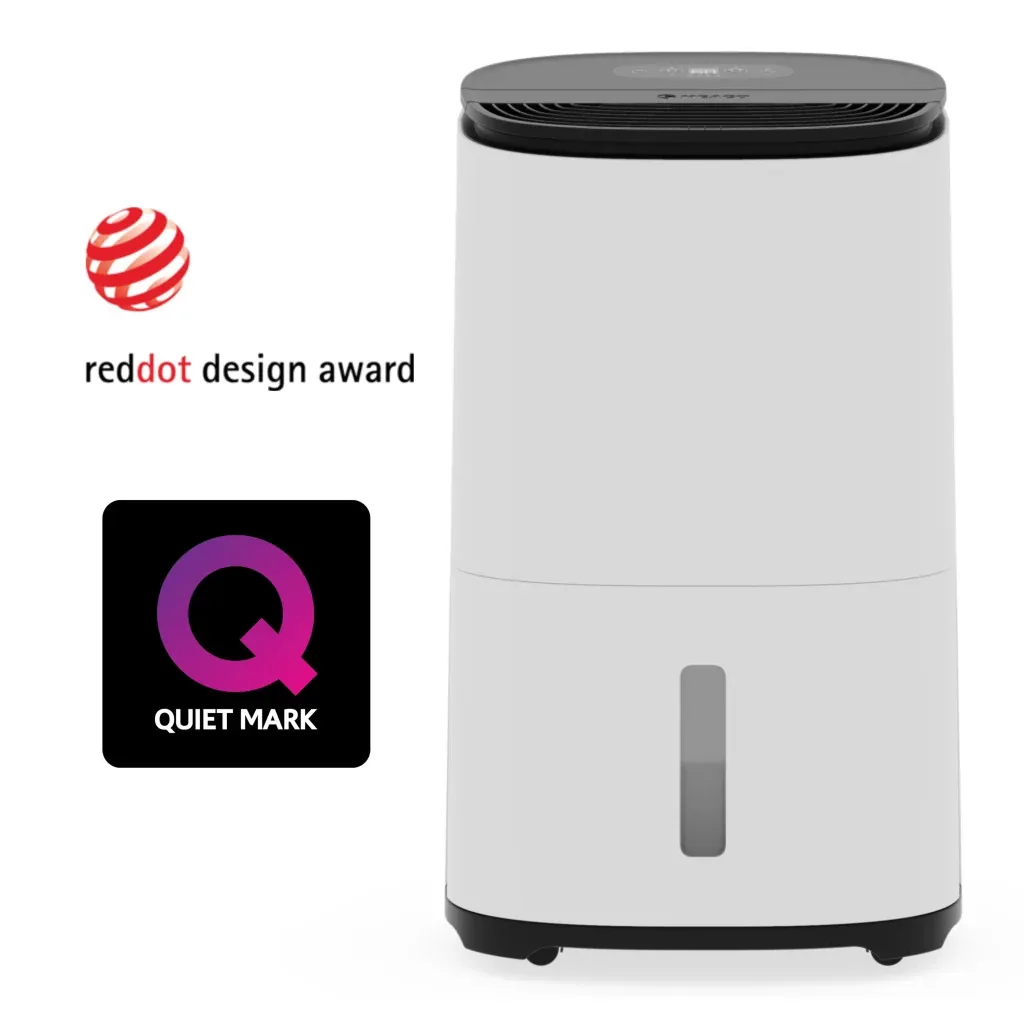
Quick answer: most heated 2-bed houses and flats are well served by a 12L compressor dehumidifier such as the MeacoDry Arete One 12L. Go up to a 20L model, such as the MeacoDry Arete One 20L, if you dry washing indoors most weeks or already have mould. If the house is cold (under 15°C), choose a desiccant instead.
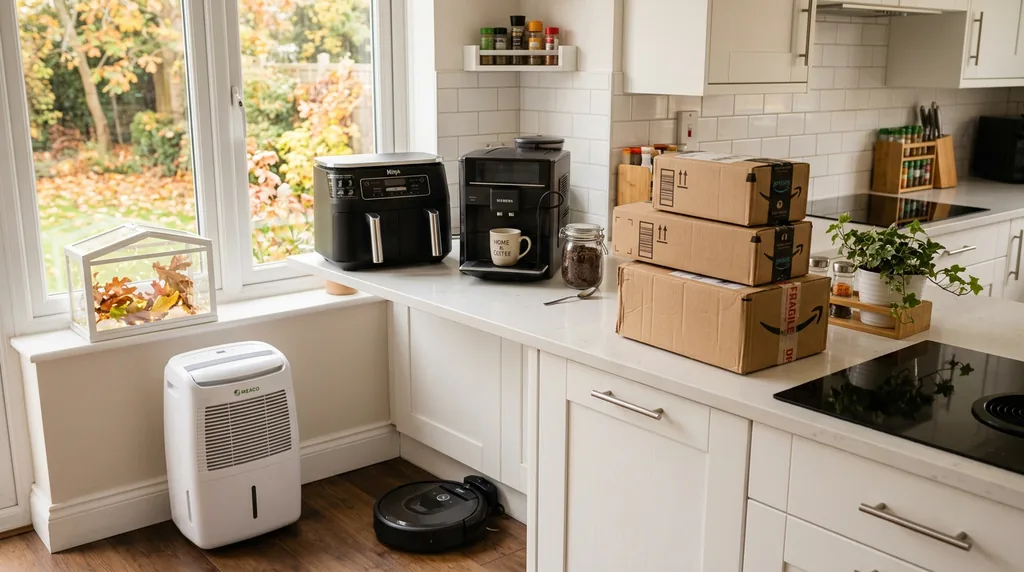
A two-bedroom home is the most common size of property in the UK, and it is also the size where people most often buy the wrong dehumidifier. A small 10L box struggles when you are drying a family's washing in the back bedroom, while a big 20L+ machine can be overkill in a well-ventilated new-build flat.
Here is how I would size one for a 2-bed home, the four models I would shortlist, what they cost to run, and where to put a single machine so it helps the whole house.
What size dehumidifier does a 2-bed house need?
The litres-per-day figure on the box is measured at 30°C and 80% humidity, which is far warmer and wetter than a British home in winter. Expect to collect a third to a half of the headline figure in practice. That is normal, not a fault, and it is why I size up rather than down.
| Your 2-bed home | Size I would buy | Type |
|---|---|---|
| Heated, occasional condensation on windows, little indoor drying | 10–12L | Compressor |
| Heated, washing dried indoors 2–4 times a week | 12–16L | Compressor |
| Visible mould, damp smell, or 4+ loads a week indoors | 20L | Compressor |
| Rooms regularly under 15°C (unheated or heating used sparingly) | 8–11L | Desiccant |
If you want a recommendation tailored to your home, the dehumidifier size calculator takes your home size, how damp it is, how much washing you dry indoors and how warm the rooms are, then suggests a size, a type and a model. My compressor vs desiccant guide explains the temperature question in more detail.
The best dehumidifiers for a 2-bed house
| Model | Extraction | Power | Tank | Noise (maker's figure) | Best for |
|---|---|---|---|---|---|
| MeacoDry Arete One 12L | 12L/day | 151W | 2.5L | 35–38 dB | Most heated 2-bed homes |
| MeacoDry Arete One 20L | 20L/day | 216W | 4.8L | 38–40 dB | Laundry-heavy or mouldy homes |
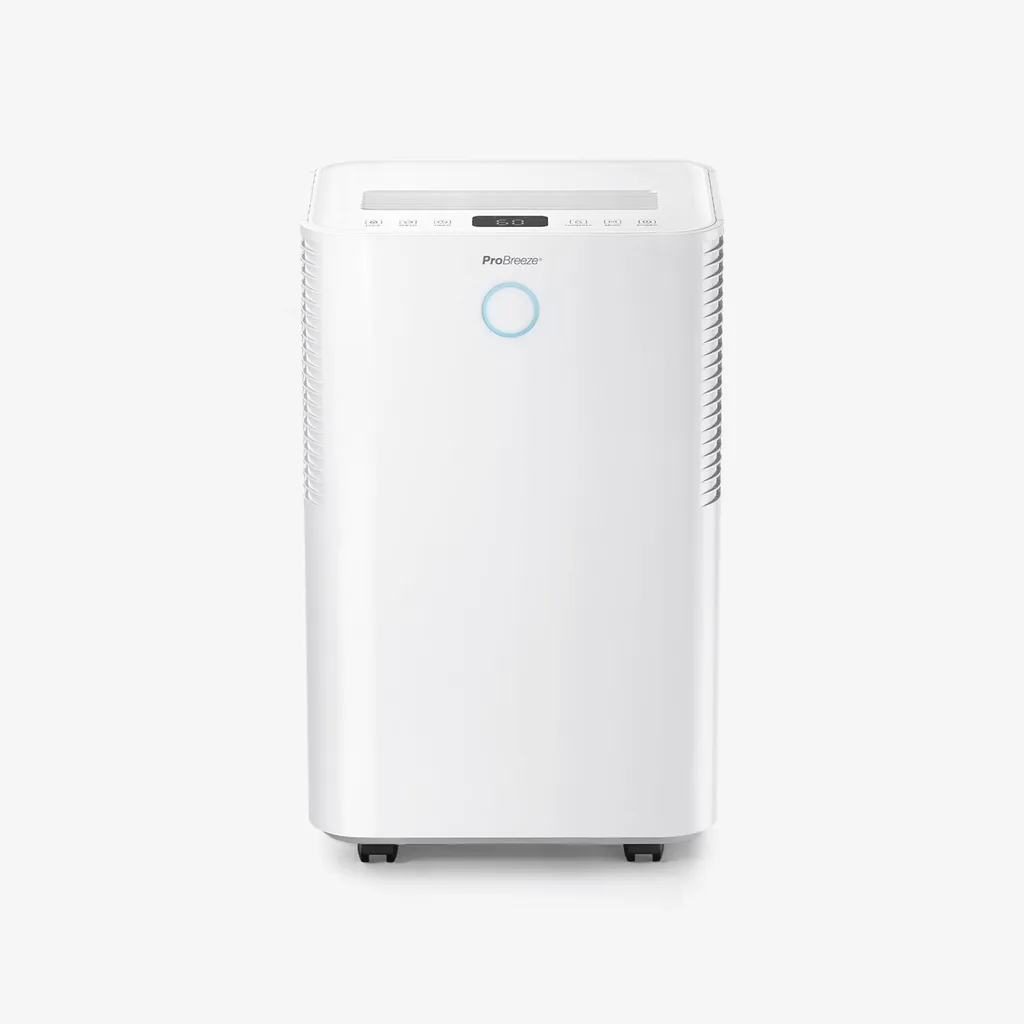
| Pro Breeze OmniDry 20L | 20L/day | ~250W | 4L | ≤36 dB | Smart control on a budget |
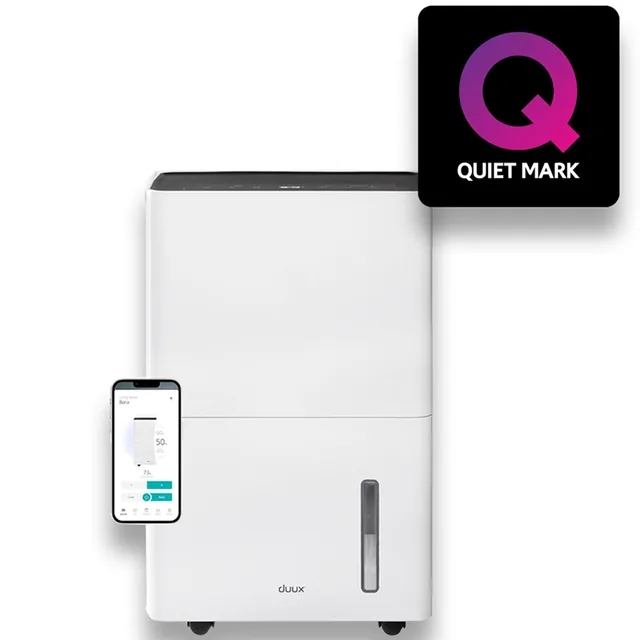
| Devola 12L Compressor | 12L/day | 185W | 2L | 36 dB | Lowest upfront price |
1. MeacoDry Arete One 12L: best for most 2-bed homes
Meaco lists the Arete One 12L for 1–3 bedroom homes, and it is the machine I would start with in a typical heated two-bed. At 151W it is the cheapest to run in my line-up (about 4p an hour), it is the quietest at 35–38 dB, and it has a built-in HEPA H13 filter. The 2.5L tank is its weak point: in a damp week you will empty it daily unless you run a hose to a sink. Full details in my Arete One 12L review.
2. MeacoDry Arete One 20L: if you dry washing indoors or have mould
Same features and filter as the 12L, with a bigger compressor and a 4.8L tank. That extra headroom matters if the machine is doing two jobs: drying a load of washing in the evening and keeping the bedrooms clear overnight. It draws only 216W, so it costs barely more per hour than the 12L, and because it reaches your target humidity faster it often runs for fewer hours. It is my top-rated dehumidifier overall. See the Arete One 20L review.
3. Pro Breeze OmniDry 20L: best smart option
If you like to schedule the machine from your phone or ask Alexa to switch it on before you get home, the OmniDry 20L is the one. It is rated at 36 dB or under and covers up to 30m², though it lacks the Meaco's HEPA filter. Owners report the app can occasionally lose connection. Read my Pro Breeze OmniDry 20L review.
4. Devola 12L: the budget pick
At £119.99 at our last check, the Devola is the cheapest way to dehumidify a small two-bed flat properly. It has a laundry mode, an adjustable humidistat and a 36 dB rating. The 2L tank is small, so it suits lighter damp rather than heavy indoor drying. More in my Devola 12L review.
What it costs to run in a 2-bed house
At the Ofgem price cap rate of 26.32p per kWh, at full power:
| Model | Per hour | 8 hours a day | 8 hours a day for a month |
|---|---|---|---|
| Arete One 12L (151W) | 4.0p | 31.8p | £9.67 |
| Devola 12L (185W) | 4.9p | 39.0p | £11.84 |
| Arete One 20L (216W) | 5.7p | 45.5p | £13.83 |
| OmniDry 20L (~250W) | 6.6p | 52.6p | £16.00 |
A month here is 30.4 days. These are worst-case figures: with the humidistat set to 50–55%, a compressor cycles off once the room is dry, so most households pay noticeably less. Try your own numbers in the dehumidifier running cost calculator, and see my dehumidifier running costs guide for the full breakdown.
Can one dehumidifier cover a whole 2-bed house?
Yes, with a little planning. A dehumidifier dries the room it is in fastest, and the rest of the house more slowly through open doors. In a 2-bed home I would:
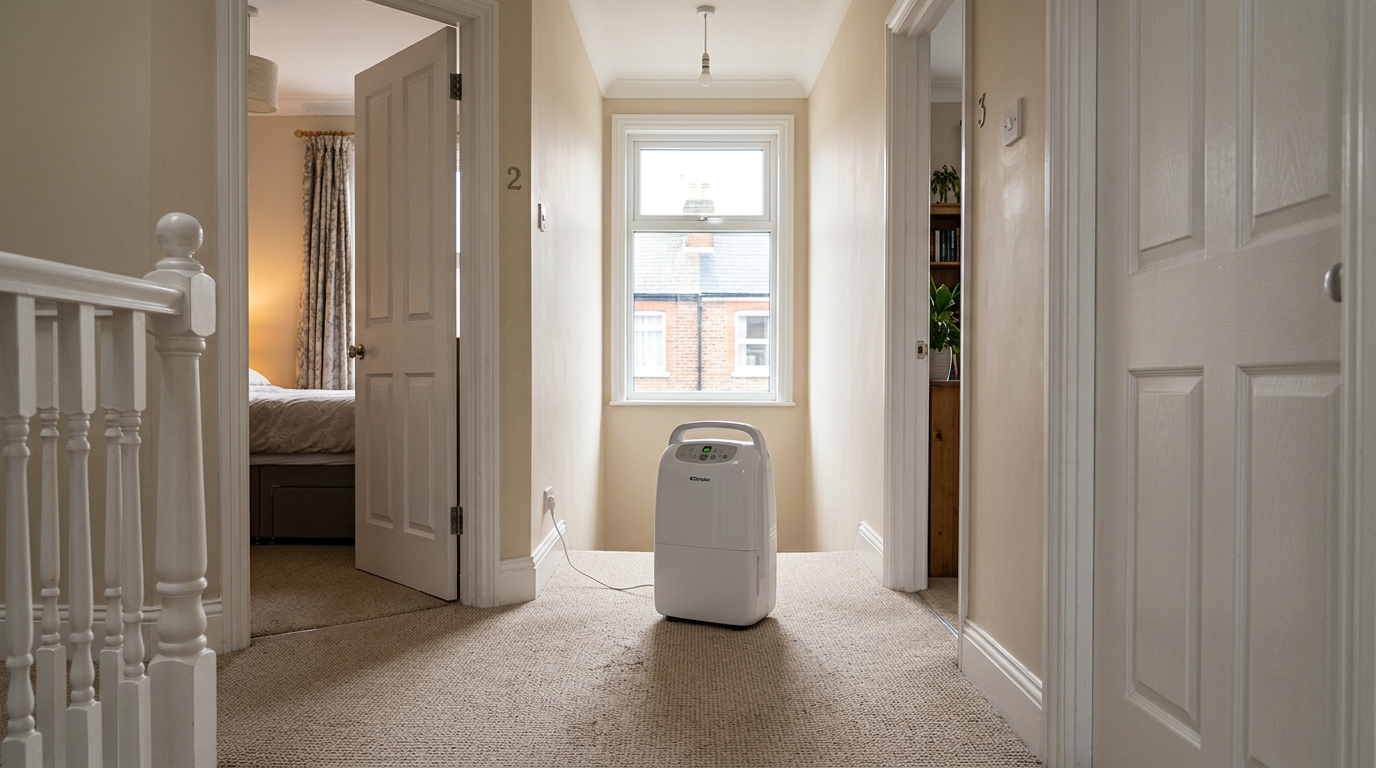
- Put it on the landing or hallway during the day with internal doors open, so drier air reaches every room. In a flat, a central hallway does the same job.
- Move it into the wettest room for a few hours: the bedroom with the worst window condensation, or wherever the washing is drying, with the door shut.
- Run it in the evening after showers and cooking, when moisture levels peak.
- Use continuous drainage if you can place it near a sink, bath or shower tray. It means the machine never stops at 3am with a full tank.
A 12–20L compressor weighs 10–15kg, so check it has wheels or a handle if you plan to move it daily. If you only need it at night, see whether you can leave a dehumidifier on overnight.
The verdict
For a typical heated two-bed, the MeacoDry Arete One 12L is the sweet spot: cheap to run, very quiet and big enough for normal winter damp. If you dry washing indoors most weeks or are fighting mould, step up to the Arete One 20L. On a tight budget, the Devola 12L does the basics well. All ten models I cover are ranked in my best dehumidifiers UK guide.
Dehumidifier and drying guides
By room and problem
- Best dehumidifier for a cold bedroom
- Best quiet dehumidifier for bedrooms
- Best dehumidifier for a conservatory
- Best dehumidifier for mould and condensation
Choosing one
- Dehumidifier size calculator
- Compressor vs desiccant dehumidifier
- Dehumidifier buying guide
- Can you leave a dehumidifier on overnight?
Drying clothes for less
- How long a dehumidifier takes to dry clothes
- Dehumidifier vs tumble dryer cost
- Heated airer vs tumble dryer cost
- Do heated airers actually save money?
Not sure what size you need? Try the dehumidifier size calculator.
Frequently Asked Questions
Is a 12L dehumidifier big enough for a 2-bed house?
For most heated 2-bed homes with occasional condensation, yes. If you dry washing indoors several times a week or have visible mould, a 20L model will keep up more comfortably and often runs for fewer hours.
Is a 20L dehumidifier too big for a 2-bed flat?
Not really. A larger compressor reaches your target humidity faster and then cycles off, and models like the Arete One 20L only draw 216W. The main downsides are the higher price and the extra weight when moving it between rooms.
Where should I put a dehumidifier in a 2-bed house?
On the landing or in a central hallway with doors open for general damp, then in the wettest room with the door shut when you are drying washing or tackling condensation. Keep 20–30cm clear around it.
How much does it cost to run a dehumidifier in a 2-bed house?
A 151–250W compressor model costs about 4–7p an hour at 26.32p per kWh, so eight hours a day is roughly £10–£16 a month at full power, and usually less once the humidistat cycles it off.
Do I need two dehumidifiers for a 2-bed house?
Usually not. One well-sized machine moved between rooms is enough for most homes. A second, smaller unit only makes sense if one room, such as a north-facing bedroom, stays damp while the machine is busy elsewhere.