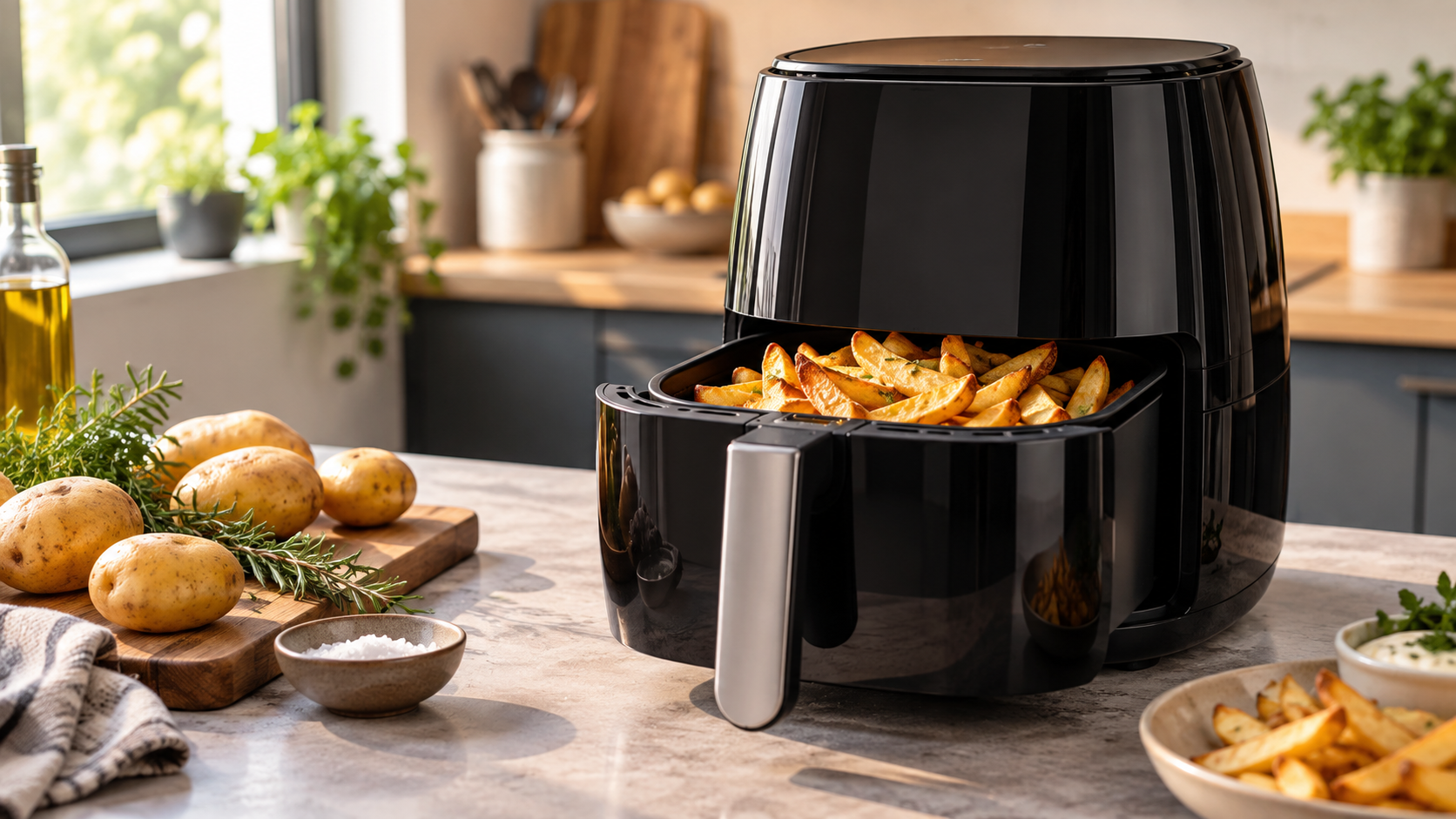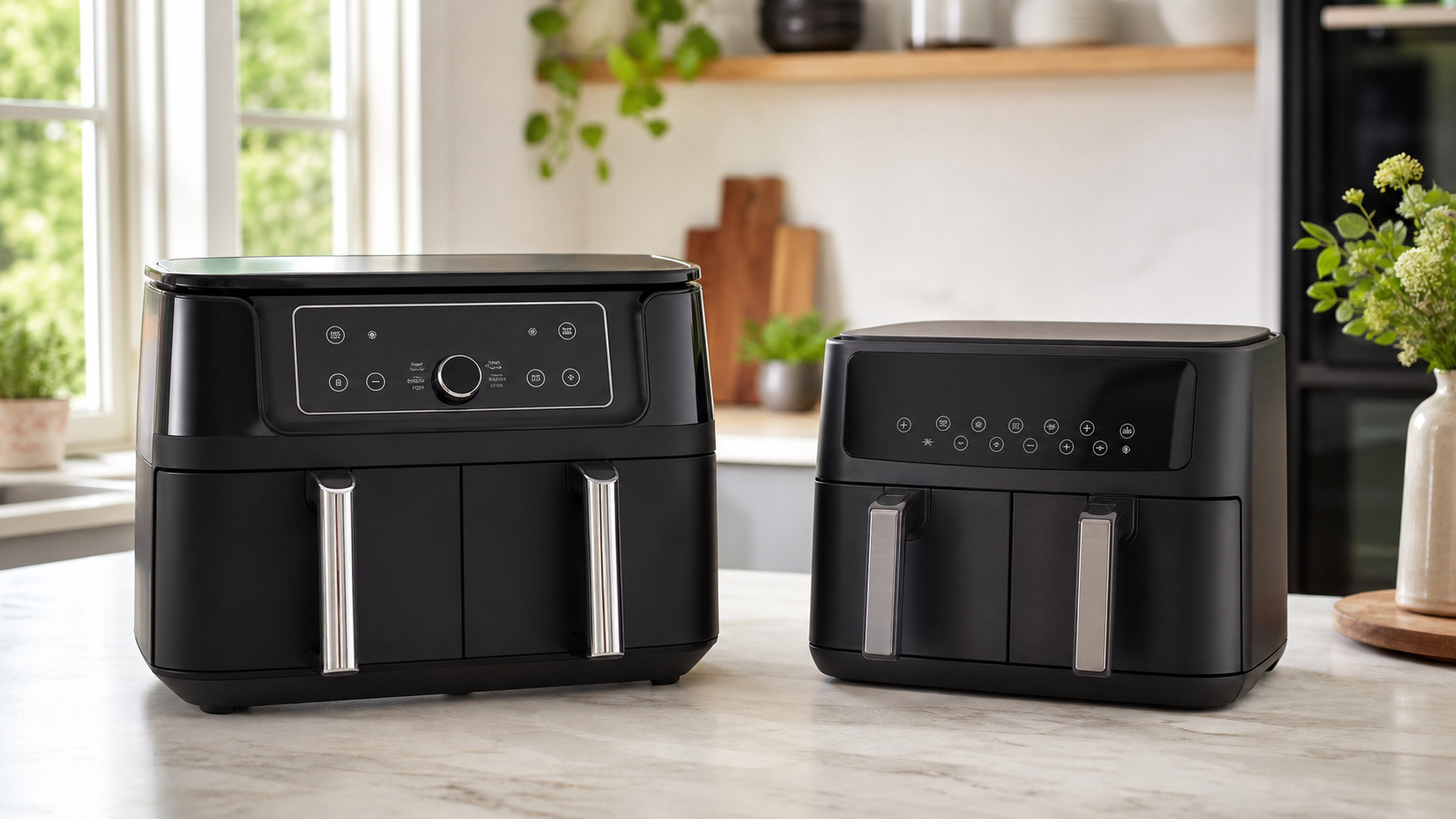
Air fryers are the appliance almost every UK kitchen has made room for, and when people ask me which one to buy, the choice usually comes down to two brands at opposite ends of the price scale: Ninja and Tower. Ninja is the premium name everyone knows — the one your neighbour won't stop talking about — while Tower is the budget champion that quietly sells in enormous numbers because it does the job for well under £100. After researching both models in depth and analysing hundreds of verified owner reviews, this is an honest head-to-head to help you decide whether the Ninja is worth the extra money or whether the Tower gives you everything you actually need.
The short answer
If you want the best build quality, the most even cooking and the slickest everyday experience, and you will use it most days, the Ninja Foodi MAX Dual Zone is worth every penny. If you want a genuinely capable dual-basket air fryer for the smallest possible outlay, the Tower Vortx 9L Duo does 90% of what the Ninja does for around 40% of the price. Neither is a bad buy — it comes down to budget and how often you will use it.
Price: the gap is the whole story
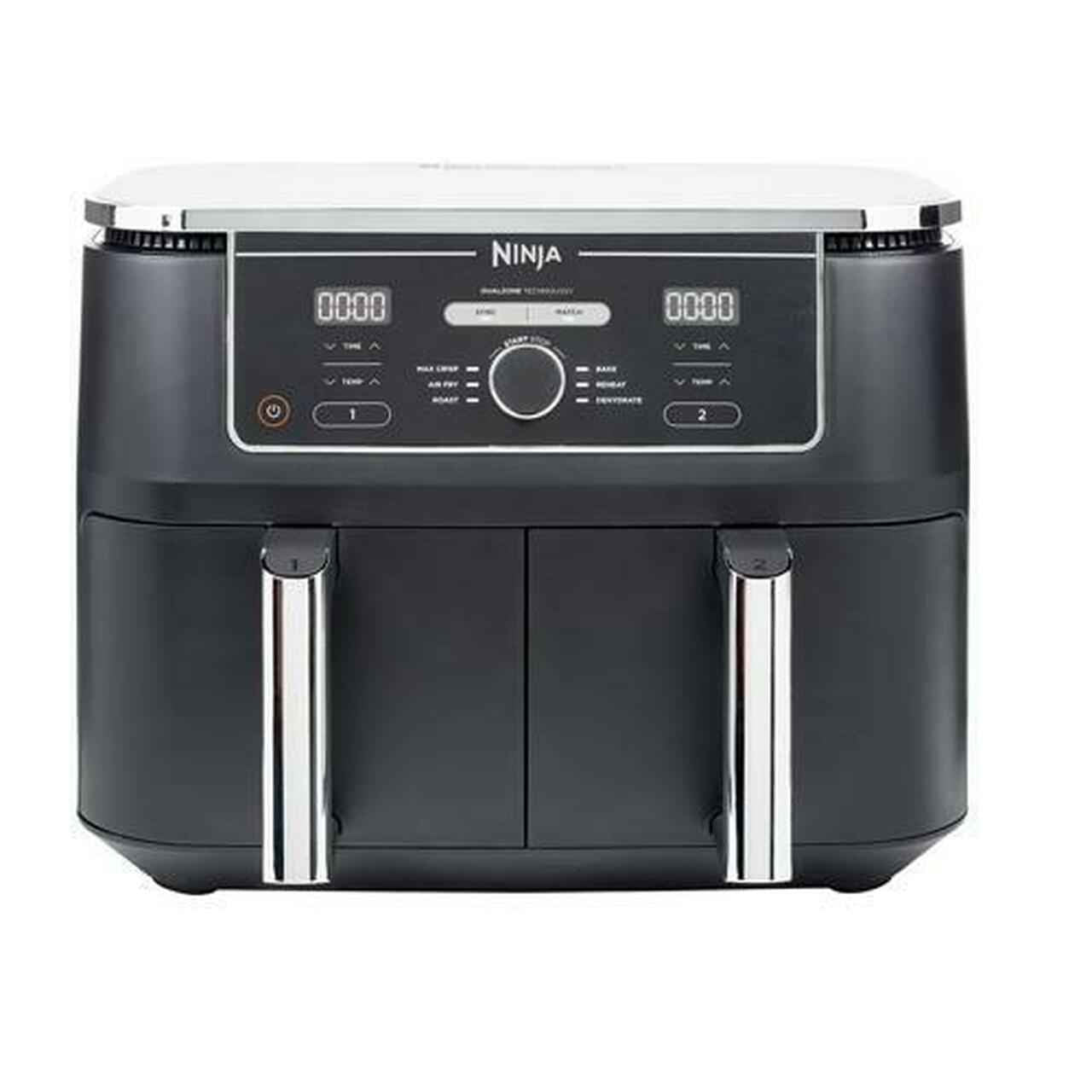
The Ninja Foodi MAX Dual Zone lands around £199. The Tower Vortx 9L Duo sits around £79.99 — less than half. Both are dual-zone machines with two independent drawers, so you are comparing like with like on format. The question is simply whether the Ninja's advantages justify paying more than double, and for a lot of households the honest answer depends on how much you cook.
Capacity: both generous, Tower slightly bigger on paper
The Tower Vortx offers 9 litres of total capacity split across two drawers; the Ninja Foodi MAX gives you 9.5 litres. In practice both comfortably cook for a family of four — a full portion of chips in one drawer and chicken or veg in the other. If you regularly cook for five or more, look at the larger single-basket or FlexDrawer models, but for the typical UK household either of these two has plenty of room. Our air fryer size guide walks through exactly how much capacity different household sizes need.
Cooking performance
This is where the Ninja earns its premium. The Foodi MAX heats fast, cooks evenly across the whole drawer, and its "Sync" and "Match" functions — finishing two different foods at the same time, or copying one drawer's settings to the other — genuinely make weeknight cooking easier. Results are consistent batch after batch.
The Tower is better than its price suggests. It cooks well, crisps chips and frozen food nicely, and the dual drawers are properly independent. What you give up is a little evenness at the edges of the basket and the polished synchronising features — you will do a bit more shaking and checking. For most everyday cooking, though, the results on a plate are closer than the price gap implies.
Build quality and controls
The Ninja feels like a premium appliance — solid drawers, a reassuring action, a clear display and buttons that will take years of daily use. The Tower feels lighter and more plasticky, which is exactly what you would expect at the price. It is perfectly well made for the money, but if you are opening and closing drawers twice a day for years, the Ninja is the one that will still feel tight and reliable further down the line.
Running costs: identical in what matters
Here there is effectively no difference. Both draw broadly similar power, and an air fryer's whole appeal is that it cooks faster and cheaper than a full-size oven — typically a few pence per session. We broke down the exact numbers in our air fryer running-cost guide, but the headline is that neither machine will noticeably move your electricity bill, and both are far cheaper to run than heating a conventional oven for a small meal.
Healthier cooking — a note that applies to both
Part of the air fryer appeal is using little or no oil, but there is one thing worth knowing whichever brand you pick: cooking starchy foods like chips at very high temperatures can raise acrylamide levels. The Food Standards Agency advises aiming for a golden colour rather than dark brown to keep it down. That guidance applies equally to the Ninja and the Tower — it is about how you cook, not which machine you buy.
Ninja vs Tower: side by side
| Ninja Foodi MAX Dual Zone | Tower Vortx 9L Duo | |
|---|---|---|
| Typical price | ~£199 | ~£79.99 |
| Total capacity | 9.5 L (dual drawer) | 9 L (dual drawer) |
| Best for | Even cooking & daily use | Best value dual-zone |
| Sync / Match cooking | Yes | No |
| Build quality | Premium, built to last | Good for the price |
| Our rating | 9.5 / 10 | 8.4 / 10 |
Which should you buy?
Buy the Ninja Foodi MAX Dual Zone if: you will use your air fryer most days, you want the most even, consistent results, and you value the synchronising features and premium build that make it a genuine long-term kitchen workhorse. At around £199 it is not cheap, but it is the one that keeps delivering for years.
Buy the Tower Vortx 9L Duo if: you want a capable dual-basket air fryer without spending big, you are a lighter or first-time user, or you are kitting out a second home or student kitchen. At around £79.99 it delivers most of the everyday benefit for a fraction of the price.
If Cosori is also on your shortlist, our Ninja vs Cosori comparison covers the premium-vs-compact debate. And if you are torn between Ninja's own models, our Ninja Crispi vs Ninja Air Fryer comparison covers the portable glass Crispi system versus the traditional drawer air fryers. Still not sure an air fryer suits you at all? Our honest verdict on whether air fryers are worth it weighs up the full picture. For independent lab results on crisping and evenness before you commit, the Which? air fryer reviews are a useful sense-check.
Want to see how these two stack up against Cosori, Philips, Instant and Tefal? Our full air fryer reviews rank every model we have reviewed so you can match one to your kitchen and your budget.