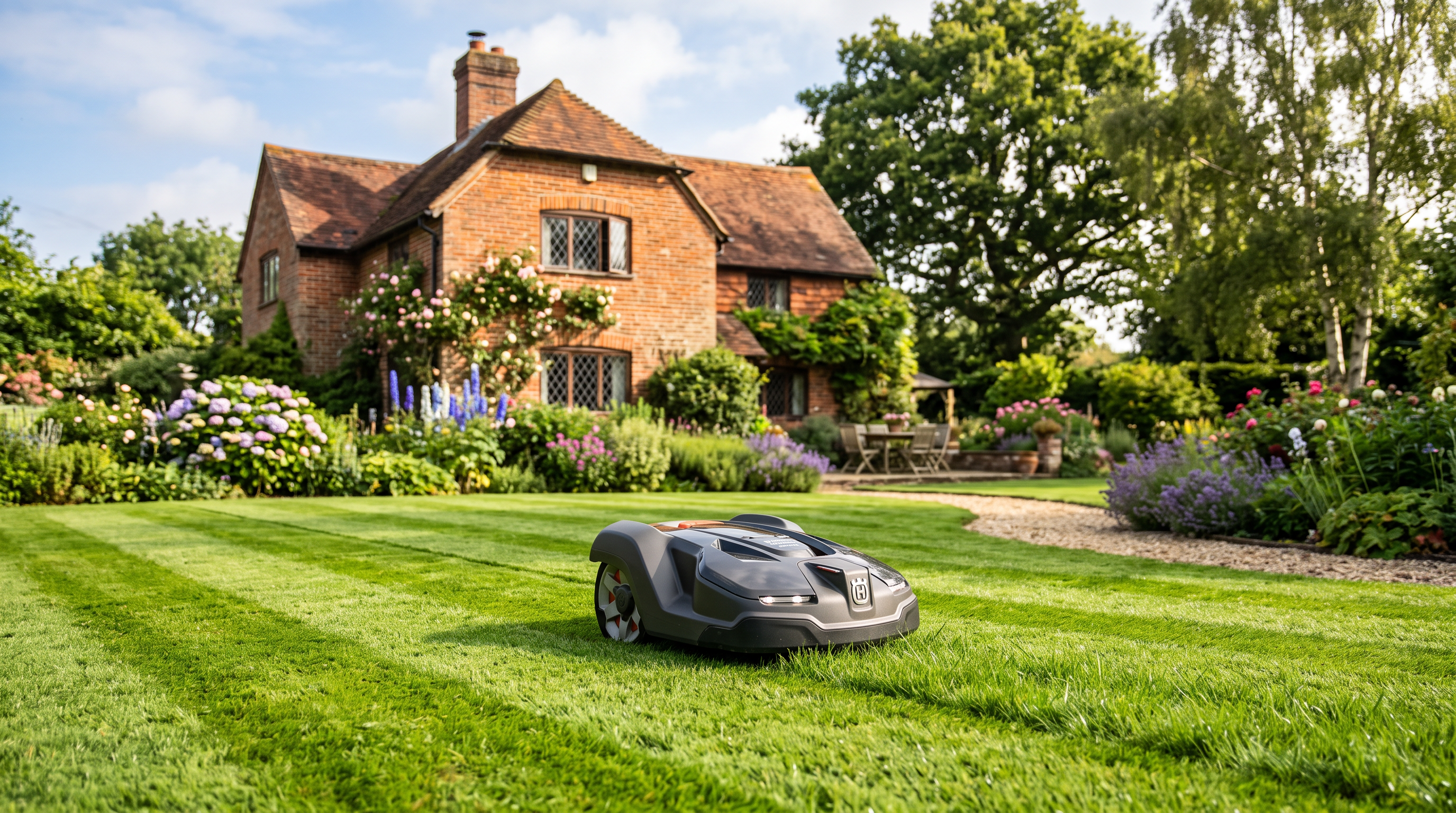
If you have started shopping for a robot lawn mower in the UK, two brands come up in almost every conversation: Husqvarna and Worx. They are among the most cross-shopped names in the category, and it is easy to see why — both have strong reputations, both sit towards the premium end, and both promise to hand your weekends back. But they take genuinely different approaches to the same job, and the right choice depends far more on your garden than on which badge you prefer. After researching both ranges in depth and reading through a great many verified owner reviews, this is an honest head-to-head to help you work out which one actually fits your lawn.
The short answer
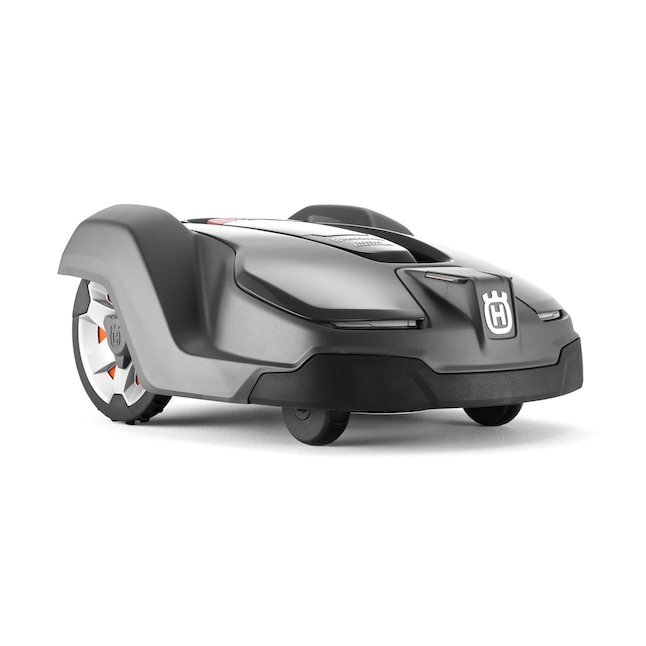
If you want the most proven, set-and-forget reliability for a large or complex garden and you do not mind laying a boundary wire, the Husqvarna Automower 430X is the safer long-term buy. If you would rather skip the perimeter wire entirely and let a camera map your garden, the Worx Landroid Vision L1600 is the more modern, lower-cost option. That is the comparison in a sentence — but the detail is where your answer lives, so let us go through it properly.
Price: Worx undercuts, Husqvarna justifies
This is the first dividing line. The Husqvarna Automower 430X lands around £2,999, while the Worx Landroid Vision L1600 sits around £2,063 — a meaningful gap of roughly £900. Both are premium machines aimed at larger lawns, so neither is a budget pick. The question is not "which is cheaper" (Worx, clearly) but "is the Husqvarna worth the extra for your garden?" For big, awkward plots where downtime is the real enemy, plenty of owners say yes. For a straightforward medium-to-large lawn, the Worx often makes more sense.
The big difference: boundary wire vs camera
This is the heart of the decision. The Husqvarna 430X is a boundary-wire mower: you (or an installer) lay a perimeter cable around the lawn and any flower beds, and the mower stays inside it. It is a faff to install, but once it is down, it is rock-solid — the mower knows exactly where its world ends, in any light and any weather. Owner reports consistently point to this reliability as the reason Husqvarna keeps its loyal following.
The Worx Landroid Vision takes the opposite route. It is wire-free and camera-guided — an AI camera on the front recognises grass versus not-grass and keeps the mower on the lawn, with no perimeter wire and no aerials to install. When it works, it is wonderful: you unbox it and mow the same day. The trade-off is that camera-only navigation is more sensitive to low light, long shadows, standing water and lawns where the grass-to-edge boundary is not crisp. It is the more convenient system to live with, but the more situational one to rely on.
Lawn size and coverage
The Husqvarna 430X is rated for larger areas — up to around 3,200 m² — which is why we tag it as our best pick for large estates. The Worx Vision L1600 is built for lawns up to roughly 1,600 m². If your garden is genuinely big, the Husqvarna has the coverage and stamina to match; for typical suburban and larger family gardens, the Worx has ample capacity without paying for coverage you will never use.
Slopes and terrain
Both handle gentle-to-moderate inclines, but the Husqvarna's mature drivetrain and wire guidance give it the edge on trickier, lumpier ground where a camera can lose confidence. If your plot has real gradients or uneven sections, this matters — and it is worth reading our guide to robot mowers on slopes and uneven lawns before you commit, because the headline slope figures behave very differently on wet grass.
Weather, security and the app
Husqvarna's ecosystem is the more polished at the premium end: Automower Connect gives you GPS theft-tracking, geofencing, remote control and detailed scheduling, and the hardware shrugs off British weather. Worx's Landroid app is capable too, with scheduling, rain delay and cut-height control, and the Vision's camera doubles as a security feature — but the wider ecosystem and long-term software track record are not yet as battle-tested as Husqvarna's. If total peace of mind and theft protection are high on your list, Husqvarna currently leads.
Running costs and longevity
Neither will trouble your electricity bill — robot mowers sip power, typically costing only a few pounds a year to run even on a daily schedule. The bigger long-term costs are blades, the occasional battery replacement and (for the Husqvarna) any boundary-wire repairs if the cable is ever cut. We break the numbers down in our guide to how long robot lawn mowers last, including battery replacement costs and the parts that wear fastest. Husqvarna's reputation for durability and parts availability is a genuine point in its favour if you plan to keep the machine for a decade.
Husqvarna vs Worx: side by side
| Husqvarna Automower 430X | Worx Landroid Vision L1600 | |
|---|---|---|
| Typical price | ~£2,999 | ~£2,063 |
| Navigation | Boundary wire (very reliable) | Camera, wire-free (very convenient) |
| Max lawn size | ~3,200 m² | ~1,600 m² |
| Best for | Large, complex estates | Skipping the perimeter wire |
| Theft protection | GPS tracking & geofencing | PIN & camera |
| Our rating | 9.1 / 10 | 8.7 / 10 |
Which should you buy?
Buy the Husqvarna Automower 430X if: you have a large or complicated garden, you want the most proven reliability and theft protection, and you are happy to lay (or pay for) a boundary wire once in exchange for years of trouble-free mowing. It costs more, but for the right plot the dependability genuinely earns it.
Buy the Worx Landroid Vision L1600 if: you want to skip the perimeter wire, your lawn is medium-to-large with reasonably clear edges, and you like the idea of unboxing and mowing the same afternoon. It is the more modern, lower-cost approach — just go in knowing camera navigation prefers good light and tidy boundaries.
If neither feels quite right, it is worth stepping back and asking whether a robot suits your garden at all — our honest verdict on whether robot lawn mowers are worth it covers the situations where a traditional mower still wins. For independent lab testing before you commit, the Which? robot lawn mower reviews are a good sense-check, and the RHS lawn care advice will help you get the most from whichever mower you choose.
Ready to compare the full field? Our robot lawn mower reviews put Husqvarna, Worx, Mammotion, Segway and more side by side so you can match a machine to your garden and your budget.