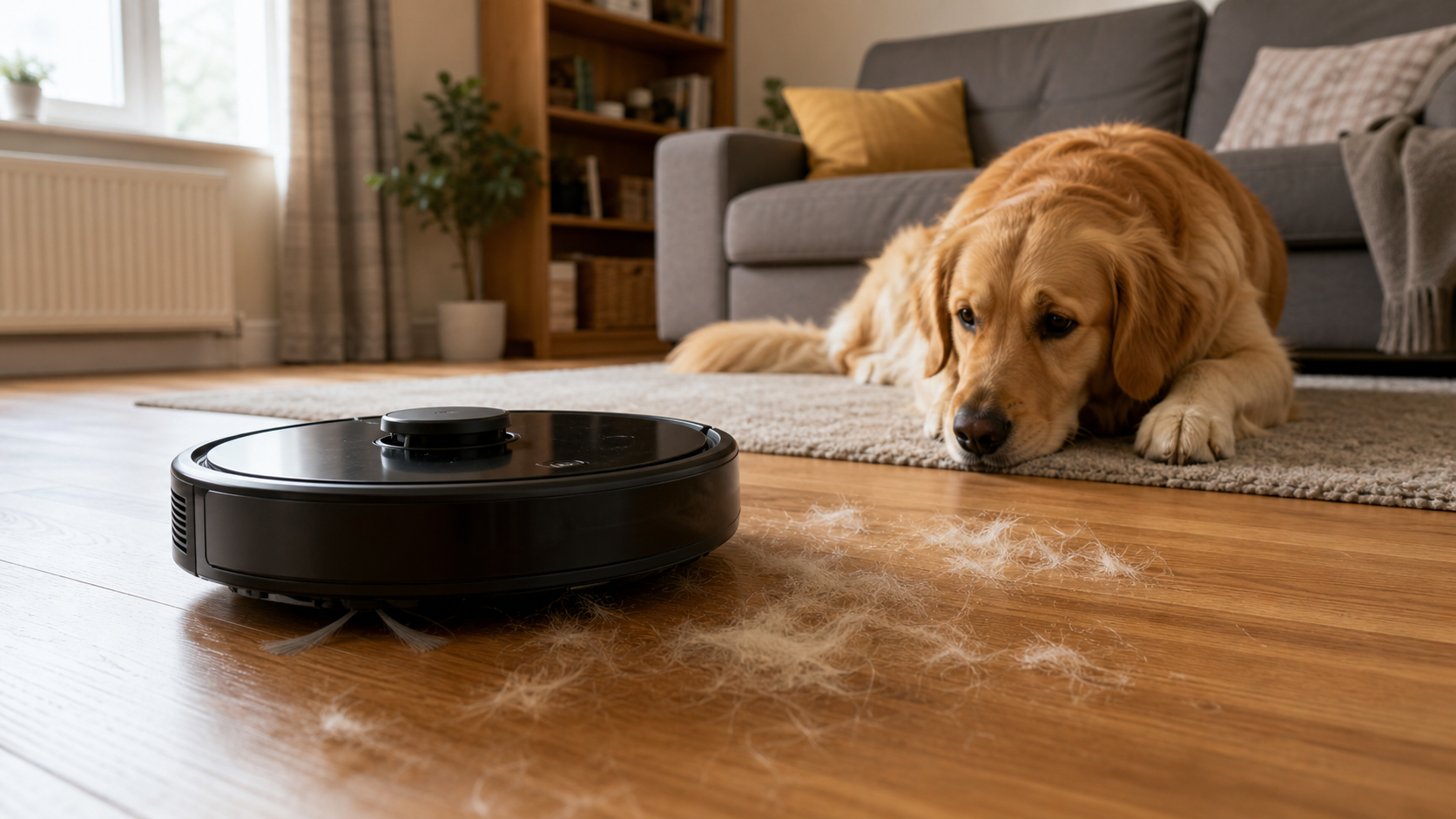
Pet hair is the single hardest job you can give a robot vacuum. It wraps around brush bars, clogs filters, fills bins in half the time, and embeds itself into carpet pile in a way that crumbs and dust simply don't. A robot that handles a childless, pet-free house beautifully can fall apart in a home with a Labrador.
This guide explains what actually matters when choosing a robot vacuum for pet hair, which features are marketing fluff, and how the models we have reviewed compare on the things that make a real difference.
Suction power matters — but there's a floor
Pet hair, especially from double-coated breeds like Golden Retrievers, Huskies and German Shepherds, embeds deep into carpet fibres. Pulling it out requires genuine suction, not the gentle airflow that handles surface dust. (If you're wondering how well robot vacuums handle carpet in general, our guide to whether robot vacuums work on carpet covers the broader question — this post focuses specifically on the pet hair challenge.)
Across the robot vacuums we've reviewed, suction ranges from 4,000 Pa to 35,000 Pa:
| Model | Suction | Price |
|---|---|---|
| Lefant M1 | 4,000 Pa | £170 |
| ECOVACS Deebot T30 Omni | 11,000 Pa | £699 |
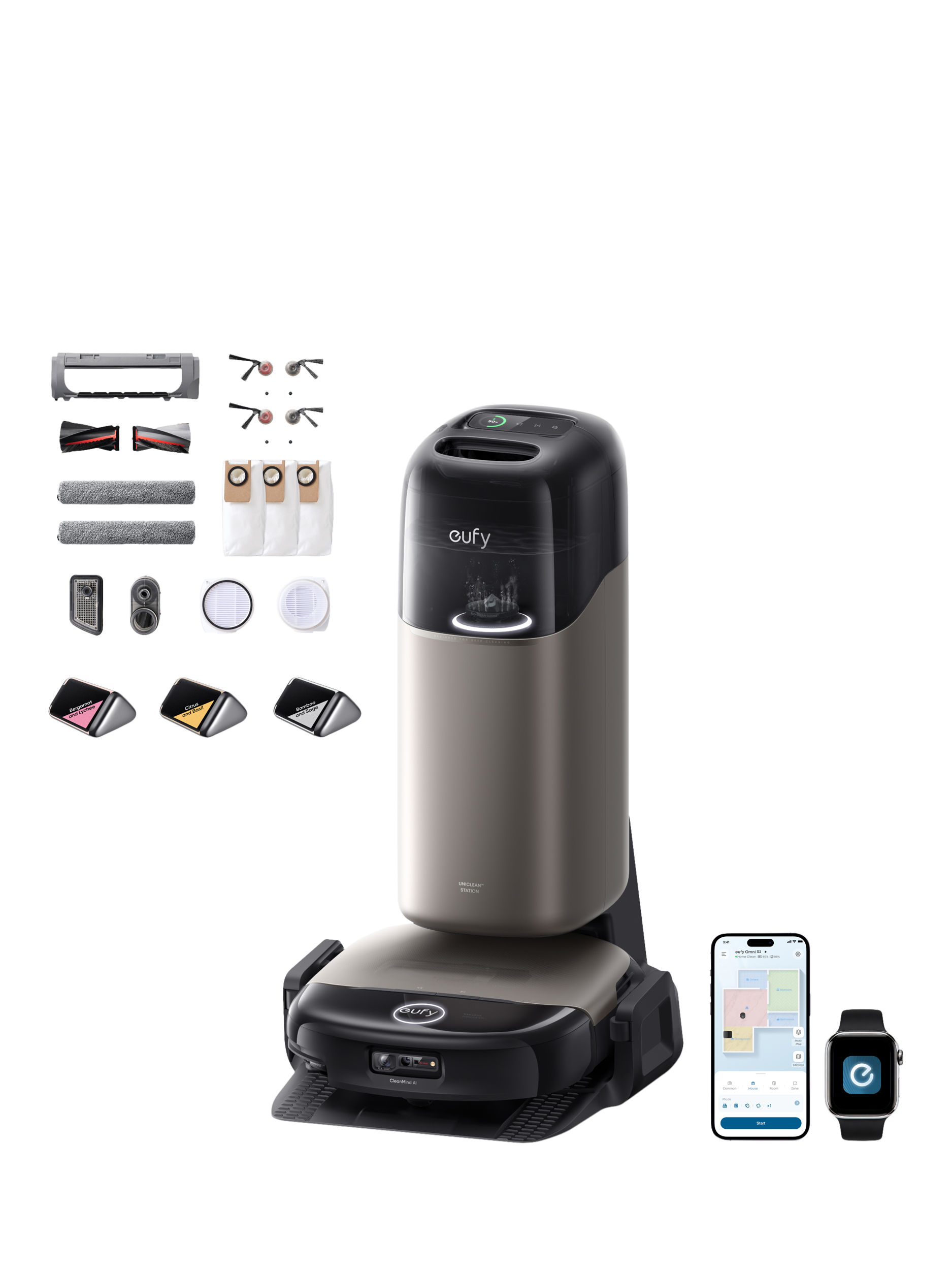
| eufy Omni C28 | 18,000 Pa | £549 |
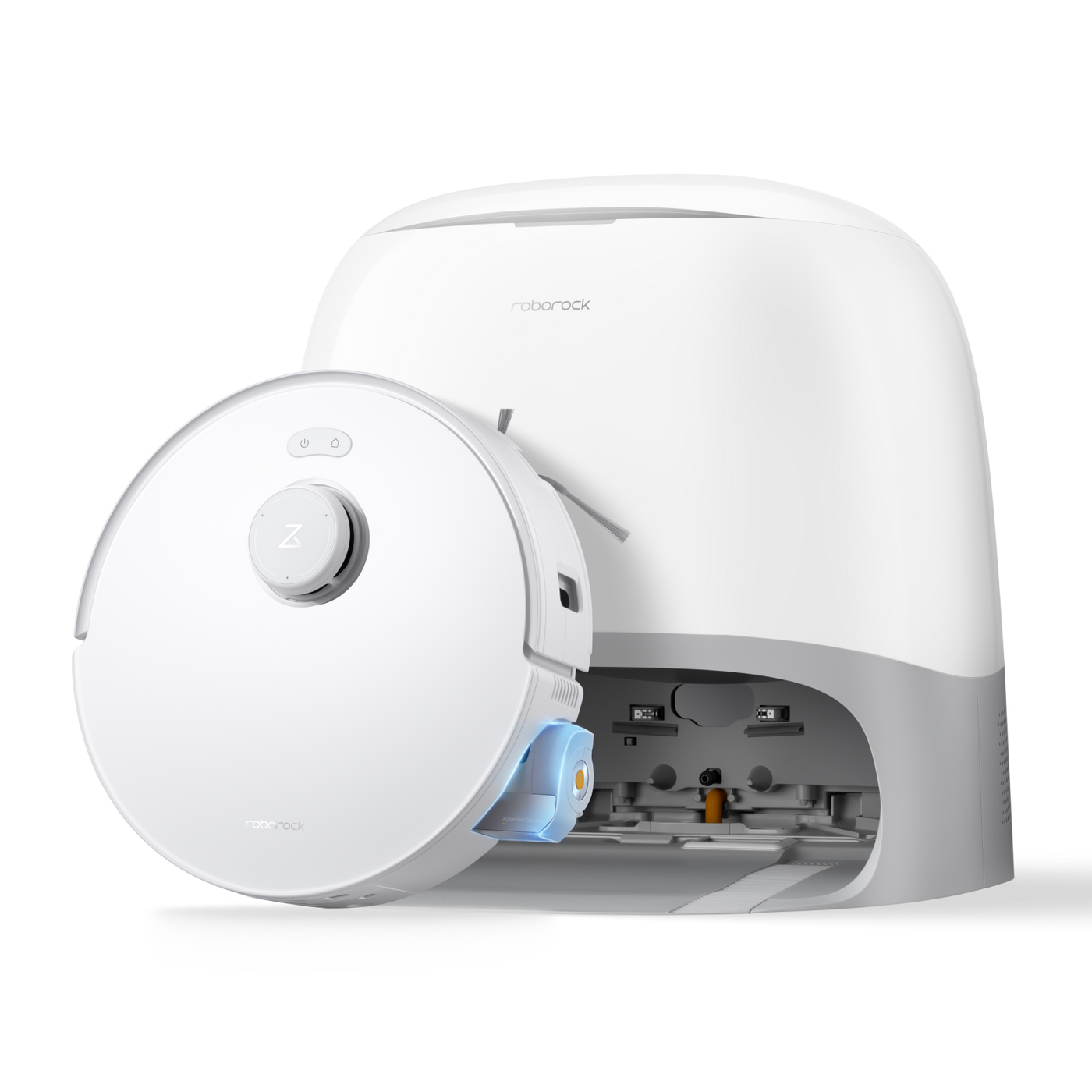
| Roborock Qrevo Curv | 18,500 Pa | £899 |
| eufy Omni S2 | 20,000 Pa | £999 |
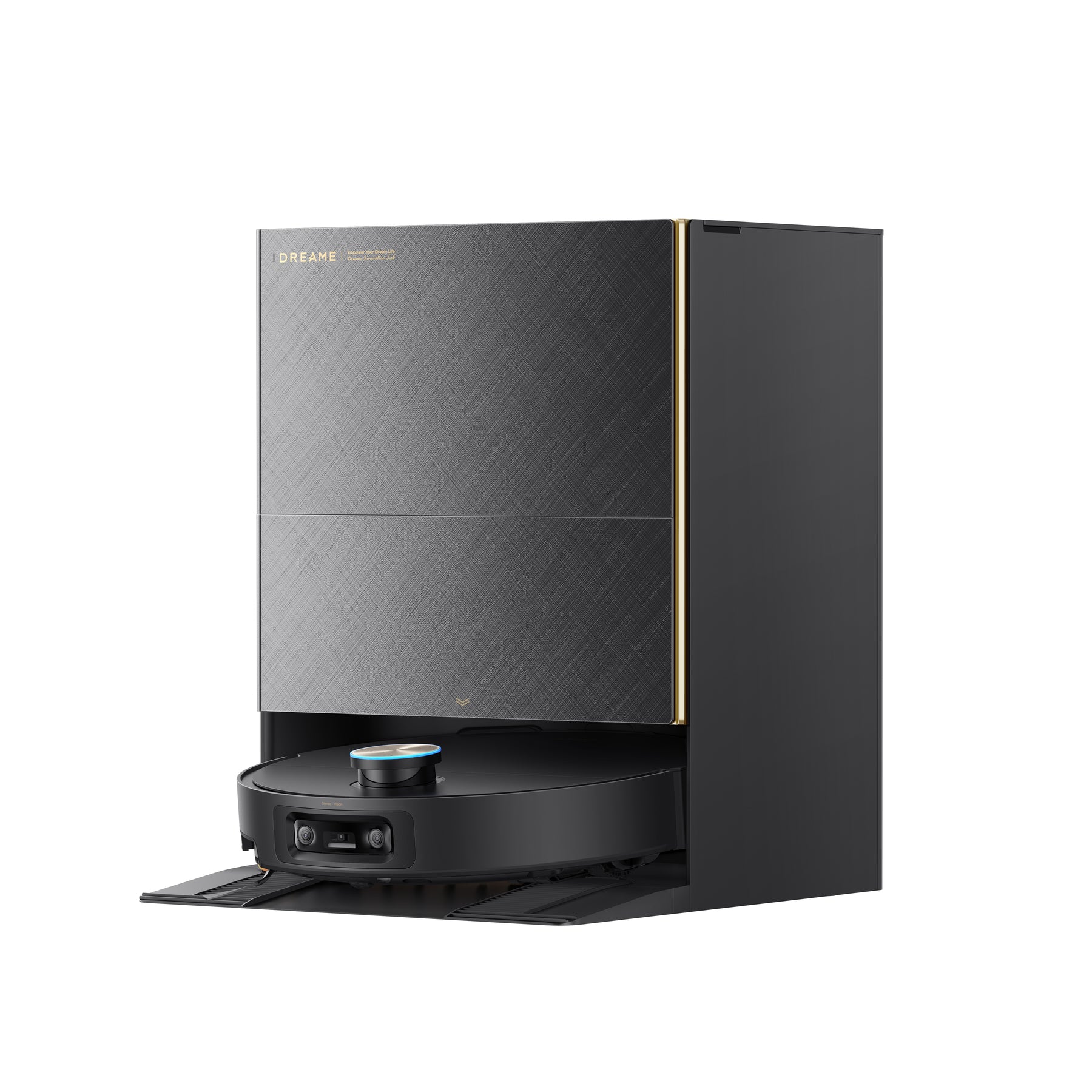
| Dreame X60 Ultra | 35,000 Pa | £1,099 |
For pet hair on hard floors, almost any suction level works — hair sits on the surface and gets swept up. For carpets, especially medium and deep pile, you want at least 10,000 Pa to reliably pull embedded fur out. Below that, you'll see the robot pass over visibly hairy carpet and leave it looking much the same.
Above about 18,000 Pa, returns diminish. The jump from 4,000 to 11,000 is transformative; the jump from 18,000 to 35,000 is nice to have but makes less practical difference on typical UK carpets. The Dreame X60 Ultra's 35,000 Pa is genuinely impressive, but the eufy Omni C28 at 18,000 Pa and nearly half the price picks up pet hair from carpet very well.
The brush bar is where most robots fail
Suction gets the headlines, but the brush roller is where pet-hair robots live or die. A standard bristle brush wraps long hair around the axle within days, choking airflow and stalling the motor. You end up cutting tangled hair off with scissors every week — which defeats the purpose of a hands-off robot.
The solutions that actually work:
- Silicone extractors (dual rubber rollers). iRobot pioneered this with the Roomba range. Two counter-rotating rubber rollers pull hair through without wrapping. It works extremely well. The Roomba Combo j7+ uses this design, and after weeks of daily runs in a house with a shedding dog, the rollers stay almost completely clean.
- Tangle-free designs. The Lefant M1 specifically advertises a tangle-free brush system, and at £170 it's by far the cheapest option here that addresses the problem. It won't match the deep-carpet performance of a £600+ machine, but on hard floors with pet hair it punches well above its weight.
- High-speed roller mops. Several modern robots (eufy Omni S2, Roborock Qrevo Curv) use roller-mop designs that are inherently less prone to tangling than traditional bristle brushes.
If you do nothing else, check what brush system the robot uses before buying. A 35,000 Pa robot with a bristle brush will need more maintenance than a 10,000 Pa robot with rubber extractors.
Self-emptying docks change the game for pet owners
A standard robot vacuum dustbin holds around 300–500ml. In a home with a shedding pet, that fills in one or two runs. Without a self-emptying dock, you're manually emptying the bin every day — and opening a bin packed with pet hair and dander is exactly the kind of allergen exposure most pet owners want to avoid.
A self-emptying dock vacuums the bin into a sealed bag or container that holds weeks' worth of debris. You deal with it once a month instead of once a day.
Here's what each model offers:
| Model | Self-empty | Dock type |
|---|---|---|
| Lefant M1 | No | Charging only |
| Shark Matrix Plus 2-in-1 | Yes | Empty only |
| iRobot Roomba Combo j7+ | Yes | Empty only |
| eufy Omni C28 | Yes | Wash, dry and empty |
| ECOVACS Deebot T30 Omni | Yes | Wash, dry and empty |
| Roborock Qrevo Curv | Yes | Wash, dry and empty |
| eufy Omni S2 | Yes | Wash, dry and empty |
| Dreame X60 Ultra | Yes | Wash, dry and empty |
For a pet household, a self-emptying dock isn't a luxury — it's the feature that stops you abandoning the robot after a month because you're tired of emptying it.
Pet-mess avoidance: the feature you don't think about until you need it
If you have a dog or cat, there will come a day when the pet has an accident on the floor and the robot finds it first. Without obstacle avoidance, the robot drives through it and drags it across every room in the house. This happens often enough that it has its own genre of horror stories online.
The iRobot Roomba Combo j7+ is specifically designed for this. Its PrecisionVision camera uses AI to identify and avoid pet waste, cables, shoes and other obstacles. iRobot is so confident in it that they offer a "Pet Owner Official Promise" — if the j7+ runs over pet waste, they'll replace it.
Most modern LiDAR and camera-equipped robots (Dreame X60 Ultra, Roborock Qrevo Curv, eufy Omni S2) also have AI obstacle avoidance that will dodge most floor objects, though none market the feature as aggressively as iRobot.
Filters and allergies
Pet dander — the microscopic flakes of skin — is the actual allergen, not the hair itself. But hair carries dander, and vacuuming it up only helps if the vacuum traps it rather than blowing it back into the room through the exhaust.
Look for a HEPA or HEPA-grade filter. Most of the robots we've reviewed include one. The filter traps particles down to 0.3 microns, which captures the vast majority of dander. Without one, you're redistributing allergens rather than removing them.
If anyone in the household has asthma or a pet allergy, this matters more than suction power. The NHS guidance on allergies recommends regular vacuuming with a HEPA-filtered machine as one of the key steps for managing pet-related symptoms at home.
Replace the filter on schedule — typically every two to three months. A clogged filter doesn't just reduce suction; it stops trapping fine particles, which is the whole point.
How often should a robot run in a pet household?
Daily. This isn't the answer people want, but it's the honest one. Pet hair accumulates continuously, and a robot running once a day keeps on top of it. Running twice a week lets hair build up to the point where each run is a heavy session that fills the bin, strains the brush bar, and takes longer.
The good news is that daily runs don't have to cover the whole house. Most modern robots let you schedule specific rooms on specific days — bedrooms Monday, Wednesday, Friday; living room daily; kitchen after meals. That cuts runtime, noise, and energy use.
For shedding-heavy seasons (spring and autumn for most breeds), consider running the robot twice daily on high-traffic areas. If you're adopting or fostering, Battersea has useful guidance on what to expect from different breeds — including coat type and shedding patterns — which can help you anticipate just how much your robot will be dealing with.
What about the mopping function?
Most newer robots vacuum and mop. For pet owners, mopping is a genuine bonus — it picks up the fine dander and dried muddy paw prints that vacuuming alone misses. But the mop must lift or retract when the robot crosses carpet, or it drags a wet pad across your rug.
The Roomba Combo j7+ has the best solution: its mop arm physically retracts onto the top of the robot over carpet. The Roborock Qrevo Curv and eufy Omni S2 lift the mop pads a few millimetres, which works but can still dampen very thick pile. Check which approach the model uses if you have a mix of hard floors and carpet.
Our honest recommendations by budget
| Budget | Best pick | Why |
|---|---|---|
| Under £200 | Lefant M1 | Tangle-free brush, solid on hard floors, remarkable value |
| £400–£600 | eufy Omni C28 | 18,000 Pa suction, self-emptying dock with wash and dry, strong all-rounder |
| £600–£700 | iRobot Roomba Combo j7+ | Best pet-mess avoidance, rubber extractors that never tangle, retractable mop |
| £900+ | Dreame X60 Ultra | 35,000 Pa for the most demanding shedders, excellent edge cleaning |
If we had to pick one for a typical UK pet household with a mix of carpet and hard floors, it would be the eufy Omni C28 at £549. It's the sweet spot: enough suction for embedded hair, a self-cleaning dock so you don't touch the mess, and a price that doesn't require justifying to a partner. The iRobot j7+ is the better choice if pet-mess avoidance is your top priority, but it costs more and the empty-only dock means more manual maintenance. Whichever you choose, the electricity is negligible — our guide to robot vacuum running costs shows even daily use costs under £35 a year, though the consumables (filters, brushes and bags) add up more than you'd expect. Still deciding whether one is worth the investment? Our honest verdict on robot vacuums covers the full pros and cons. And if you're weighing up whether the auto-empty base station is worth the extra outlay, see our guide to self-emptying robot vacuums for pet hair.