The single biggest objection people have to outdoor kitchens in the UK is the weather. It rains roughly 150 days a year in southern England and closer to 200 in the north and west — and even in summer, a barbecue can turn into a puddle-dodging exercise in ten minutes. So is an outdoor kitchen a write-off in this climate? No, but it needs protecting properly. This guide covers everything from shelter and materials to the covers, drainage and winter prep that keep an outdoor kitchen usable and looking good for years rather than months.
Start with shelter — it matters more than the kitchen itself
Shelter is the single biggest factor in whether an outdoor kitchen gets used twelve months a year or four. Without overhead protection, even the best stainless steel units will spend most of their life under a cover, which defeats the purpose.
The options, from cheapest to most permanent
| Shelter type | Typical cost | Rain protection | Planning permission? |
|---|---|---|---|
| Large cantilever parasol | £150–£500 | Light showers only | No |
| Pop-up gazebo (3×3 m) | £80–£300 | Moderate — not storm-proof | No |
| Permanent metal gazebo with roof | £500–£2,000 | Good — solid roof panels | Usually no (under 2.5 m to eaves) |
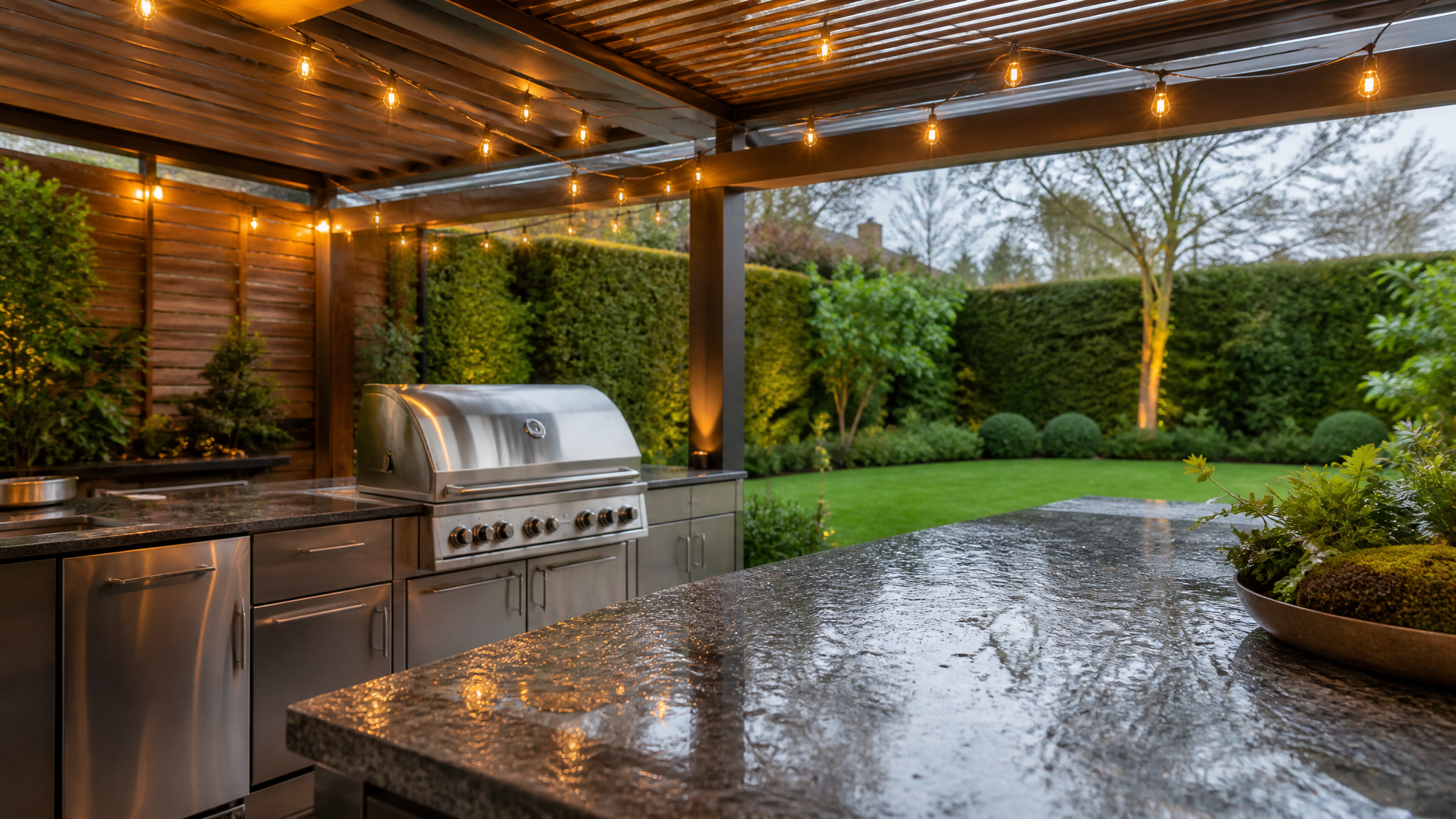
| Slatted pergola with louvred roof | £2,000–£6,000 | Excellent — adjustable blades | Usually no (permitted development) |
| Lean-to or garden room extension | £5,000–£15,000+ | Complete | Possibly — check with local authority |
For most outdoor kitchens, a permanent gazebo or a louvred pergola is the sweet spot. They keep rain off the cooking area, provide shade in summer, and look substantially better than a pop-up gazebo from a supermarket. Louvred pergolas are particularly good because you can open the blades on dry days for ventilation and close them when it rains — some motorised versions even have integrated rain sensors. Our pergola reviews compare all the options, and our pergola planning permission guide covers whether you need consent.
Our guide to outdoor kitchen planning permission covers the height and position rules that determine whether your shelter counts as permitted development.
Choose the right materials from the start
Cabinets and frames
Marine-grade stainless steel (304 or 316) is the gold standard. Grade 304 handles rain and British temperatures without issue. Grade 316 adds molybdenum for saltwater resistance, which matters if you are within a mile of the coast. Most premium outdoor kitchens from the likes of GrandPro, Napoleon and BeefEater use 304 stainless throughout.
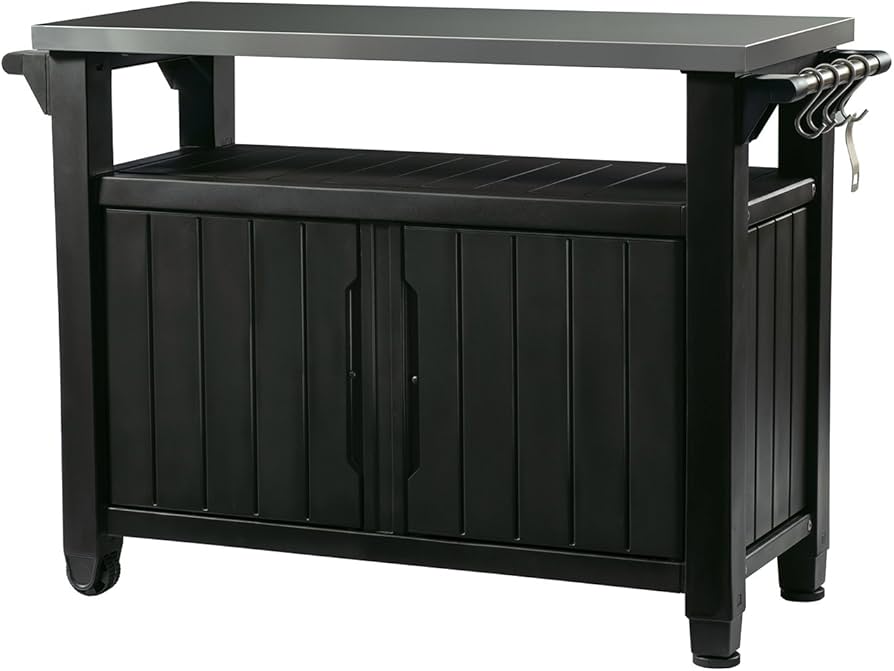
Powder-coated mild steel works in a sheltered setting but will rust at joints and scratches if exposed long term. Plastic resin cabinets — like the Keter Unity XL — are genuinely weatherproof and a smart budget option, but they will not take the weight of stone worktops or heavy built-in appliances.
Worktops
Granite, porcelain slab or dekton all handle freeze-thaw cycles without cracking. Standard interior-grade quartz composites (Silestone, Caesarstone) are not recommended outdoors because the resin binder can discolour and degrade under UV and frost. Polished concrete is another option — cheaper, but it needs sealing annually.
Flooring beneath the kitchen
Porcelain paving, natural stone flags or poured concrete — all fine. Composite decking works too but make sure it is rated for direct heat underneath a barbecue. The critical thing is drainage: the base should slope gently (1:80 minimum) away from the kitchen and the house, so pooling water drains off rather than sitting under the cabinets.
Covers — the boring bit that saves you thousands
Even with overhead shelter, a fitted weather cover for the grill and worktop area is worth having for the months you are not using it daily. A good cover costs £40–£100 and prevents the slow degradation from moisture, bird droppings and pollen that builds up over winter.
- Grill covers should be heavy-duty polyester (600D minimum) with a waterproof PVC lining and air vents to prevent condensation. Avoid cheap universal covers — they never fit properly, flap in the wind, and pool water on top.
- Full kitchen covers that drape over the entire run are available for modular setups. They are more expensive but far more effective than covering each component separately.
- Fridge and sink covers are often overlooked. An outdoor-rated fridge like the one in the GrandPro 262 is built to run outdoors, but covering it in winter extends the compressor life and keeps the gaskets from cracking.
The electrics and plumbing
Outdoor electrical sockets must be IP65-rated at minimum — splashproof and dust-tight. They need to run through an RCD on a dedicated circuit. This is not a DIY job unless you are a qualified electrician — and even then, Part P of the Building Regulations requires that outdoor electrical work in England and Wales is either done by a registered competent person or inspected by Building Control. Get it done properly once and forget about it.
For plumbing, outdoor sinks need frost protection. In the UK, exposed outdoor pipes will freeze and split in a bad winter. Options include self-regulating trace heating cable on the pipes (about £30 and trivial to fit), lagging all exposed runs, and — simplest of all — fitting an isolation valve indoors so you can drain the outdoor pipework before the first frost.
Winter preparation — the annual checklist
- Deep-clean everything. Grease left on grill grates and burners attracts moisture and accelerates corrosion. Burn the grill on high for 15 minutes, brush it clean, then wipe all stainless surfaces with a stainless steel cleaner.
- Drain the water. Isolate the supply, open the outdoor tap, and let all pipes empty. Disconnect any hoses.
- Remove gas bottles. Store propane and butane cylinders upright in a ventilated outdoor space, away from drains and below ground-floor windows.
- Cover everything. Grill, worktops, fridge, sink. Secure covers with bungee cords — the February wind will find a loose cover.
- Check the drainage. Clear any leaf debris from the base and guttering. Standing water under a covered kitchen through winter is the single most common cause of premature rust on cabinet legs.
This takes about an hour in late October and saves hundreds of pounds in replacement parts.
What about the cheaper outdoor kitchens?
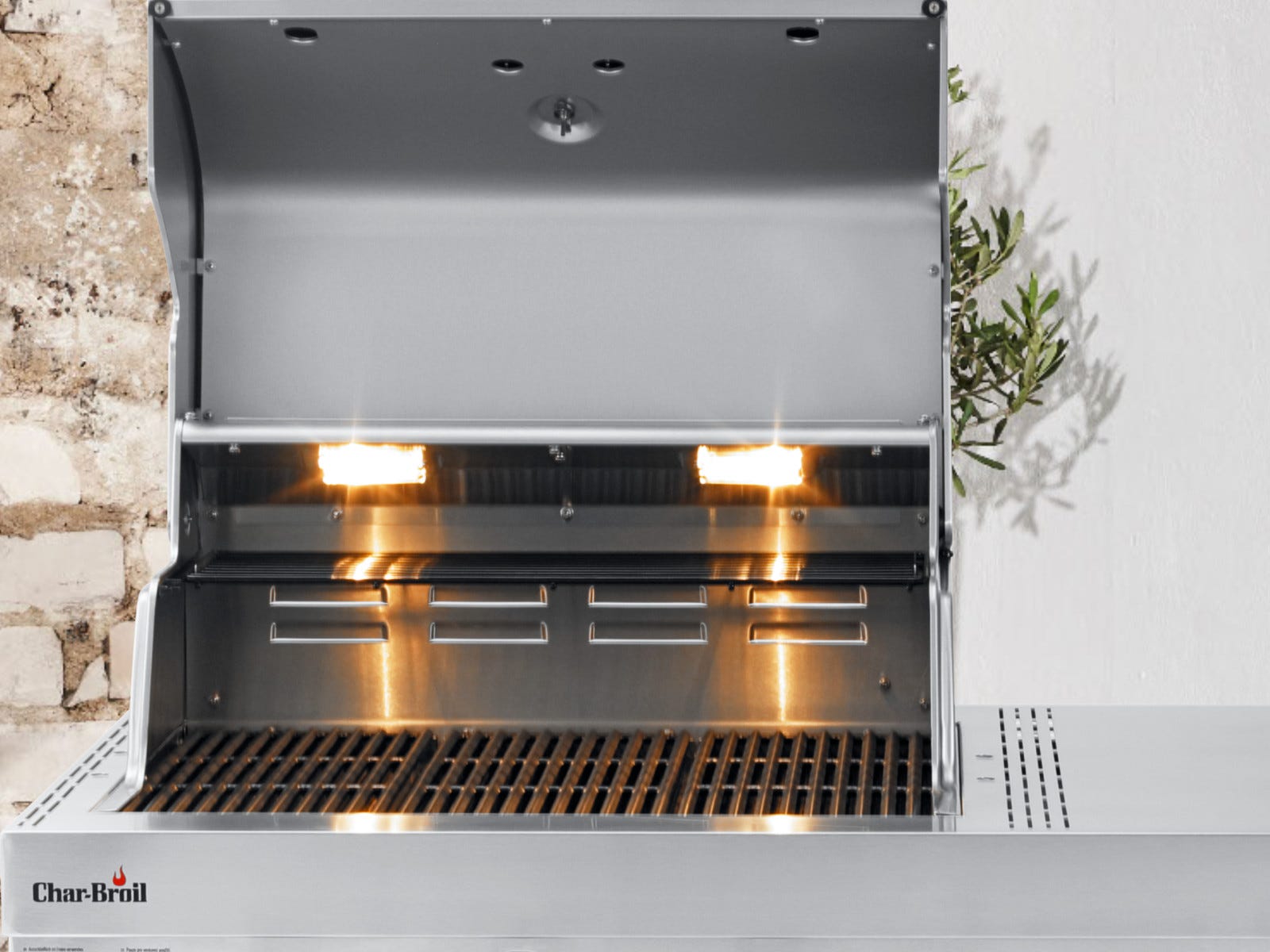
Budget modular setups — the Cozze Outdoor Kitchen 180, Char-Broil Ultimate 3200, and similar units in the £800–£1,700 range — are designed to live outside, but they use thinner gauge steel and simpler coatings. They will last well under shelter with covers, but leaving them fully exposed through a British winter shortens their life noticeably. If budget is tight, spend less on the kitchen and more on the shelter. That is consistently the better trade-off.
The freestanding Norfolk Grills Absolute 4 Burner and Whistler Grills Cirencester use heavier stainless and more robust powder coating, which buys you more forgiveness if the cover blows off in a storm — but even at that price point, shelter and covers are still the right approach.
Does UK weather actually damage outdoor kitchens?
Yes, if they are neglected. The UK's combination of rain, frost, salt air (near the coast) and fluctuating temperatures is harder on outdoor equipment than a consistently hot or consistently cold climate. The Met Office UK climate data shows average annual rainfall of 1,100 mm and around 50 days of frost inland — that is a lot of freeze-thaw cycles for any material.
But with decent materials, overhead shelter, proper covers and an annual winterisation routine, there is no reason an outdoor kitchen should not last 10–15 years in any part of the UK. The people who report problems are almost always the ones who bought a cheap grill, left it uncovered on a patio, and wondered why it rusted through in two winters.
The verdict
Protecting an outdoor kitchen in the UK is not complicated, but it is not optional either. The priority order is: shelter first, materials second, covers third, winter prep every year. Get those right and a British outdoor kitchen works year-round — and the extra shelter makes it genuinely usable in drizzle and wind, which extends your outdoor cooking season from four months to ten.
If you are still in the planning stage, our guide to what an outdoor kitchen costs in the UK breaks down budgets from under £500 to £8,000+, and our understanding UK rainfall page from the Met Office gives you the regional data to plan your shelter around. And if you are comparing modular brands at the planning stage, our Norfolk Grills vs GrandPro comparison covers weather resistance and long-term durability.