Home battery storage has gone from niche gadget to genuine money-saver in a remarkably short time. With electricity running at roughly 24–26p per kWh on a standard tariff and smart off-peak rates as low as 7–8p, the maths is finally starting to work for a lot of UK households. But "starting to work" isn't the same as "definitely worth it" — and the answer depends heavily on your setup, your tariff and how you use electricity.
Here's an honest look at who benefits, who doesn't, and what the real payback numbers look like in 2026.
How Home Batteries Save You Money
There are two main routes to savings, and most battery owners end up using both.
1. Solar Self-Consumption
If you have solar panels, a typical UK home without a battery uses only around 30–40% of what the panels generate — the rest gets exported to the grid, often for just 4–6p per unit via the Smart Export Guarantee. Add a battery and self-consumption jumps to 80–90%. Instead of selling cheap and buying back expensive, you store your daytime surplus and use it in the evening when rates are highest.
On a 4 kWp solar system, that shift alone can be worth £300–£500 per year depending on your household usage pattern.
2. Tariff Arbitrage (No Solar Needed)
You don't need solar panels at all. If you're on a time-of-use tariff — Octopus Go, Intelligent Octopus Go, Economy 7, or Agile Octopus — you charge the battery at the cheap overnight rate and discharge it during the expensive daytime and evening hours.
| Tariff | Off-Peak Rate | Off-Peak Window | Peak Rate | Saving Per kWh Cycled |
|---|---|---|---|---|
| Octopus Go | ~7.5p | 00:30–05:30 | ~24.5p | ~17p |
| Intelligent Octopus Go | ~7.5p | 23:30–05:30 + smart slots | ~24.5p | ~17p |
| Economy 7 | 12–18p | 7 hours overnight | 28–34p | ~12–16p |
| Agile Octopus | Variable (can go negative) | Dynamic 30-min slots | Variable | Highly variable |
With a 5 kWh battery cycling once daily on Octopus Go, you'd save roughly 85p a day — around £310 per year. Combine solar and tariff arbitrage and savings climb further, but the gains overlap rather than simply stacking.
What Does It Cost?
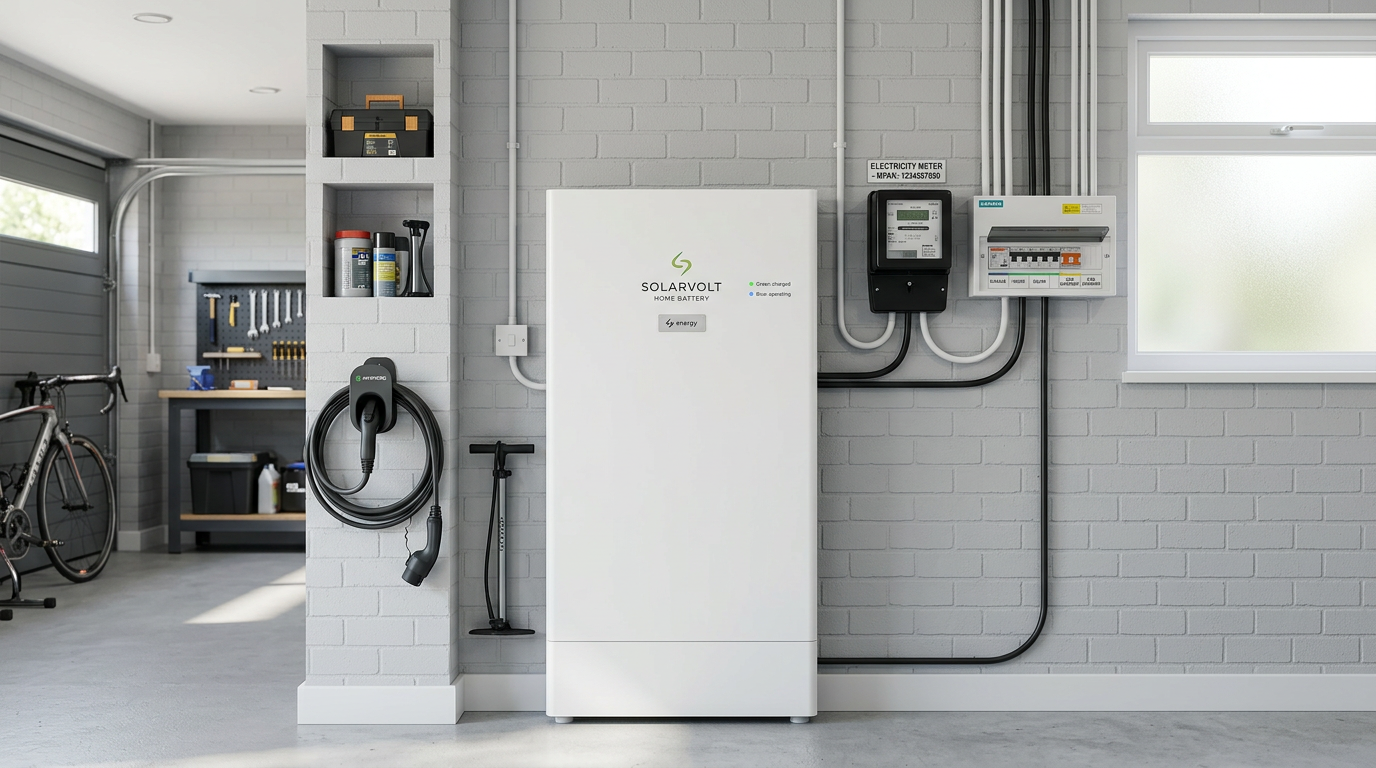
Installed prices in 2026 depend on capacity, brand, and whether you're adding to an existing solar system or starting fresh.
| System Size | Typical Installed Cost | Cost Per kWh |
|---|---|---|
| ~5 kWh (e.g. GivEnergy 5.2) | £2,500–£5,500 | £500–£1,100 |
| ~10 kWh (e.g. Tesla Powerwall 3) | £4,500–£7,500 | £450–£750 |
| ~13.5 kWh (e.g. Tesla Powerwall 3) | £6,000–£9,500 | £444–£703 |
A key detail: residential battery installations currently attract 0% VAT until 31 March 2027, which knocks a significant chunk off the upfront cost. If you're considering a battery, this is a genuine incentive to move before the deadline.
Realistic Payback Periods
Here's where things get honest. Payback depends on your scenario:
| Scenario | Annual Saving | Typical Payback |
|---|---|---|
| Battery added alongside new solar install | £400–£600 | 6–11 years |
| Battery retrofitted to existing solar | £300–£500 | 8–16 years |
| Standalone battery (tariff arbitrage only) | £250–£350 | 10–22 years |
The sweet spot is adding a battery when you install new solar panels — shared labour and scaffolding costs bring the marginal cost of the battery down, and 0% VAT applies to the whole system. Retrofitting is more expensive because you need a separate installation visit and potentially an inverter upgrade if your existing one isn't battery-compatible.
Standalone battery storage without solar is the weakest financial case. It works, but the payback stretches beyond many warranties (typically 10–12 years), which means you're betting on the battery lasting long enough to turn a profit.
Beyond the Maths: Other Reasons People Buy
Not every purchase decision is purely financial. Three non-monetary benefits come up repeatedly:
Power cuts. Most modern battery systems offer Emergency Power Supply (EPS), keeping your lights, fridge and broadband running during a grid outage. The 2023–24 storms reminded a lot of UK households what a 12-hour blackout actually feels like.
Energy independence. Using 80–90% of your own solar generation rather than relying on grid imports gives a degree of control over costs that no fixed tariff can match — particularly if energy prices spike again.
Carbon reduction. Shifting consumption from peak grid hours (when marginal generation is often gas) to off-peak or solar-powered hours can cut a household's carbon footprint by 65–75% according to recent industry estimates.
Who Should Wait
Batteries aren't for everyone. You should probably hold off if:
You're on a flat-rate tariff and have no solar. Without a price differential between peak and off-peak, there's nothing to arbitrage. The battery just sits there depreciating.
Your electricity usage is very low. If you're spending under £60 a month on electricity, the absolute savings are too small to justify a multi-thousand-pound investment.
You rent and can't modify the property. Most installed systems require wall-mounting and electrical work that needs landlord permission. Plug-in battery systems are emerging but aren't widely available yet — see our guide on plug-in solar panel rules for the current regulatory position.
The Plug-In Battery Question
A new category of "plug-and-play" home batteries is developing — units you plug into a standard 13A socket without an electrician. These are not yet approved for UK sale as of September 2026; the regulatory process is still underway and first deliveries are expected in 2027. We'll cover these in detail once hardware is actually available. For now, any battery system in the UK requires professional installation.
If you're interested in what's legal to plug in today, our post on whether plug-in solar panels are worth it covers the panels that are approved under the new 2026 regulations.
Frequently Asked Questions
How long do home batteries last?
Most LFP (lithium iron phosphate) batteries are rated for 6,000+ cycles, which translates to roughly 15–20 years of daily use. Warranties typically cover 10–12 years or a guaranteed minimum capacity retention (usually 70–80% of original).
Can I install a home battery myself?
No. All currently available UK home battery systems require installation by a qualified electrician, and most manufacturers void the warranty if the unit isn't installed by an approved installer. Plug-in batteries may change this in future, but they're not yet approved.
Do I need solar panels to use a home battery?
No. Standalone batteries work purely on tariff arbitrage — charging from cheap off-peak grid electricity and discharging during expensive peak hours. Solar makes the financial case stronger, but it's not essential. See our dedicated guide on battery storage without solar panels for the full breakdown, or our best Octopus tariff for battery storage comparison to pick the right tariff.
Is the 0% VAT on batteries permanent?
The current 0% VAT rate for residential energy-saving materials (including batteries) runs until 31 March 2027. After that, it's expected to revert to the reduced rate of 5%, though this could change depending on government policy.
What size battery do I need?
For most UK homes, 5–10 kWh covers the evening and overnight demand gap. A 5 kWh battery suits smaller households or those mainly interested in tariff arbitrage; 10 kWh+ is better for larger homes or those with solar wanting to maximise self-consumption. Oversizing rarely pays back — you want a battery that cycles fully most days.