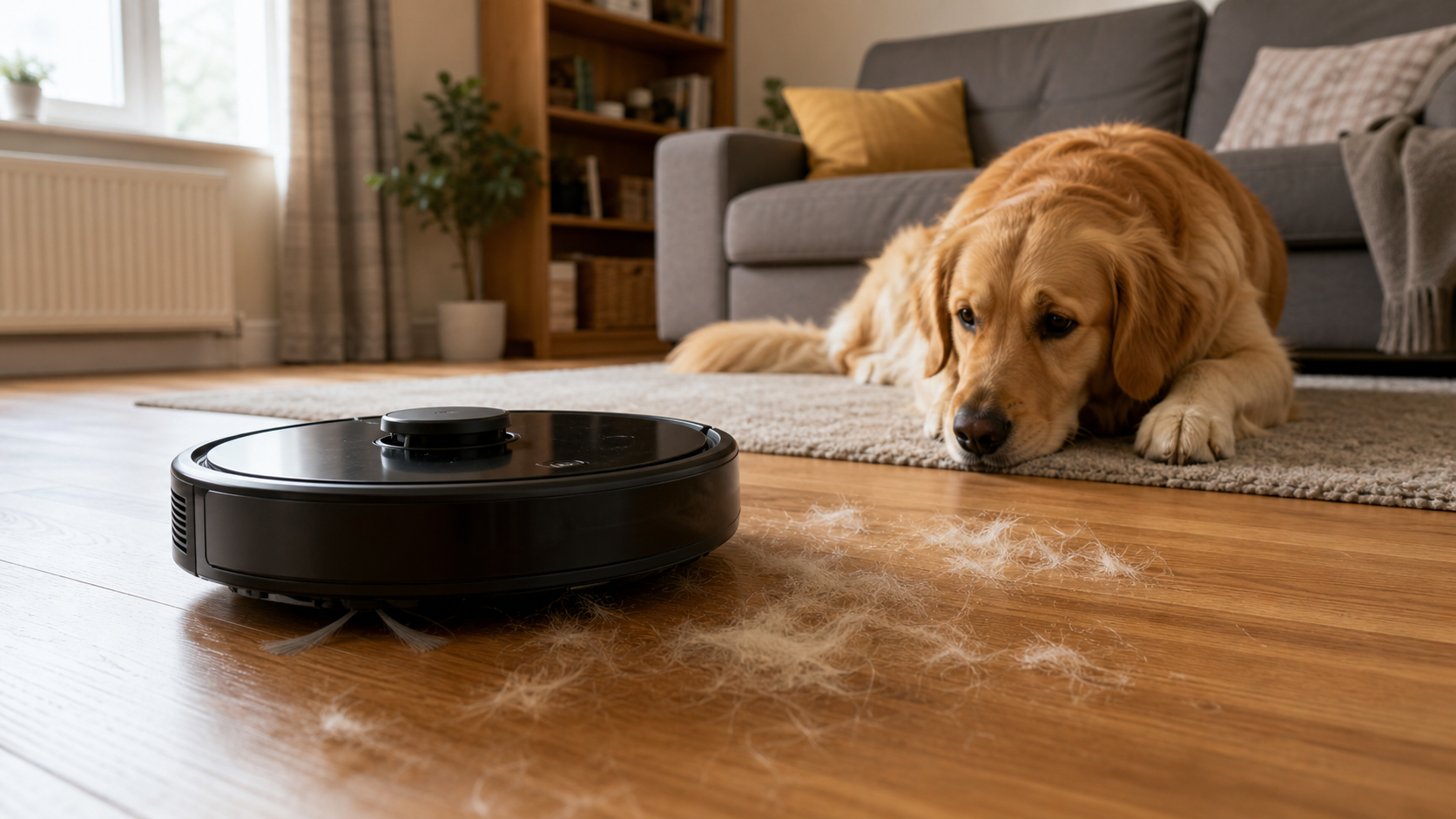
If you share your home with a shedding dog or cat, you already know the routine: empty the vacuum, watch a cloud of hair rise out of the bin, sneeze, repeat. So when robot vacuum makers started fitting self-emptying docks — a base station that sucks the robot's bin into a large sealed bag — it looked like the perfect answer for pet households. But these docks add £150 to £400 to the price, so the real question is whether that premium actually pays off when the mess is pet hair rather than ordinary dust.
This guide explains how self-emptying docks cope with pet hair specifically, where they genuinely help, where they fall short, and whether they are worth the money for a UK pet home. If you just want the models that clean pet hair best regardless of dock type, start with our best robot vacuums for pet hair roundup — this post focuses purely on the self-emptying question.
What a self-emptying dock actually does
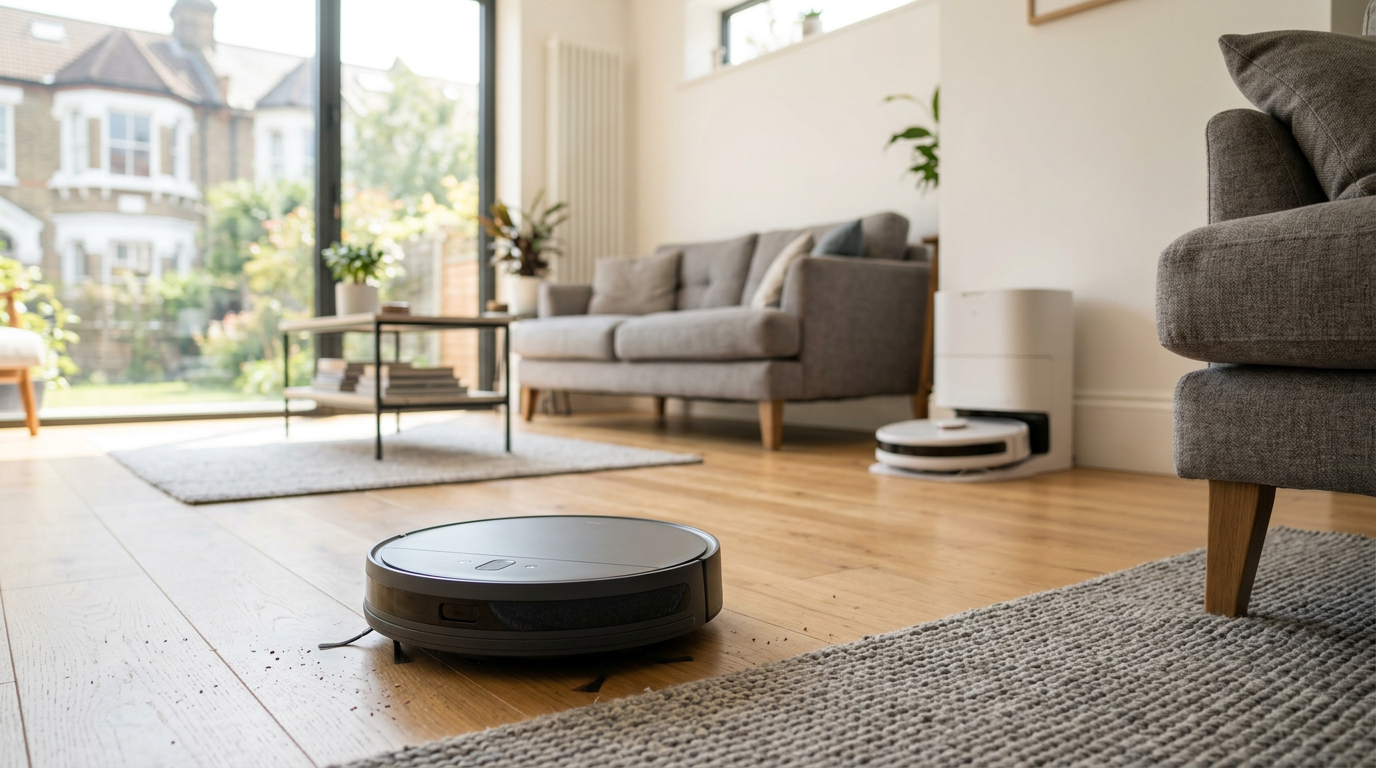
When the robot finishes cleaning, it returns to its base and a powerful fan pulls the contents of its small onboard bin up into a much larger bag or bin inside the dock. Most docks hold the equivalent of 30 to 60 robot bin-loads, which the manufacturers translate to "up to 60 days hands-free". For a dust-only home that figure is realistic. For a pet home it is not — hair fills the dock bag far faster than fine dust, so expect to change or empty it every few weeks rather than every two months.
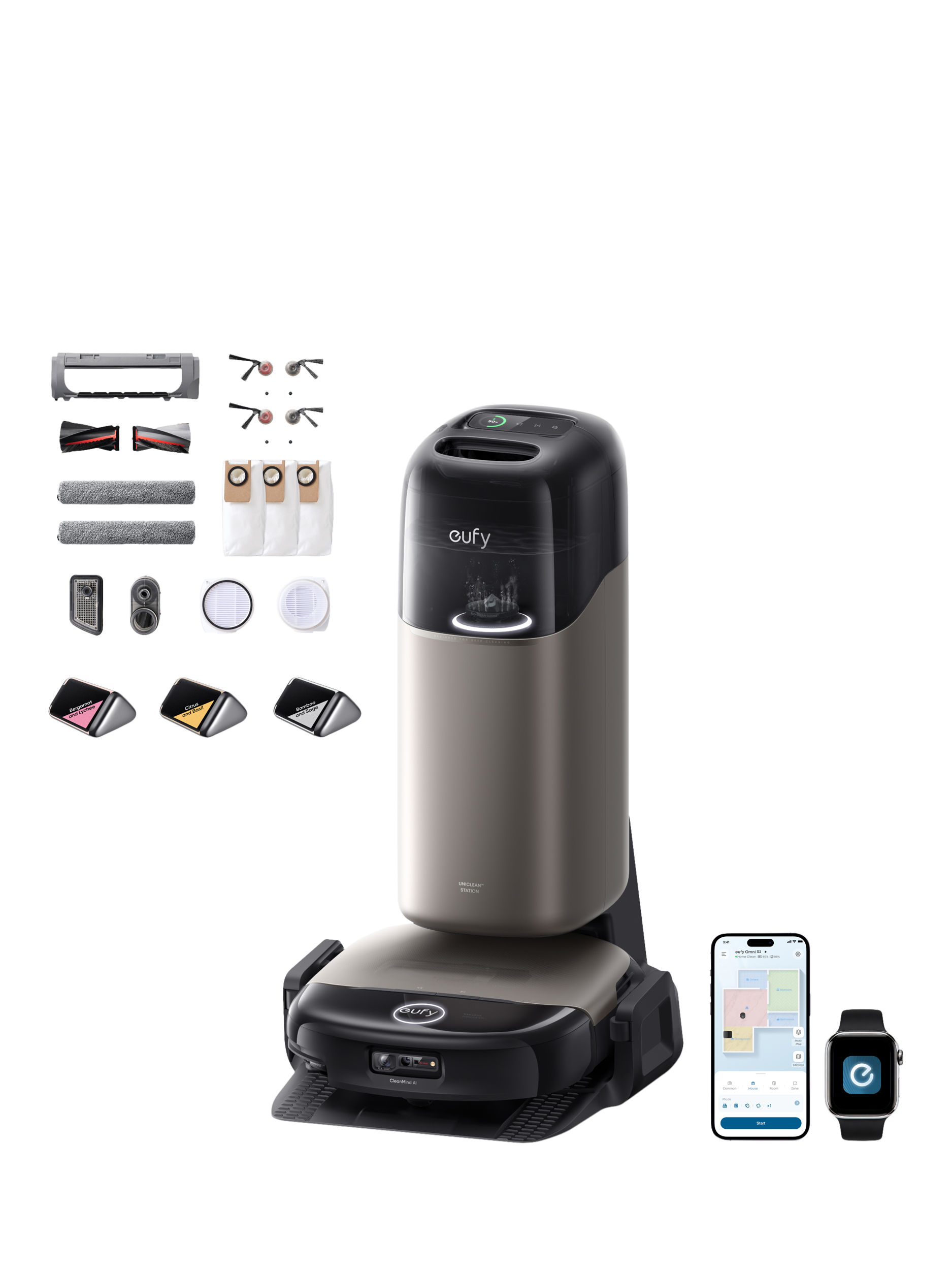
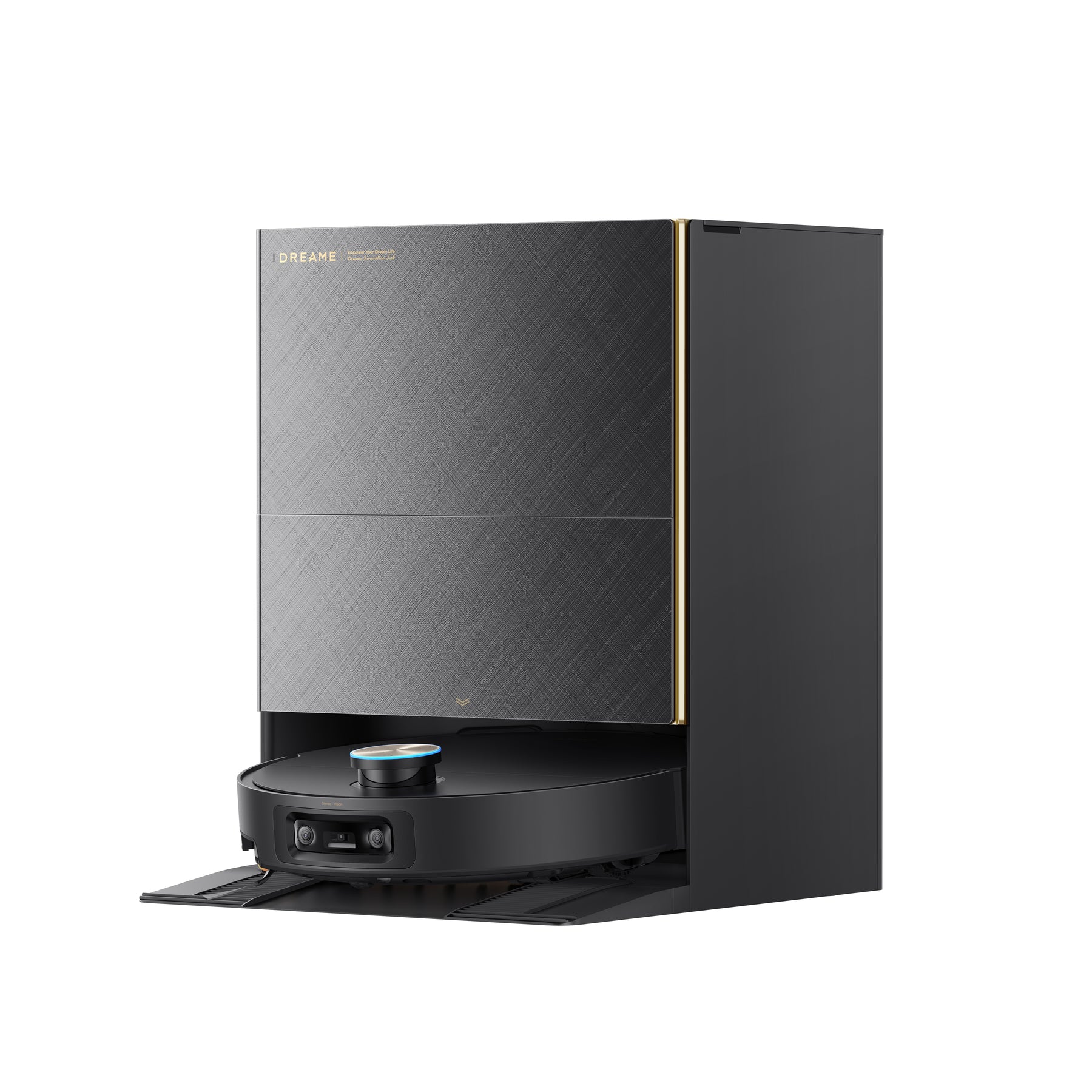
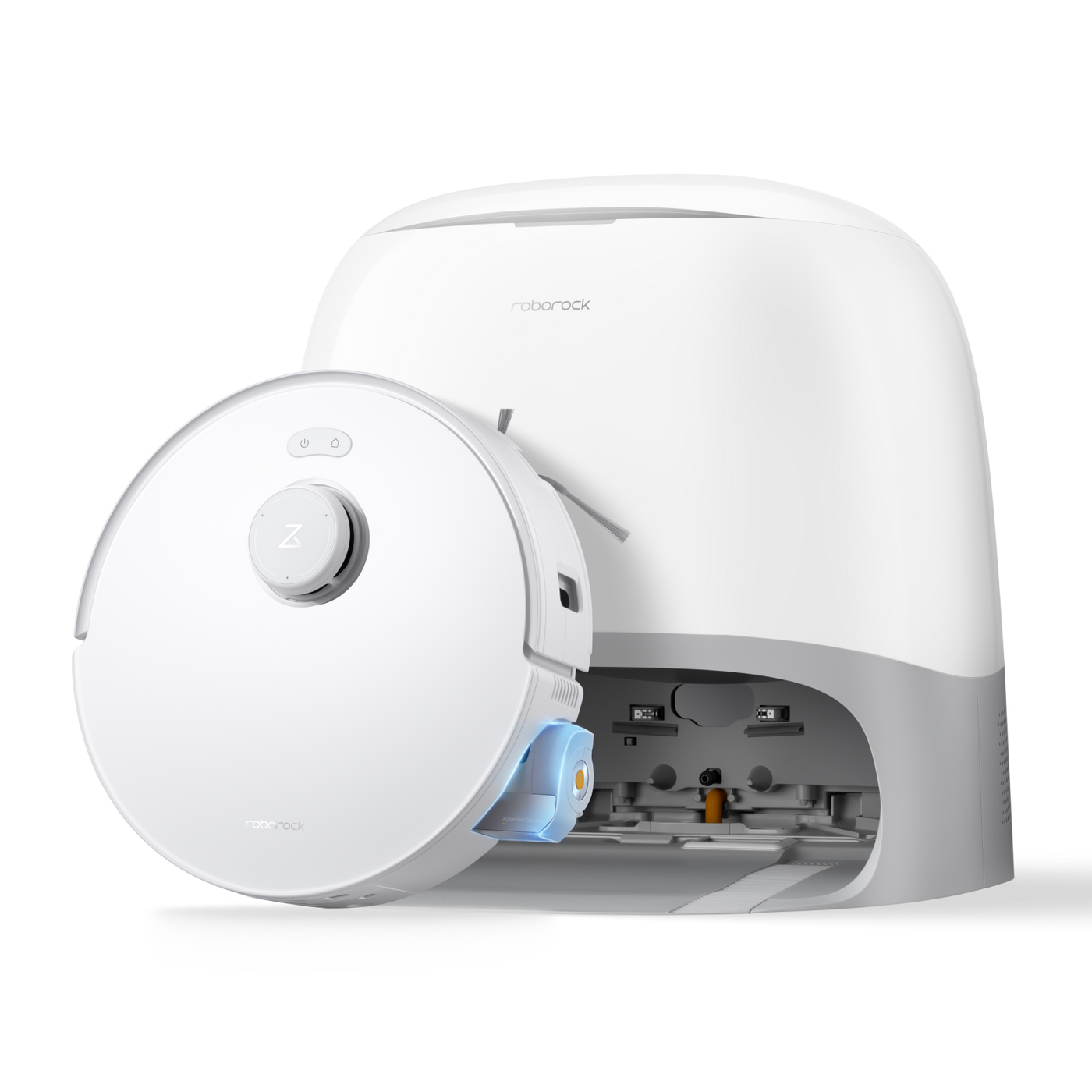
The premium models we've reviewed almost all include an auto-empty dock, and several go further with self-washing mop pads and hot-air drying. Here's how the pricing stacks up:
| Model | Dock type | Price |
|---|---|---|
| eufy Omni S2 | Auto-empty + mop wash & dry | £999 |
| Dreame X60 Ultra | Auto-empty + mop wash & dry | £1,099 |
| Roborock Qrevo Curv | Auto-empty + mop wash & dry | £899 |
| ECOVACS Deebot T30 Omni | Auto-empty + mop wash & dry | £699 |
| eufy Omni C28 | Auto-empty + mop wash | £549 |
| iRobot Roomba Combo j7+ | Auto-empty (bagged) | £599 |
| Shark Matrix Plus 2-in-1 | Auto-empty (bagless) | £399 |
Why self-emptying helps most in a pet home
The single biggest reason to want a self-emptying dock has nothing to do with convenience and everything to do with allergies. Emptying a robot's tiny bin by hand releases a puff of hair, dander and dust straight into your breathing space. If anyone in the house reacts to pet allergens, a sealed bagged dock — where the hair goes into a bag you only touch when you bin the whole thing — is genuinely worth paying for. Bagged docks (like the iRobot j7+) contain allergens best; bagless docks are cheaper to run but you still get a small cloud when you tip them out.
The second reason is simply that pet homes fill the robot's onboard bin fast. A small 300ml robot bin can be full after a single run in a home with a heavy shedder, at which point the robot either stops or starts pushing hair around. A dock means the robot empties itself between rooms and keeps working, so you get consistently clean floors without babysitting it.
Where self-emptying docks fall short on pet hair
A dock empties the bin — it does not stop hair tangling around the brush. That is a separate problem solved by anti-tangle brush design (tapered or dual rubber brushes), not by the dock. Plenty of buyers assume an expensive auto-empty model will be tangle-free and are disappointed when they still have to cut hair off the brush roller. Check the brush type, not just the dock.
Docks also clog. The narrow channel that sucks hair from robot to bag is a pinch point, and matted pet hair can jam it — especially if the robot picks up longer human hair too. And the running costs are real: bagged docks need replacement bags (roughly £3 to £5 each, changed more often in a pet home), and every robot needs new filters and brushes over time. Our guide to robot vacuum running costs breaks down how the consumables add up more than the electricity ever does.
So, is it worth it for pet owners?
For most UK pet households, yes — but with realistic expectations. A self-emptying dock is worth the premium if allergies are a factor, if you have a heavy shedder that fills the bin every run, or if you simply won't keep using the robot when hand-emptying becomes a chore. It is not worth it if you assume it removes all maintenance: you will still change bags, clean the dock channel, and deuntangle brushes.
If budget matters, the eufy Omni C28 at £549 is the sweet spot — a proper auto-empty dock without the four-figure price of the flagship omni models. If allergy control is your priority, the bagged iRobot Roomba Combo j7+ seals hair away best. And if you want the most hands-off experience money can buy, the eufy Omni S2 and Dreame X60 Ultra add self-washing mops on top. Still torn between the two most popular brands? Our Shark vs Roborock comparison weighs them head to head, and if you're not sure a robot suits your home at all, read our honest verdict on whether robot vacuums are worth it first.
For an independent view on suction and reliability across brands, Which? tests robot vacuums in a lab and is a useful second opinion before you spend four figures.
Frequently Asked Questions
How often do I need to empty a self-emptying dock in a pet home?
Manufacturers quote "up to 60 days", but that assumes fine dust. With a shedding dog or cat, expect to empty or change the dock bag every two to four weeks. Hair is bulky and fills the bag far faster than dust does.
Do self-emptying docks stop pet hair tangling around the brush?
No. The dock only empties the robot's bin. Tangling is solved by anti-tangle brush design — tapered or dual rubber brushes — so check the brush type separately. Some models still need occasional hair cutting off the roller regardless of the dock.
Are bagged or bagless docks better for pet allergies?
Bagged docks are better for allergy sufferers because the hair and dander go into a sealed bag you bin whole, with almost no exposure. Bagless docks cost less to run but release a small cloud of dust when you tip them out.
Is a self-emptying dock worth the extra money?
For pet owners, usually yes — especially if anyone has allergies or you have a heavy shedder. The dock keeps the robot working between rooms and reduces hands-on contact with hair. It is not worth it if you expected zero maintenance, as you'll still change bags and clean the channel.
Can the dock channel get blocked by pet hair?
Yes. The narrow tube that transfers hair from robot to dock is a common clog point, particularly with matted or long hair. A quick check and clear-out every few weeks prevents the robot failing to empty properly.